Mayo Clinic’s NEJM study advances precision oncology for relapsed myeloma
Unlike CAR-T therapy, which requires patient-specific cell modification and lengthy manufacturing, this treatment is delivered as a ready-to-use infusion, making it more accessible in standard hospital settings.
Published
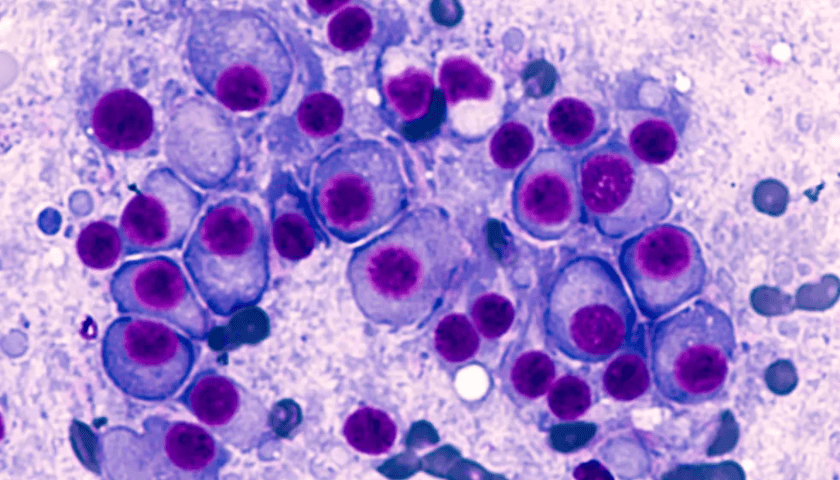
UAE—A new study led by Mayo Clinic and published in the New England Journal of Medicine has reported promising results for patients with extramedullary multiple myeloma, one of the most aggressive and difficult-to-treat forms of blood cancer.
Conducted in the UAE, amid growing discussions on oncology innovation, the findings highlight how a dual-antibody approach can trigger strong and lasting immune responses in patients with previously limited treatment options.
Targeting cancer through a dual immune Pathway
Researchers tested a combination of two engineered antibodies, talquetamab and teclistamab, designed to activate T cells in two complementary ways.
These antibodies guide immune cells directly toward myeloma cells and encourage them to attack through distinct biological pathways.
Unlike CAR-T therapy, which requires patient-specific cell modification and lengthy manufacturing, this treatment is delivered as a ready-to-use infusion, making it more accessible in standard hospital settings.
According to study author Dr. Shaji Kumar of Mayo Clinic Comprehensive Cancer Center, the approach reflects a shift in how immune therapies are designed.
He noted that engaging T cells through dual mechanisms creates a stronger and more coordinated attack against cancer cells, especially in cases that have resisted multiple prior treatments.
Clinical trial results show high response rates
The trial enrolled 90 patients with confirmed extramedullary multiple myeloma, verified using PET and MRI imaging.
Among them, 79% showed a measurable response to treatment, while 54% achieved no detectable disease in imaging or blood tests.
In addition, nearly two-thirds of responders-maintained disease control after one year, a significant outcome for a condition that typically progresses within months.
Researchers emphasized that the study was the first large prospective trial focused exclusively on true extramedullary disease, rather than mixed forms of myeloma, allowing for more precise evaluation of outcomes.
Safety profile and ongoing questions
While the results were encouraging, the study also reported notable safety concerns.
Infections emerged as one of the most significant adverse effects, underscoring the need for careful monitoring and supportive care during treatment.
Researchers stressed that managing immune suppression will be essential as the therapy moves forward.
Looking ahead, scientists are now exploring whether this dual-target strategy could be introduced earlier in the disease course and whether safety can be improved through better infection prevention protocols.
They are also investigating whether similar “two-lock, one-key” immune designs could be adapted for other hard-to-treat cancers, potentially expanding the reach of this approach across oncology.
Sign up HEREto receive our email newsletters with the latest news and insights from Africa and around the world, and follow us on LinkedInfor updates.



Be the first to leave a comment