

Zambia receives first US-funded Lenacapavir shipment for HIV prevention
Lenacapavir has demonstrated almost 100% efficacy in preventing HIV infection in clinical trials, giving Zambia an additional prevention option alongside existing HIV services.
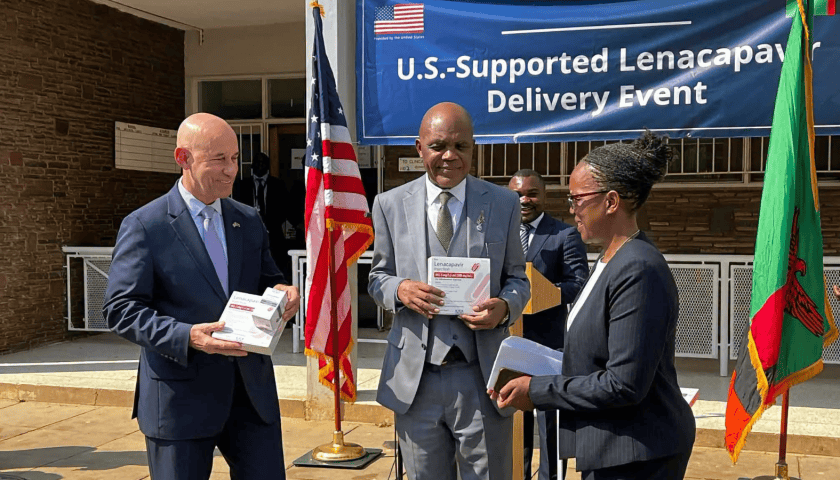
ZAMBIA—Zambia has received its first shipment of lenacapavir, a twice-yearly injectable pre-exposure prophylaxis (PrEP), as the country expands efforts to prevent new HIV infections.
UNAIDS is working with the Zambian government, communities, the Global Fund to Fight AIDS, Tuberculosis and Malaria, and the US government to support the rollout and ensure the medicine reaches people who could benefit.
The Ministry of Health received the shipment at University Teaching Hospital in Lusaka on 1 September 2026.
The Ministry of Health Permanent Secretary for Donor Coordination, George Sinyangwe, and US Assistant Secretary of State for African Affairs, Frank Garcia, officially received the delivery, highlighting the health partnership between Zambia and the United States.
Lenacapavir has demonstrated almost 100% efficacy in preventing HIV infection in clinical trials, giving Zambia an additional prevention option alongside existing HIV services.
Scaling up access
UNAIDS will support the rollout by providing data and evidence on populations at high risk of acquiring HIV.
It aims to expand access to 82,000 people through 542 selected health facilities by the end of 2026.
UNAIDS Regional Director for Eastern and Southern Africa Anne Githuku-Shongwe said the collaboration shows what can be achieved when political leadership, communities, science and partners work towards a shared goal.
She said the rollout would bring Zambia closer to ending AIDS as a public health threat.
Of those expected to receive lenacapavir, about 21,000 are pregnant or breastfeeding women.
Their inclusion is expected to strengthen efforts to protect maternal health and reduce mother-to-child transmission of HIV, which is estimated at about 6% in Zambia.
Reaching young people
The arrival of lenacapavir comes as Zambia continues to address HIV prevention needs among adolescents and young people.
Zambia recorded about 23,000 new HIV infections in 2025, with adolescents and young people accounting for 37% of infections.
Adolescent girls and young women represented 29% of these new infections, reflecting their continued vulnerability to HIV in many parts of sub-Saharan Africa.
The availability of a discreet, long-acting prevention option could provide an additional choice for people who face barriers to daily prevention methods.
Githuku-Shongwe said introducing lenacapavir creates an opportunity to build on Zambia’s progress and ensure prevention services reach those who need them most, particularly adolescent girls and young women.
Part of combination prevention
Zambia will integrate lenacapavir into its combination HIV prevention programme.
UNAIDS will provide coordination, technical advice and advocacy to support an evidence-based and equitable rollout.
UNAIDS has worked with Zambia for many years to strengthen the national HIV response, including policy development, strategic information, sustainability and community engagement.
It also supports efforts to ensure HIV services reach populations most vulnerable to infection.
Zambia joins Eswatini, Nigeria, Kenya, Zimbabwe and South Africa among the first countries in sub-Saharan Africa to receive the HIV prevention medicine.
The US government said its support for the rollout reflects its longstanding partnership with Zambia through the President’s Emergency Plan for AIDS Relief (PEPFAR).


Be the first to leave a comment