WHO pledges support to EFDA in Addis Ababa for Maturity Level 3 health standards
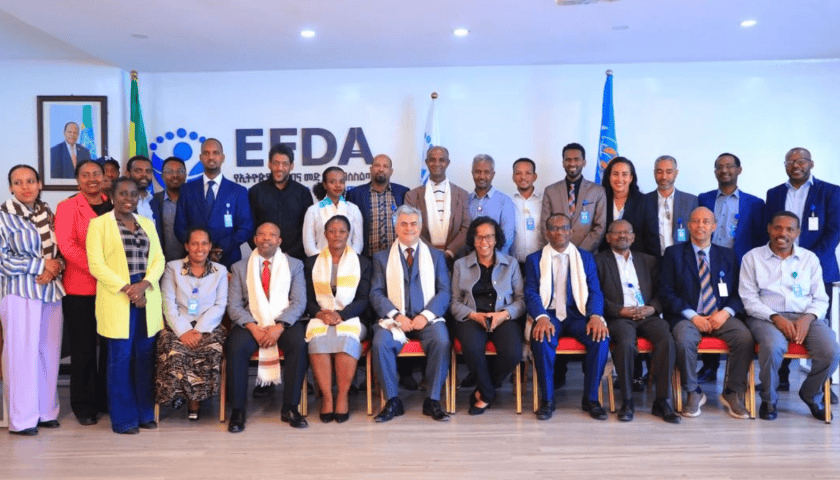
WHO Representative to Ethiopia, the African Union and the United Nations Economic Commission for Africa, Professor Francis Chisaka Kasolo, held a bilateral meeting with EFDA Director General Heran Gerba to discuss measures to improve health product regulation.
ETHIOPIA—The World Health Organization (WHO) and the Ethiopian Food and Drug Authority (EFDA) have reaffirmed their commitment to strengthening the country’s regulatory systems for medicines, medical devices, and vaccines.
WHO Representative to Ethiopia, the African Union, and the United Nations Economic Commission for Africa, Professor Francis Chisaka Kasolo, held a bilateral meeting with EFDA Director General Heran Gerba to discuss measures to improve health product regulation.
The meeting focused on Ethiopia’s efforts to achieve WHO Maturity Level 3 (ML3) for medical device regulation.
The designation represents a stable, well-functioning, and integrated regulatory system with established processes and capabilities.
WHO also reaffirmed its commitment to supporting EFDA through the WHO Global Benchmarking Tool Plus Medical Devices (GBT+MD), which assesses national regulatory systems and identifies areas for further development.
Building on progress in medicines regulation
Professor Kasolo commended EFDA for building on its ML3 achievement in medicines regulation while continuing to strengthen its oversight of medical devices.
He also recognized the completion of a WHO-supported self-benchmarking exercise that assessed EFDA’s regulatory capacity against established criteria.
The exercise identified areas where the authority has demonstrated strength, as well as areas requiring further improvement.
Following the assessment, EFDA developed an Institutional Development Plan (IDP) to address the identified gaps and strengthen its regulatory functions.
Gerba said the authority would require coordinated support to implement the plan, particularly in human resources, infrastructure, digital systems and technical capacity.
These areas are expected to support EFDA as it strengthens regulatory processes and improves its ability to oversee medical devices.
Focus on vaccine regulation
The discussions also covered the regulation of vaccines, with particular attention to vaccine lot release.
Advancing this function towards ML3 is expected to strengthen Ethiopia’s ability to assess vaccine batches and support the availability of safe, effective and quality-assured products.
The two sides also discussed how stronger vaccine regulation can support domestic manufacturing.
Developing regulatory capacity alongside local production efforts could help Ethiopia strengthen its vaccine supply systems and support broader efforts towards greater vaccine self-reliance.
WHO and EFDA agreed to continue working together to strengthen Ethiopia’s regulatory capacity across medicines, medical devices and vaccines.
Their collaboration will focus on addressing identified regulatory gaps, supporting institutional development and strengthening systems for the oversight of health products.


Be the first to leave a comment