

FDA expands Pfizer’s Talzenna-Xtandi combination to earlier-stage metastatic prostate cancer
Talzenna (talazoparib), a PARP inhibitor, is used alongside Xtandi (enzalutamide), an androgen receptor inhibitor, to target cancer through complementary mechanisms.
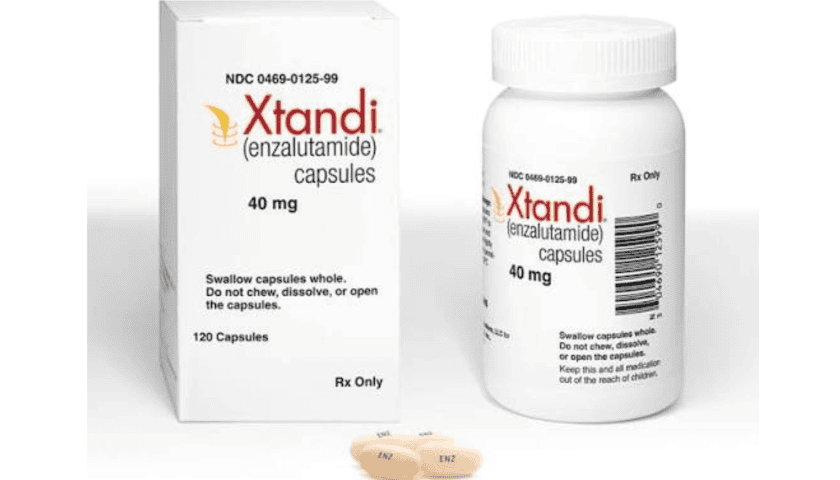
USA—The US Food and Drug Administration (FDA) has expanded Pfizer’s Talzenna-Xtandi combination to treat metastatic hormone-sensitive prostate cancer in patients with homologous recombination repair (HRR) gene mutations, extending its use to an earlier stage of the disease.
The approval covers patients whose cancer remains sensitive to androgen pathway inhibition and carries BRCA or other HRR gene mutations.
Talzenna (talazoparib), a PARP inhibitor, is used alongside Xtandi (enzalutamide), an androgen receptor inhibitor, to target cancer through complementary mechanisms.
The expanded indication builds on the FDA’s 2023 approval of the combination for patients with HRR gene-mutated metastatic castration-resistant prostate cancer (mCRPC).
The latest decision brings the treatment option to patients before their disease progresses to the castration-resistant stage.
Phase III trial supports expanded indication
The FDA based its decision on results from the Phase III TALAPRO-3 study (NCT04821622).
The trial found that Talzenna plus Xtandi reduced the risk of radiographic disease progression or death by 52% compared with placebo plus Xtandi. Researchers also reported a manageable safety profile.
The approval coincides with the 2026 European Society for Medical Oncology (ESMO) Congress in Madrid, held from 23 to 27 October, where researchers presented new findings on prostate cancer treatment.
Pfizer estimates that approximately one in four patients with metastatic hormone-sensitive prostate cancer whose disease remains sensitive to androgen pathway inhibition carries an HRR gene mutation, highlighting the potential role of biomarker testing in identifying eligible patients.
Aamir Malik, Pfizer’s chief US commercial officer and executive vice-president, said the combination offers a treatment option at a stage when it may have a greater impact on delaying disease progression.
Neeraj Agarwal, lead investigator of TALAPRO-3, described the approval as an important advance for newly diagnosed patients with metastatic HRR gene-mutated prostate cancer, who generally face a poorer prognosis.
He noted that the trial showed consistent clinical benefits among patients with both BRCA and non-BRCA HRR gene mutations.
Biomarker testing strengthens personalised treatment
Agarwal also highlighted the importance of biomarker testing at diagnosis to help clinicians select appropriate treatments.
Identifying specific genetic alterations can guide therapy decisions and help match patients with targeted medicines.
The expanded indication reinforces the role of companion diagnostics (CDx) in oncology, where tests identify biomarkers that can determine whether a patient is eligible for a particular treatment.
For pharmaceutical companies and diagnostic developers, such approvals can increase demand for validated genetic testing and strengthen the link between drug development and diagnostic services.
Andrew Thompson, GlobalData Healthcare’s director of therapy research and analysis in medical devices, noted that changes to European regulation could move the market towards a companion diagnostic adoption model closer to that of the US, where the FDA can approve medicines alongside tests designed to identify eligible patients.
Karan Arora, senior vice-president of advanced assays, artificial intelligence and pharmaceutical services at Leica Biosystems, has also emphasized how genomics, digital pathology and AI-driven analytics can improve the speed and accuracy of biomarker identification.


Be the first to leave a comment