Philips launches FDA-cleared Rembra platform for high-throughput imaging
The Rembra platform extends the use of computed tomography beyond traditional diagnostic radiology into radiation therapy planning.
Published
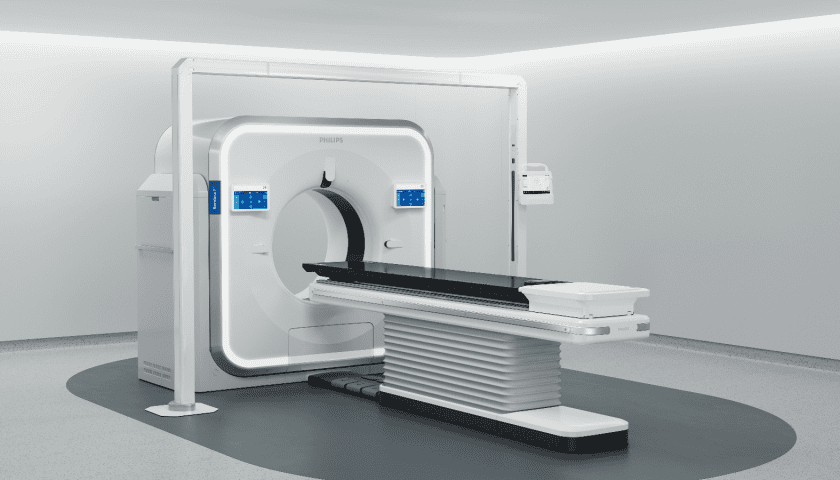
THE NETHERLANDS—Royal Philips has received 510(k) clearance from the U.S. Food and Drug Administration for its Rembra platform of scanning systems, including Rembra CT, Rembra RT, and Areta RT.
This regulatory approval allows the company to introduce a new generation of imaging solutions to meet the rising demand for faster, more efficient diagnostic and treatment-planning tools.
As healthcare systems face increasing imaging volumes and growing clinical complexity, providers require technologies that enhance workflow efficiency while maintaining confidence in clinical decisions.
In response, Philips has developed the Rembra platform to improve speed, scalability, and access to high-quality imaging across care settings.
Expanding CT across the care continuum The Rembra platform extends the use of computed tomography beyond traditional diagnostic radiology into radiation therapy planning.
By integrating these functions, the system supports more connected workflows and enables a coordinated approach to patient care.
Clinicians can seamlessly transition from rapid assessment in acute settings to precise imaging for cancer treatment planning, thereby improving overall care delivery.
Dan Xu, Business Leader of CT at Philips, emphasized that imaging plays a central role in enabling timely and informed clinical decisions as healthcare demand grows.
He noted that the Rembra platform redefines expectations for CT by combining speed, precision, and scalability to expand access to quality imaging and support accurate diagnosis and treatment planning.
High-throughput imaging for demanding environments Rembra CT features an 85 cm bore, one of the largest in its class, making it suitable for high-demand clinical environments.
The system supports up to 270 exams per day, enabling high-throughput imaging in emergency departments, critical care units, and interventional settings.
In addition, its advanced acquisition and reconstruction technologies deliver rapid, high-quality imaging, helping clinicians make timely decisions in critical situations without compromising diagnostic accuracy.
Precision imaging for radiation therapy Rembra RT and Areta RT bring similar performance benefits to radiation therapy workflows, where precision is essential.
These systems provide high-fidelity imaging for treatment planning, supported by an extended field of view and next-generation 4DCT capabilities.
As a result, clinicians can target tumors more accurately while minimizing exposure to healthy tissue.
Furthermore, the systems streamline simulation and planning workflows, reducing variability and improving efficiency.
This approach supports more consistent and personalized cancer care, particularly in complex treatment scenarios.
Strengthening Philips’ imaging portfolio The FDA clearance strengthens Philips’ broader CT portfolio and highlights its focus on integrating advanced imaging technologies with intelligent, connected workflows.
By aligning diagnostic imaging with therapy solutions, the company continues to address the evolving needs of modern healthcare environments while supporting more efficient and coordinated care delivery.
Sign up HEREto receive our email newsletters with the latest news and insights from Africa and around the world, and follow us on LinkedInfor updates.




Be the first to leave a comment