LongBio Pharma debuts on Hong Kong Stock Exchange with US$1.37B valuation
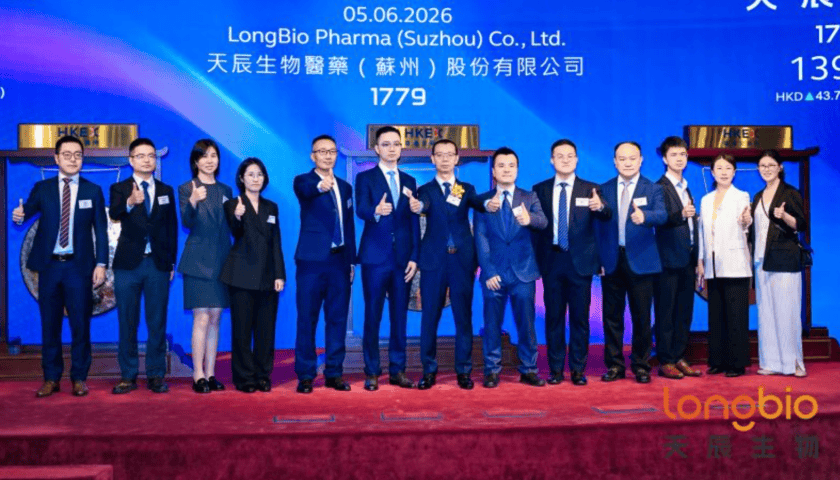
The company officially listed on the Hong Kong Stock Exchange on June 5, achieving a market valuation of approximately HK$10.7 billion (US$1.37 billion) following its debut.
Published
CHINA— LongBio Pharma (Suzhou) Co., Ltd., a clinical-stage biotechnology company focused on autoimmune and allergic diseases, is accelerating its growth plans after launching its public offering ahead of its Hong Kong Stock Exchange debut.
The move comes as China’s autoimmune disease treatment market experiences rapid expansion, driven by rising disease prevalence, increasing healthcare investment, and growing demand for innovative therapies.
According to Frost & Sullivan, the global autoimmune disease drug market is projected to grow from US$138.9 billion in 2024 to US$176.7 billion in 2030.
In China, however, the market is expected to expand much faster, increasing from US$5.1 billion in 2024 to US$19.0 billion in 2030, reflecting a compound annual growth rate of 24.5%.
Hong Kong IPO to support development
LongBio launched its public subscription on May 28, with shares priced at HK$96.06 each (US$12.25).
The company plans to raise approximately HK$1.36 billion (US$174 million) through the offering, with proceeds earmarked for clinical development, research activities, and future commercialization efforts.
Recent reports indicate that cornerstone investors committed approximately US$8.7 million to the offering, underscoring investor interest in the company’s immunology-focused pipeline.
The company officially listed on the Hong Kong Stock Exchange on June 5, achieving a market valuation of approximately HK$10.7 billion (US$1.37 billion) following its debut.
LP-003 leads allergy treatment portfolio
Founded in 2020, LongBio has built a pipeline targeting allergic and autoimmune diseases, led by LP-003, a next-generation anti-IgE monoclonal antibody designed to treat seasonal allergic rhinitis, chronic spontaneous urticaria (CSU), allergic asthma, chronic rhinosinusitis with nasal polyps, and food allergies.
The therapy works by blocking free immunoglobulin E (IgE), a key driver of allergic reactions. Clinical studies conducted in China have shown encouraging results.
In Phase II trials involving CSU patients, LP-003 demonstrated rapid onset, sustained efficacy, and competitive performance compared with existing anti-IgE therapies.
The drug candidate also produced favorable efficacy and safety outcomes in patients with moderate-to-severe seasonal allergic rhinitis.
A Phase III study for seasonal allergic rhinitis is currently underway in China.
LP-005 targets autoimmune disorders
LongBio’s second major candidate, LP-005, is a bifunctional antibody fusion protein that simultaneously targets complement proteins C5 and C3b.
By acting on multiple points in the complement pathway, the therapy aims to address complex autoimmune conditions more effectively than conventional single-target treatments.
The candidate has received investigational approvals in China for indications including paroxysmal nocturnal hemoglobinuria (PNH) and complement-mediated kidney diseases such as IgA nephropathy, C3 glomerulopathy, and lupus nephritis.
Interim Phase II data have shown promising efficacy in PNH patients, while earlier studies demonstrated a favorable safety and tolerability profile.
Proprietary platforms drive innovation
Supporting the company’s pipeline are two proprietary technology platforms: the High-Affinity Antibody Discovery Platform and the Bi-functional Antibody Development Platform.
These platforms enable LongBio to identify, optimize, and advance biologic drug candidates across multiple disease areas.
In addition to LP-003 and LP-005, the company is developing several early-stage candidates, including LP-00A, LP-00C, and LP-00D, targeting allergic diseases, B-cell-mediated autoimmune disorders, and complement-related conditions.
As clinical programs advance and new data emerge, LongBio is positioning itself to compete in some of the fastest-growing segments of China’s biotechnology market, particularly in areas where treatment options remain limited.
Sign up HEREto receive our email newsletters with the latest news and insights from Africa and around the world, and follow us on LinkedInfor updates.



Be the first to leave a comment