Kenya strengthens pharmaceutical supply chain regulations to combat illegal trade
The new committee will serve as the highest oversight body for implementing the action plan by providing strategic leadership, policy direction and inter-agency coordination.
Published
KENYA—The Kenyan government has launched an Interministerial Steering Committee (ISC) to oversee the implementation of the National Action Plan on Substandard and Falsified (SF) Medical Products, marking a major step in strengthening the country’s response to unsafe medicines.
The committee, inaugurated by Health Cabinet Secretary Aden Duale, will coordinate national efforts to prevent, detect, and respond to counterfeit and poor-quality medical products through stronger regulation, enforcement, and collaboration across government agencies.
The new committee will serve as the highest oversight body for implementing the action plan by providing strategic leadership, policy direction and inter-agency coordination.
It brings together institutions with complementary mandates to address policy, legal, operational, regulatory, and resource challenges while improving surveillance, investigations, and enforcement against substandard and falsified medicines.
Speaking during the launch, Duale described counterfeit and substandard medical products as a serious threat to patient safety, national health security, and economic development.
He said the products contribute to treatment failure, antimicrobial resistance and preventable deaths while eroding public confidence in the healthcare system and undermining the successful implementation of Taifa Care and Universal Health Coverage (UHC).
He added that addressing the problem requires a coordinated whole-of-government approach involving regulators, law enforcement agencies, border control authorities, county governments, healthcare professionals, manufacturers, distributors, development partners and the public.
Regulatory reforms and enforcement
Kenya has continued to strengthen pharmaceutical regulation to protect the public from unsafe medicines.
Between 2021 and 2025, the Pharmacy and Poisons Board (PPB) recorded 1,413 product quality complaints, coordinated 99 product recalls, received 32,833 adverse drug reaction reports and issued 18 public alerts on suspected falsified medicines.
Since January 2025, the regulator has conducted 58 product recalls and issued 14 rapid alerts on falsified medical products, reflecting a more responsive surveillance system.
Authorities have also closed more than 200 non-compliant pharmaceutical premises and prosecuted individuals involved in illegal pharmaceutical activities.
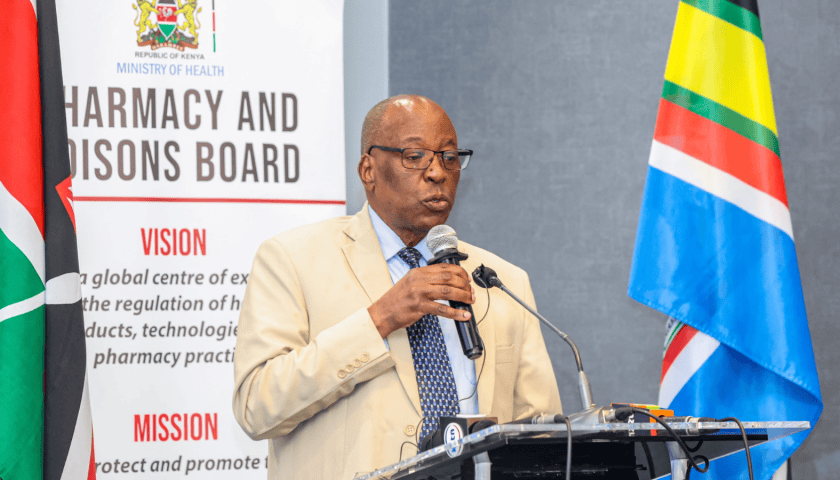
PPB Chairperson Dr. John Munyu said the Board has introduced several reforms over the past eight months to strengthen Kenya’s regulatory system.
These include mandatory re-registration of legacy medical products, enhanced surveillance at ports of entry, risk-based inspections across the pharmaceutical supply chain, and expanded post-market surveillance and pharmacovigilance systems to improve early detection of unsafe products.
However, Munyu noted that counterfeit medicines continue to exploit weaknesses in international trade, border control, digital commerce and criminal networks, making collaboration among government institutions essential.
He urged stakeholders to work together in developing a practical and nationally owned action plan that will strengthen medicine regulation and protect public health.
Digital tracking and international partnerships
The launch comes as the Ministry of Health steps up efforts to curb counterfeit medicines through new technology-driven initiatives.
In recent days, the government announced plans to introduce a nationwide digital “track and trace” system that will enable regulators to monitor medicines throughout the supply chain and quickly identify falsified products.
Health officials have also raised concerns over the circulation of counterfeit medicines, including fake HIV test kits and other medical products, highlighting the need for stronger surveillance and enforcement.
Duale reaffirmed the government’s commitment to working with the World Health Organization (WHO) and other partners to strengthen regulatory capacity, intelligence sharing, digital traceability and enforcement in line with international best practices.
The inauguration was attended by Council of Governors Vice Chairperson and Tharaka Nithi Governor Muthomi Njuki, Council of Governors Chief Executive Officer Mary Mwiti, PPB Chief Executive Officer Dr. Ahmed Mohamed, representatives from WHO, IGAD, senior government officials and development partners.
Sign up HEREto receive our email newsletters with the latest news and insights from Africa and around the world, and follow us on LinkedInfor updates.




Be the first to leave a comment