Africa CDC launches the SPARK-NCD program to strengthen chronic disease surveillance across Africa
The new Strengthening Public Health Surveillance and Resilient Knowledge for Non-Communicable Diseases in Africa (SPARK-NCD) programme aims to improve disease surveillance, workforce capacity, and integrated care across the continent.
Published
ETHIOPIA—The Africa CDC has launched a continent-wide programme to strengthen surveillance and improve care for non-communicable diseases (NCDs), as Africa faces a sharp rise in chronic illnesses alongside infectious diseases.
Cardiovascular diseases, diabetes, cancers, chronic respiratory illnesses, and mental health conditions are increasing across the continent.
These conditions are driving premature deaths, disability, household poverty, and mounting pressure on health systems and national economies.
“This growing burden is changing the demands placed on our health systems, economies, and societies,” said Dr Raji Tajudeen, Acting Deputy Director General of Africa CDC.
He noted that many countries still lack strong NCD surveillance systems.
As a result, millions of people live for years with undiagnosed hypertension or diabetes, while many who receive a diagnosis struggle to remain in long-term care.
Dr Abdulaziz Mohammed, Head of the Division of NCDs, Injuries and Mental Health at Africa CDC, said only 10% to 20% of Africans living with hypertension or diabetes receive regular care.
He added that NCD programmes remain highly centralised and require stronger integration into primary healthcare systems.
Building stronger surveillance systems
The new Strengthening Public Health Surveillance and Resilient Knowledge for Non-Communicable Diseases in Africa (SPARK-NCD) programme aims to improve disease surveillance, workforce capacity, and integrated care across the continent.
According to Betty Kabarega Ingabire, Senior Technical Officer for NCDs, Injuries and Mental Health at Africa CDC, the programme will equip frontline public health workers with practical skills in disease surveillance, data analysis, interpretation, and evidence-based decision-making.
It will also integrate NCD surveillance into existing public health systems by building on lessons learned from infectious disease monitoring.
Eleven countries and several technical partners are supporting implementation through curriculum development, mentorship, stakeholder engagement, and monitoring frameworks.
The programme also incorporates implementation research to help countries identify effective approaches for strengthening health systems.
Integrating HIV and NCD services
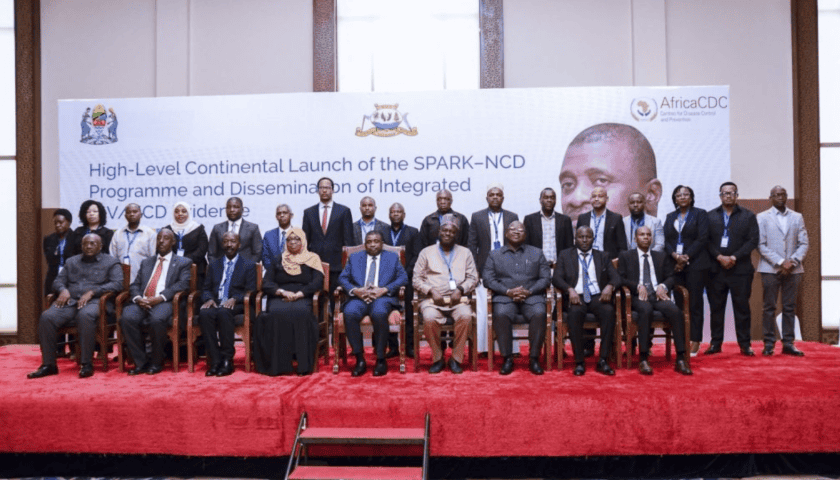
The launch took place in Zanzibar, Tanzania, where health leaders highlighted the growing need to integrate HIV and chronic disease services.
“We are treating HIV successfully, but many patients are now developing hypertension and diabetes. These are no longer separate challenges,” said Omar Mwalim of Zanzibar’s Ministry of Health.
Evidence from more than a decade of research in Tanzania and Uganda shows that integrating HIV and NCD services is safe, equitable, cost-effective, and improves access without affecting HIV treatment outcomes.
Community-based care models also reduce healthcare costs while easing congestion in health facilities.
Katie Dain, Chief Executive Officer of the NCD Alliance, said people living with HIV face a higher risk of cardiovascular disease, diabetes, depression, and several cancers as life expectancy increases.
She added that integrated care improves patient retention while reducing travel costs and duplication of services.
Regional rollout gains momentum
The SPARK-NCD programme, funded by the Novo Nordisk Foundation, will initially be implemented in 11 countries across Eastern and Southern Africa.
These include Kenya, Rwanda, Ethiopia, Tanzania, South Sudan, Somalia, Lesotho, Namibia, Eswatini, Botswana, and Zambia.
Implementation has already begun in Zambia, Rwanda, Tanzania, and Ethiopia.
In recent weeks, Africa CDC has continued expanding broader health system initiatives, including new partnerships on primary healthcare digital transformation and health financing reforms, reinforcing its drive to build stronger, locally led public health systems across the continent.
Sign up HEREto receive our email newsletters with the latest news and insights from Africa and around the world, and follow us on LinkedInfor updates.


Be the first to leave a comment