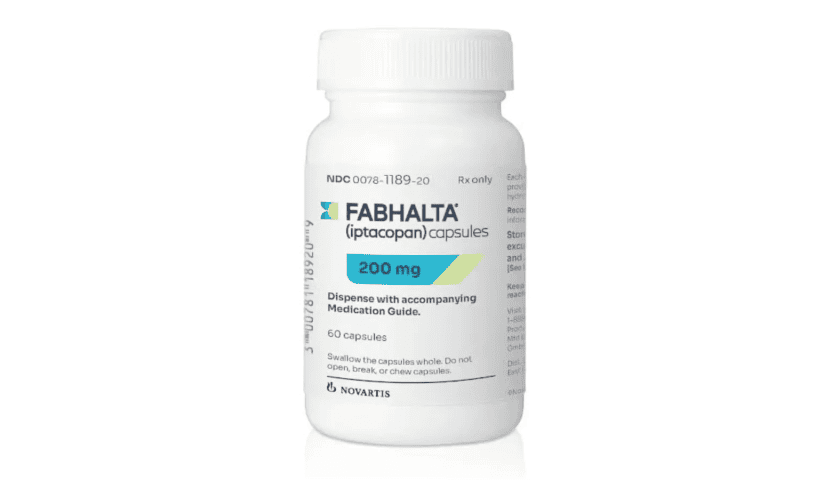
Novartis secures full FDA approval for Fabhalta in IgA Nephropathy
Fabhalta, a first-in-class complement factor B inhibitor, initially received accelerated FDA approval in 2024 to reduce proteinuria, or excess protein in the urine, a key indicator of kidney damage.
Published
USA—Novartis has strengthened its position in the treatment of primary immunoglobulin A nephropathy (IgAN) after the U.S. Food and Drug Administration (FDA) granted full approval to Fabhalta for adults at risk of disease progression.
The decision converts the medicine’s accelerated approval to traditional approval, allowing its use to slow the decline in kidney function in adult patients with the chronic autoimmune kidney disease.
Fabhalta, a first-in-class complement factor B inhibitor, initially received accelerated FDA approval in 2024 to reduce proteinuria, or excess protein in the urine, a key indicator of kidney damage.
The latest approval expands confidence in the therapy by confirming its long-term clinical benefit in preserving kidney function.
Phase 3 trial confirms long-term benefit
The FDA’s decision was supported by results from a phase 3 placebo-controlled clinical trial that demonstrated statistically significant and clinically meaningful improvements in estimated glomerular filtration rate (eGFR) over two years.
The eGFR test measures how well the kidneys filter waste from the blood and serves as an important indicator of kidney health and disease progression in people living with IgAN.
Earlier approval of Fabhalta relied on data from the same study showing a significant reduction in proteinuria after nine months of treatment compared with placebo.
At the time, Novartis noted that proteinuria has become an increasingly recognised surrogate marker for predicting progression to kidney failure.
“Today’s approval reinforces Fabhalta’s role in preserving kidney function by significantly slowing disease progression, an outcome that matters deeply to patients at risk of long-term kidney damage,” said Victor Bultó, President of Novartis US.
Dana Rizk, MD, from the Division of Nephrology at the University of Alabama at Birmingham, added that slowing the decline in kidney function remains a critical objective in treating IgAN.
She said the approval highlights the importance of targeting the underlying disease process, including complement activation, to help preserve long-term kidney health.
Expanding IgAN treatment portfolio
IgA nephropathy affects approximately 25 people per million worldwide.
According to Novartis, as many as half of patients with persistent proteinuria eventually develop kidney failure within 10 to 20 years of diagnosis, often requiring dialysis or kidney transplantation.
Beyond Fabhalta, Novartis continues to expand its kidney disease portfolio.
In 2025, the FDA granted accelerated approval to Vanrafia, an oral endothelin A (ETA) receptor antagonist, after the company’s US$3.2 billion acquisition of Chinook Therapeutics.
Although the medicine fell short of meeting its primary kidney function endpoint in a phase 3 trial, Novartis announced earlier this year that it intends to seek full FDA approval.
The company is also advancing zigakibart, an investigational anti-APRIL antibody currently undergoing phase 3 evaluation in IgAN.
Novartis recently amended the trial protocol to prioritise eGFR as the primary endpoint, with interim kidney function data expected during the first half of next year.
Competition in the IgAN market
Novartis operates in an increasingly competitive IgAN treatment landscape.
Travere Therapeutics’ Filspari received full FDA approval for the condition in 2024, while Calliditas Therapeutics’ Tarpeyo became the first medicine approved in the United States for IgAN in 2023.
In 2024, Japan’s Asahi Kasei acquired Sweden-based Calliditas Therapeutics for US$1.1bn.
Fabhalta has also become an important commercial asset for Novartis, generating US$505 m in sales last year, a 291% year-on-year increase.
During the first quarter of this year, Fabhalta recorded US$169m in revenue, while Vanrafia contributed an additional US$16m.
Fabhalta was first approved in 2023 for paroxysmal nocturnal haemoglobinuria (PNH), and the FDA later expanded its label to include treatment of C3 glomerulopathy.
Sign up HEREto receive our email newsletters with the latest news and insights from Africa and around the world, and follow us on LinkedInfor updates.



Be the first to leave a comment