
Liberia’s Ministry of Health trains Grand Bassa health workers on WHO PEN to strengthen NCD care
It forms part of the government’s efforts to strengthen the prevention, early detection, diagnosis, treatment, referral, and long term management of noncommunicable diseases (NCDs) at the primary healthcare level.
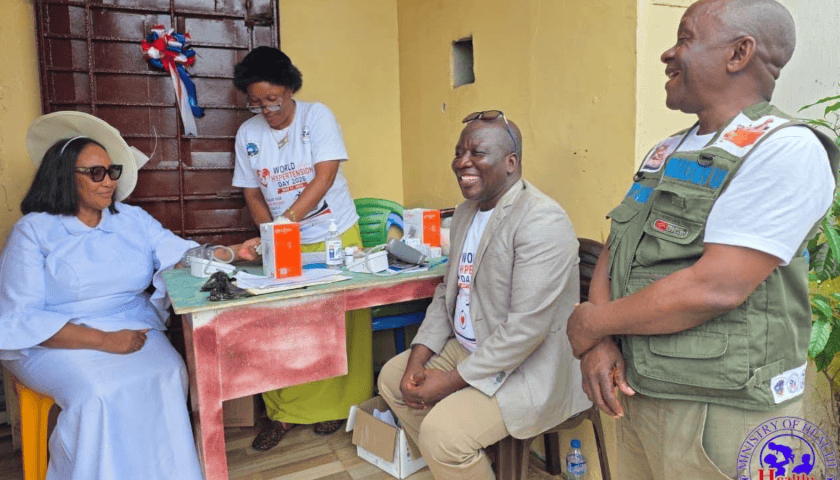
LIBERIA—The Ministry of Health (MOH), through its National Noncommunicable Diseases and Injuries (NCDI) Unit, has completed a four-day training on the World Health Organization Package of Essential Noncommunicable Disease Interventions (WHO PEN) for primary healthcare workers in Grand Bassa County.
Supported by the IECD TREND Project, the training brought together 27 healthcare workers from 14 primary healthcare facilities.
It forms part of the government’s efforts to strengthen the prevention, early detection, diagnosis, treatment, referral, and long-term management of noncommunicable diseases (NCDs) at the primary healthcare level.
The training focused on diabetes, hypertension, cardiovascular diseases, and other priority NCDs.
Participants developed practical skills in patient assessment, cardiovascular risk assessment and stratification, lifestyle counseling, diagnosis and treatment, referral, follow-up care, documentation, and reporting.
The facilitators used presentations, case studies, clinical demonstrations, role plays, group discussions, and practical exercises to help healthcare workers build confidence in delivering standardized, evidence based NCD services in resource limited settings.
Government reaffirms commitment to primary healthcare
Speaking on behalf of Mrs. Jamesetta Teewon Smith, Director of the National NCDI Program at the Ministry of Health, Mr. Gontopoe Omedo Nuahn, Diabetes and Hypertension lead, reaffirmed the government’s commitment to integrating quality NCD services into primary healthcare.
He said the approach supports Liberia’s pursuit of universal health coverage and the government’s ARREST Agenda for Inclusive Development.
He also urged participants to apply their skills to improve patient care and strengthen community-based prevention, early detection, and management of NCDs.
Representing the IECD TREND Project, Project Manager Dr. Anthony M. Tucker reaffirmed the project’s support for the Ministry of Health’s efforts to strengthen the health system through workforce development, improved service delivery, and wider access to quality NCD care.
Grand Bassa County Health Officer Dr. Whesseh Jude thanked the Ministry of Health and NCDI Unit for selecting the county as a WHO PEN implementation site.
He encouraged participants to use the training to improve the quality of services provided to patients.
Dr. Jude also called for accountability in the management of government and donor supported resources and urged continued cooperation between the Ministry of Health, the County Health Team, and the IECD TREND Project.
Facilities receive NCD equipment
At the end of the training, the IECD TREND Project donated NCD screening and diagnostic equipment and supplies to the Grand Bassa County Health Team for distribution to the 14 participating facilities.
The County Chief Pharmacist, who received the items on behalf of the County Health Team, pledged that the equipment would be properly accounted for and used for its intended purpose.
He also stressed that donated supplies should not be sold and should remain separate from commodities purchased through the Community Revolving Drugs Fund system.
The latest training brings to 56 the number of healthcare workers trained from the 14 selected facilities under the two phases of WHO PEN training in Grand Bassa County.
The initiative is part of Liberia’s wider effort to expand access to essential NCD prevention, screening, diagnosis, treatment, referral, and long term care through primary healthcare facilities.

Be the first to leave a comment