

Siemens Healthineers launches Accela radiotherapy platform in Germany
The development of Accela and NeoArc involved collaboration with an advisory group comprising several cancer research and treatment institutions.
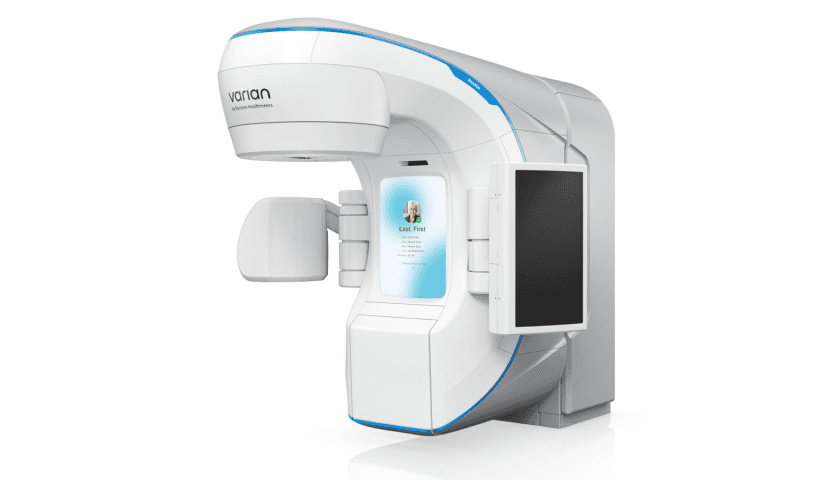
GERMANY—Siemens Healthineers has launched Accela, a radiotherapy solution built on its NeoArc technology, to enable faster treatment delivery and more scalable workflows for complex cancer cases.
The company said Accela can deliver multi-site stereotactic body radiation therapy (SBRT) treatments in as little as 60 seconds and can support single-breath-hold stereotactic treatments.
These capabilities are intended to reduce the time patients spend on the treatment table while helping clinical teams manage increasingly complex radiotherapy procedures.
Faster treatment and AI-supported planning
According to Siemens Healthineers, Accela combines treatment planning software with artificial intelligence (AI) and advanced algorithms designed to help clinicians balance treatment plan quality with delivery speed.
The approach supports workflows where treatment precision and efficient use of radiotherapy equipment are both important.
The company also said the system incorporates several hardware and imaging features, including a large HyperSight cone-beam computed tomography panel, a newly designed multi-leaf collimator, and a gantry capable of rotating at up to 2.5 revolutions per minute.
Accela can deliver dose rates of up to 40 Gy per minute and includes an eight-megavolt flattening filter-free energy setting.
Siemens Healthineers said the combination of imaging, treatment delivery, and planning technologies is designed to support a wider range of radiotherapy applications.
However, the clinical benefits of individual features will depend on treatment protocols, patient characteristics and how healthcare providers integrate the system into their existing workflows.
Addressing capacity and workforce pressures
The launch comes as radiotherapy providers face pressure to expand access to cancer treatment while managing growing clinical complexity and workforce constraints.
Faster treatment delivery could allow facilities to use treatment capacity more efficiently, although the effect on patient throughput will also depend on staffing, scheduling, treatment planning, and other operational factors.
Dee Khuntia, chief medical officer at Varian, the Siemens Healthineers cancer care business, said the platform represents a major development in the company’s approach to radiotherapy.
He also suggested that the technology could support further research into how changes in radiation delivery may affect biological responses to treatment.
Arthur Kaindl, head of Varian, said the development builds on Siemens Healthineers’ imaging capabilities, radiation oncology installed base, AI and software technologies, as well as its relationships with healthcare providers and researchers.
Research collaboration
The development of Accela and NeoArc involved collaboration with an advisory group comprising several cancer research and treatment institutions.
These included Mayo Clinic, Washington University School of Medicine Siteman Cancer Center, University Hospital Zurich, Seidman Cancer Center at University Hospitals Cleveland Medical Center, Maastro Maastricht Radiation Oncology Institute, Mass General Brigham Cancer Center and Memorial Sloan Kettering Cancer Center.
Siemens Healthineers said the institutions contributed clinical input, research collaboration and product evaluation during development.
The company has not indicated that these institutions’ involvement constitutes an endorsement of Accela or guarantees specific clinical outcomes.
The launch expands Siemens Healthineers’ radiotherapy portfolio as providers seek technologies that combine imaging, treatment planning, and radiation delivery while accommodating increasingly complex treatment approaches.
Be the first to leave a comment