

BioNTech to close three German sites after failed sale efforts
The Mainz-based biopharmaceutical company said the closures will affect about 1,800 employees at sites in Tübingen, Marburg and Idar-Oberstein.
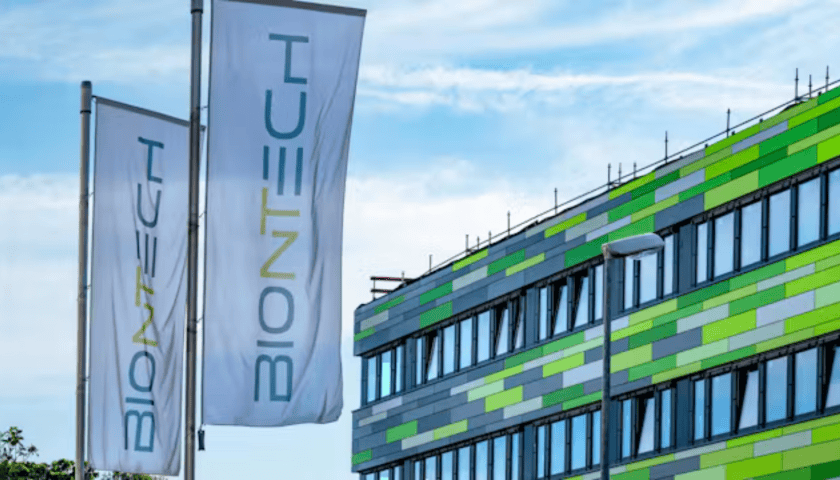
GERMANY — BioNTech will close three German manufacturing sites from 2027 after failing to find buyers, as the company reduces capacity amid lower COVID-19 vaccine demand and shifts investment toward its oncology pipeline.
The Mainz-based biopharmaceutical company said the closures will affect about 1,800 employees at sites in Tübingen, Marburg, and Idar-Oberstein.
BioNTech had announced in May that it would seek buyers for the facilities as part of a broader consolidation of its global manufacturing network.
However, the sales process did not result in a transaction.
“Despite the intensive efforts of all parties involved and a broad-based sales process, it was unfortunately not possible to realize a sale,” a BioNTech spokesperson said.
Sites to close through 2028
The Tübingen site, which BioNTech acquired through its 2025 purchase of CureVac, is scheduled to close at the end of 2027.
Operations at Marburg are expected to end in early 2028, followed by Idar-Oberstein at the end of 2028.
BioNTech had used the Marburg facility to produce mRNA-based COVID-19 vaccines and plasmid DNA, an important starting material for mRNA vaccines and some cell therapies.
The company has also been reviewing options for its manufacturing operation in Singapore as part of the wider footprint consolidation.
The broader restructuring could affect up to 1,860 jobs when operations outside Germany are included.
BioNTech has agreed additional redundancy terms with its works council for affected employees.
Cost savings and restructuring
BioNTech expects the consolidation of its German operations to generate about €500 million (US$584.5 million) in annual savings.
The company plans to redirect those savings toward its drug development pipeline, particularly oncology programmes.
The restructuring is already reflected in BioNTech’s financial statements.
During the first six months of 2026, the company recorded €96.1 million (US$112.3 million) in impairment losses on property, plant and equipment.
Of this amount, €68.9 million (US$80.6 million) related to equipment, installations, and leasehold improvements at the Marburg and Idar-Oberstein sites.
BioNTech also recorded €97.6 million ($114.1 million) in employee-related restructuring costs during the period.
The company separately reached an agreement in August to sell JPT Peptide Technologies to a fund advised by DUBAG Group.
BioNTech said the transaction formed part of its manufacturing footprint consolidation and capital allocation strategy.
Broader vaccine manufacturing shift
BioNTech’s restructuring comes amid wider changes in vaccine manufacturing as demand for pandemic-era COVID-19 products declines.
The company is transferring COVID-19 vaccine production to partner Pfizer while reducing its own manufacturing capacity.
Moderna has also reduced manufacturing capacity and launched cost-saving measures following lower COVID-19 vaccine sales.
Meanwhile, GSK plans to close its vaccine manufacturing facility in Dresden, Germany, by summer 2027.
The site produces traditional egg-based influenza vaccines, and GSK said declining demand has left it with more capacity than required.
The company plans to consolidate influenza manufacturing at its Canadian facility, putting 641 jobs at risk.
The shift is occurring as vaccine manufacturers develop newer production platforms.
Moderna’s mFLUSIVA became the first FDA-approved mRNA influenza vaccine in August 2026 for adults aged 50 years and older.
GSK is also advancing its own mRNA influenza vaccine candidate into late-stage testing after reporting positive mid-stage results.


Be the first to leave a comment