DOH Abu Dhabi collaborates with MSD to build regional logistics hub in HELM cluster
Through the HELM Cluster, the emirate has brought together research institutions, advanced healthcare infrastructure, genomics programs, manufacturing capabilities, and distribution networks within a single ecosystem.
Published
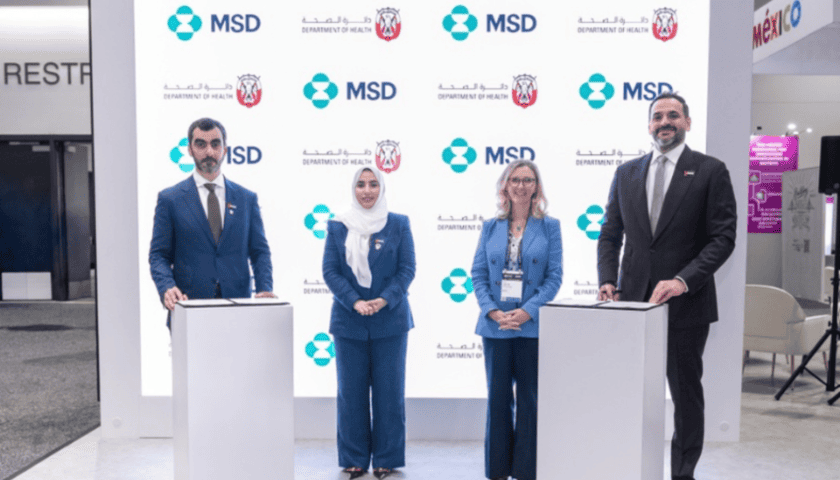
UAE — The Department of Health – Abu Dhabi (DoH) has partnered with global pharmaceutical company MSD to explore the establishment of a regional logistics hub within Abu Dhabi’s Health, Endurance, Longevity, and Medicine (HELM) Cluster.
This move aimed to strengthen pharmaceutical supply chains and improve access to innovative medicines across the Middle East and surrounding markets.
If approved and implemented, the planned MSD hub will support the distribution of a wide range of medicines and healthcare products to several regional markets.
The facility is expected to enhance supply chain resilience while helping healthcare providers and patients gain faster access to advanced therapies.
It will also provide the infrastructure needed to support the commercialization and expansion of next-generation health technologies throughout the region.
Strengthening Abu Dhabi’s life sciences ecosystem
The announcement comes as Abu Dhabi continues to position itself as a global center for life sciences, biotechnology, and healthcare innovation.
Through the HELM Cluster, the emirate has brought together research institutions, advanced healthcare infrastructure, genomics programs, manufacturing capabilities, and distribution networks within a single ecosystem.
H.E. Dr. Noura Khamis Al Ghaithi, Undersecretary of DoH, said that while scientific breakthroughs are emerging at an unprecedented pace, their true impact depends on how efficiently they reach patients.
She noted that Abu Dhabi has developed an integrated life sciences environment that combines advanced research, population genomics, resilient infrastructure, and world-class distribution capabilities.
According to Al Ghaithi, MSD’s intention to establish a regional hub in Abu Dhabi highlights the strength of the emirate’s healthcare ecosystem and its growing reputation as a trusted partner for global pharmaceutical companies.
She added that the initiative could help bring life-saving therapies closer to patients while reinforcing Abu Dhabi’s ability to scale healthcare innovation globally.
Expanding regional healthcare access
For MSD, the proposed hub would provide direct access to a highly connected distribution network and a supportive regulatory environment.
The collaboration is expected to reduce supply chain vulnerabilities and improve the availability of medicines across multiple countries in the region.
Ashraf Mallak, Managing Director of MSD Gulf Countries, Libya and Egypt, said the planned collaboration reflects a shared commitment to strengthening healthcare systems.
He noted that combining MSD’s global expertise with Abu Dhabi’s advanced healthcare ecosystem could improve operational resilience and accelerate the delivery of innovative treatments to patients.
Series of strategic partnerships announced
The MSD agreement is one of several major healthcare partnerships unveiled by Abu Dhabi during the BIO International Convention 2026 in San Diego.
In recent days, DoH also announced a collaboration with Sanofi to explore establishing a Vaccine Innovation Centre focused on AI-enabled vaccine discovery, mRNA research, clinical development, and advanced manufacturing.
The emirate additionally signed a partnership with Biocom California to establish a formal gateway connecting Abu Dhabi’s life sciences sector with one of the world’s largest biotechnology ecosystems.
These initiatives build on Abu Dhabi’s broader strategy to expand its role in genomics, gene editing, advanced therapeutics, rare disease research, and AI-powered healthcare.
Recent investments have also strengthened the emirate’s logistics capabilities, including regional pharmaceutical and vaccine distribution hubs designed to support health security and ensure uninterrupted access to critical medicines across multiple markets.
Sign up HEREto receive our email newsletters with the latest news and insights from Africa and around the world, and follow us on LinkedInfor updates.

Be the first to leave a comment