Ethiopia vaccinates over 1M children in synchronized polio campaign along South Sudan border
The initiative focused on border communities, refugee camps, and other vulnerable areas where frequent cross-border movement increases the risk of disease transmission.
Published
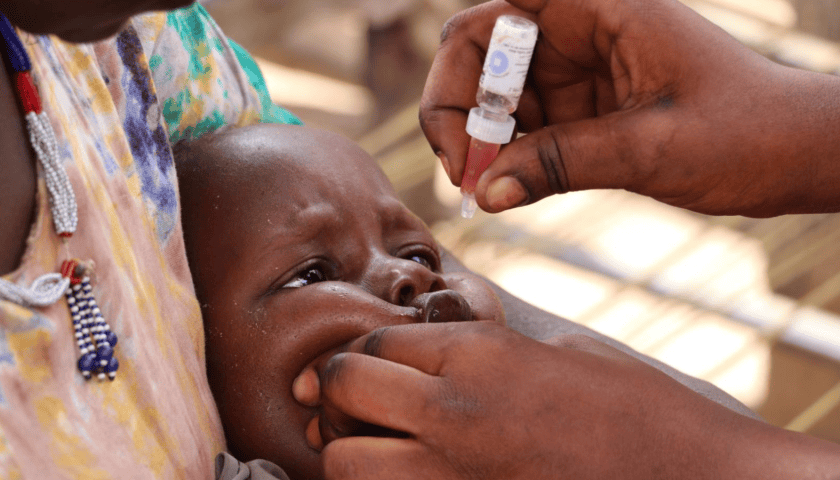
ETHIOPIA—Ethiopia has vaccinated more than one million children under the age of five during a synchronized cross-border polio immunization campaign with South Sudan, as health authorities intensified efforts to prevent the spread of variant poliovirus into high-risk communities.
The campaign, conducted from 7 to 10 May 2026, used the bivalent Oral Polio Vaccine (bOPV) and targeted children living in the Gambella and Benishangul-Gumuz regions, as well as the West Wollega and Kelem Wollega zones in the Oromia Region.
The initiative focused on border communities, refugee camps, and other vulnerable areas where frequent cross-border movement increases the risk of disease transmission.
Response to Rising Cross-Border Risk
The vaccination drive followed the detection of circulating vaccine-derived poliovirus type 1 (cVDPV1) in South Sudan during March and April 2026, including cases reported near the Ethiopian border.
The findings heightened concerns over virus importation because of the regular movement of traders, pastoralists, refugees, and other mobile populations between the two countries.
Ethiopian health authorities also reported five cVDPV1 cases in Gambella among children living in refugee camps hosting people who had fled South Sudan.
These developments prompted an urgent, coordinated public health response to strengthen immunity in vulnerable communities before the virus could spread further.
Coordinated Cross-Border Vaccination Effort
Speaking at the campaign launch in Gambella, WHO Ethiopia Representative Professor Francis Kasolo, in remarks delivered by Dr. Fadinding Manneh, WHO Global Polio Eradication Initiative (GPEI) Coordinator, described the campaign as a proactive measure to protect children from the virus.
He noted that Gambella’s highly mobile population and close ties with neighboring South Sudan require continuous vigilance and close regional cooperation.
Gambella Regional Health Bureau Head Dr. Abel Assefa emphasized the importance of the synchronized exercise, saying the campaign was essential for protecting children living in border communities and refugee settlements.
He added that collaboration with development partners and neighboring countries would help prevent the importation and spread of variant poliovirus.
To maximize impact, Ethiopia and South Sudan synchronized vaccination activities on both sides of the border.
Health teams developed detailed microplans, mapped migration routes and border crossings, and aligned operational strategies with support from WHO, UNICEF, national public health institutions, and other partners.
They also deployed specialized teams to reach mobile populations, riverine communities, and densely populated refugee settlements.
Strong Partner Support and Integrated Services
The Ethiopian Public Health Institute, working with WHO, UNICEF, and GPEI partners, mobilized funding from the Gates Foundation, secured vaccine supplies, and strengthened logistics systems to support vaccine delivery.
Preliminary data show that 1,026,885 children received the bOPV during the campaign, representing 101% of the target population.
WHO provided financial support for operational activities, along with technical assistance for planning, training, supervision, and real-time monitoring.
The organization also supported cold-chain assessments to maintain vaccine quality and strengthened surveillance for acute flaccid paralysis, the primary indicator used to detect poliovirus transmission.
In addition to polio vaccination, health workers identified zero-dose and under-vaccinated children for routine immunization, screened and referred patients with tuberculosis, and facilitated referrals for obstetric fistula and clubfoot treatment.
These integrated services expanded access to essential healthcare while supporting Ethiopia’s broader disease prevention efforts in high-risk border communities.
Sign up HEREto receive our email newsletters with the latest news and insights from Africa and around the world, and follow us on LinkedInfor updates.



Be the first to leave a comment