

Liberia Ministry of Health unveils five-year strategy for adolescent health in Monrovia
The National Adolescent Sexual and Reproductive Health and Rights (SRHR) and Nutrition Strategy 2026 to 2031 was unveiled at the Ministry of Health in Monrovia.
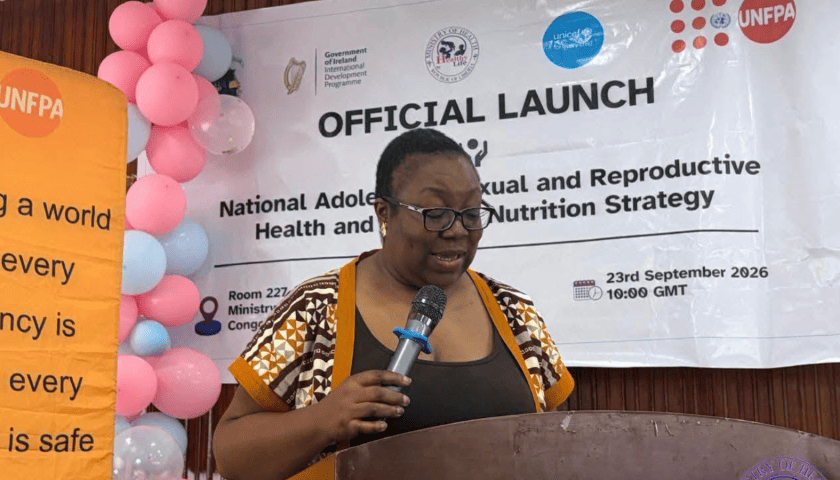
LIBERIA—The Ministry of Health has launched a five-year national strategy to address sexual and reproductive health, nutrition, and protection challenges affecting adolescents across Liberia.
The National Adolescent Sexual and Reproductive Health and Rights (SRHR) and Nutrition Strategy 2026 to 2031 was unveiled at the Ministry of Health in Monrovia.
It brings together government ministries, United Nations agencies, civil society organizations, development partners and young people to coordinate efforts to improve adolescent health and nutrition.
Addressing adolescent health needs
Speaking at the launch, Deputy Minister for Health Services and Chief Medical Officer Dr. Catherine T. Cooper said the strategy provides guidelines for addressing the health challenges facing adolescents.
“Today, on behalf of the Ministry of Health, we are proud to officially launch the Five-Year Adolescent Health Strategy,” Cooper said while unveiling the document.
Dr. Nuntia K. Gbanlon Nuahn, Acting Director of the Family Health Division, presented the strategy and outlined its rationale, development process, guiding principles, vision, mission, goal and strategic objectives.
Nuahn said the strategy aims to expand adolescents’ access to quality sexual and reproductive health and nutrition services while addressing social and behavioral barriers.
It also seeks to strengthen the policy, legal and institutional systems supporting adolescent health.
“From teenage pregnancy and nutrition deficiencies to HIV prevention, school retention and access to information, these issues cannot be resolved by the Ministry of Health alone,” she said.
Focus on implementation
UNICEF Country Representative Shairose Mawji, speaking on behalf of the United Nations Resident Coordinator, said the strategy requires sustained action and resources to achieve its objectives.
Mawji called for the government and its partners to finance and implement the strategy while ensuring that services reach adolescents who face greater barriers to care, including young people with disabilities and those who are out of school.
She also emphasized the need to monitor implementation through reliable data and measurable results.
“When adolescents are healthy, well nourished, protected, and able to remain in school, the benefit extends to their families, their communities, and Liberia’s investment and development,” Mawji said.
She added that investing in adolescent health could strengthen Liberia’s human capital and support its long-term development.
Partners pledge continued support
Megan Beare, Development Lead at the Embassy of Ireland in Liberia, reaffirmed Ireland’s support for the strategy and the collaborative process behind its development.
Beare said Ireland had supported the initiative from its early stages through its official launch.
However, she urged stakeholders to continue working beyond the adoption of the strategy and translate its priorities into practical action.
Representatives from civil society organizations, United Nations agencies, the Embassy of Ireland, the Scaling Up Nutrition Movement, the Ministry of Education and other partners attended the launch.
The strategy will serve as a framework for coordinating adolescent sexual and reproductive health, nutrition and related interventions across Liberia through 2031.


Be the first to leave a comment