Neuland Laboratories to launch USD30M peptide manufacturing facility in India
The facility will house sophisticated equipment, including liquid-phase peptide synthesis reactors ranging from 250 to 3,000 liters and solid-phase peptide synthesis reactors up to 500 liters.
Published
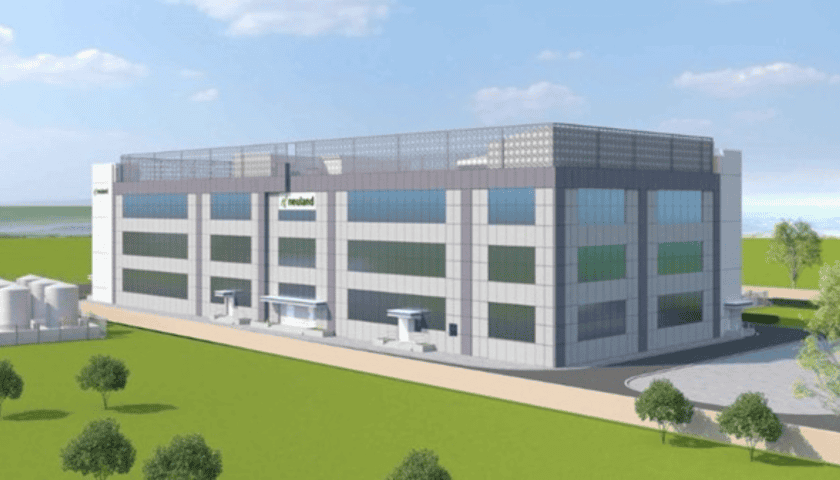
INDIA—Neuland Laboratories Ltd. is preparing to open a commercial-scale peptide manufacturing facility at its 17-acre Bonthapally campus in Hyderabad, India
The new facility addresses rising global demand for complex peptides, including the increasingly popular GLP-1 drugs used for diabetes and weight management.
The company has designed the expansion with four planned manufacturing modules, with the first unit scheduled to begin operations in June 2026.
Neuland has already secured approximately USD30 million in customer commitments for this initial module, demonstrating strong market interest in the new production capabilities.
Advanced production capabilities
The first module will add 6,370 liters of combined solid-phase and liquid-phase peptide synthesis capacity to Neuland’s operations.
The facility will house sophisticated equipment, including liquid-phase peptide synthesis reactors ranging from 250 to 3,000 liters and solid-phase peptide synthesis reactors up to 500 liters.
Construction of the facility began last year, with the site engineered to support production volumes from early development stages through multi-ton commercial manufacturing.
The design incorporates flexibility to accommodate long-chain and other complex peptide programs that require specialized manufacturing approaches.
Strategic growth plans
Neuland has structured the facility for incremental expansion, allowing the company to scale operations in response to market demand.
Future modules will include space for an additional 2,000-litre solid-phase peptide synthesis unit and multiple 5,000-litre liquid-phase peptide synthesis reactors.
The company aims to attract both established innovator companies and emerging biotechnology firms facing limited access to peptide manufacturing capacity.
This strategic positioning becomes particularly relevant as GLP-1 therapies consume an increasing share of global peptide production resources.
Neuland expects double-digit growth in research and development staffing this year and plans to more than double its manufacturing workforce to support the buildout of the peptide facility.
The company currently operates three FDA-approved active pharmaceutical ingredient plants with combined capacity of 1.17 million liters, supported by a dedicated research and development center in the vicinity.
Technology and infrastructure
The new peptide facility will feature digital operations and distributed-control-system-based automation, with electronic batch record systems.
These technologies enable precise process control and comprehensive documentation throughout the manufacturing cycle.
The site will also incorporate scaled-up purification and drying capabilities designed to improve batch consistency and reduce cycle times.
Infrastructure investments include multi-column preparative high-performance liquid chromatography systems, large lyophilizers, expanded solvent-handling infrastructure, and upgraded waste-management systems.
Leadership perspective
Saharsh Davuluri, Vice Chairman and Managing Director at Neuland Labs, emphasized that the facility represents a strategic entry into commercial-scale peptide manufacturing.
He noted that the company has built a strong reputation among innovator and biotech customers for complex active pharmaceutical ingredient capabilities.
Davuluri outlined a strategy focused on supporting innovator and emerging biotech companies across all areas of novel peptide development.
The company will simultaneously address ongoing demand for GLP-1 manufacturing, which continues to grow as these therapies gain wider acceptance for metabolic conditions.
He identified commercial peptide production as a key growth driver for Neuland’s business over the coming years.
The company is scaling operations rapidly and expects to activate all modules of the new peptide facility in alignment with customer demand patterns.
Sign up HEREto receive our email newsletters with the latest news and insights from Africa and around the world, and follow us on LinkedInfor updates.




Be the first to leave a comment