African Union validates Continental Strategy to strengthen response to sickle cell disease
The continental framework outlines actions to expand newborn screening, early diagnosis, treatment, surveillance, financing, advocacy, local production of commodities, research, and integrated care systems.
Published
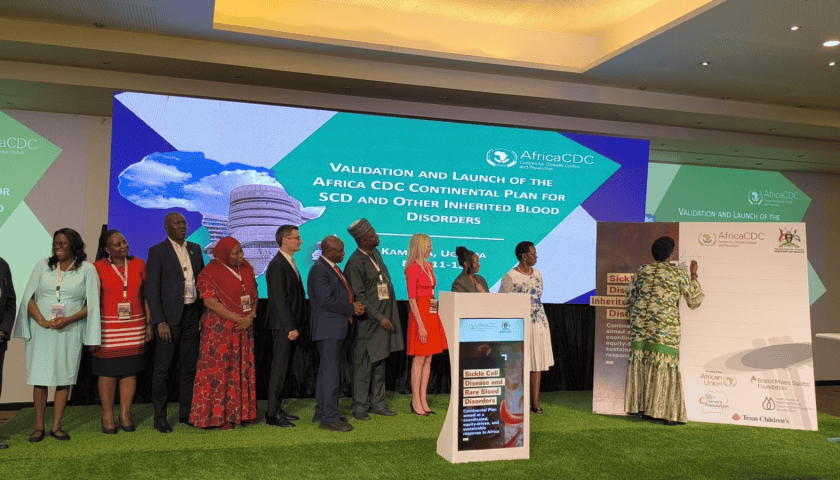
UGANDA—African Union Member States have validated a continental plan to strengthen the response to sickle cell disease and other inherited blood disorders, marking a coordinated step toward improved prevention, diagnosis, treatment, and care across Africa.
Convened by Africa CDC in collaboration with the Uganda Ministry of Health, the three-day Technical Review and Validation Meeting brought together representatives from 50 AU Member States, regional bodies, civil society, patient groups, experts, and development partners.
Africa carries the highest global burden of sickle cell disease; however, access to early diagnosis, treatment, and essential medicines remains limited in many settings.
The validated plan aims to address these gaps through a unified and sustainable approach.
Inherited blood disorders, including sickle cell disease, thalassaemia, and haemophilia, are genetic conditions that affect blood function and often lead to chronic illness and reduced quality of life.
Strengthening health systems and access
The continental framework outlines actions to expand newborn screening, early diagnosis, treatment, surveillance, financing, advocacy, local production of commodities, research, and integrated care systems.
It also supports integration into primary healthcare and alignment with universal health coverage goals and Africa’s health security agenda.
Uganda’s Minister of Health, Dr Jane Ruth Aceng Ocero, emphasized the need to translate commitments into practical interventions that improve access to services for affected individuals and families.
She called for stronger solidarity and sustained investment across Member States.
Participants reviewed governance structures, implementation pathways, and monitoring systems, building consensus on priority interventions at national, regional, and continental levels.
They also highlighted the importance of community engagement and lived experience in shaping effective responses.
Leadership and partnerships
Dr Mohammed Abdulaziz of Africa CDC reaffirmed the agency’s commitment to supporting Member States in operationalising the plan and strengthening integrated health systems.
He noted that coordinated action would improve equity and sustainability in addressing inherited blood disorders.
The meeting included contributions from the World Health Organization, West African Health Organization, Texas Children’s Global HOPE, the Bristol Myers Squibb Foundation, and the Novo Nordisk Haemophilia and Haemoglobinopathies Foundation.
Africa CDC acknowledged continued partner support in developing the plan and facilitating technical alignment across regions.
Recent communications from Africa CDC and partners further underline the urgency of scaling up diagnostics, workforce capacity, and supply chains for essential medicines across the continent.
Next steps
Going forward, the Africa CDC will work with Member States, regional institutions, and partners to accelerate implementation of the continental framework.
Efforts will focus on strengthening health systems, improving equitable access to care, and advancing research and innovation in inherited blood disorders.
Additionally, implementation partners indicated ongoing technical support to strengthen data systems, expand laboratory capacity, and improve cross-border coordination for the management of rare blood disorders across African Union Member States.
These efforts align with broader continental health priorities to reduce preventable morbidity and mortality associated with genetic blood conditions through coordinated policy action and sustainable financing mechanisms across Africa’s national health systems.
Sign up HEREto receive our email newsletters with the latest news and insights from Africa and around the world, and follow us on LinkedInfor updates.


Be the first to leave a comment