WHO renews five-year partnership with Gilead Sciences to eliminate deadly Kala-Azar disease
Since the partnership began, Gilead has supplied more than 1.1 million vials of AmBisome and contributed over US$18 million in funding.
Published
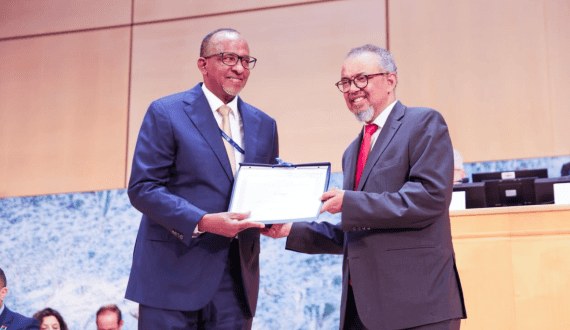
SWITZERLAND—The World Health Organization and Gilead Sciences have renewed their partnership with a new five-year agreement (2026-2030) to accelerate the fight against visceral leishmaniasis (VL), a deadly neglected tropical disease.
Under the renewed deal, Gilead Sciences will donate 402,941 vials of AmBisome, a liposomal amphotericin B treatment used to treat visceral leishmaniasis and related complications, to countries with the highest burden of the disease.
The company has supported WHO’s VL elimination efforts since 2012, and the collaboration has now been extended for the fourth time.
Alongside the medicine donation, Gilead will provide financial support to strengthen diagnosis, improve access to treatment, and expand WHO-recommended interventions in vulnerable communities.
Since the partnership began, Gilead has supplied more than 1.1 million vials of AmBisome and contributed over US$18 million in funding.
With the renewed commitment, total support will rise to nearly 1.5 million vials and more than US$27 million in financial assistance.
Expanding access in high-burden countries
The donated medicines will support patients in Bangladesh, Chad, Djibouti, Ethiopia, Eritrea, India, Kenya, Nepal, Somalia, South Sudan, Sudan, Uganda, and Yemen, where the disease continues to affect some of the most underserved populations.
Dr Jeremy Farrar, Assistant Director-General for Health Promotion, Disease Prevention and Care at WHO, said the agreement demonstrates how public-private partnerships can accelerate progress against neglected tropical diseases.
He noted that the collaboration would help countries expand access to life-saving tools, strengthen health systems, and improve disease control efforts in regions where the burden remains highest.
Daniel O’Day, Chairman and Chief Executive Officer of Gilead Sciences, said sustained investment and collaboration have already helped reduce the disease burden in endemic regions.
He added that the renewed partnership, particularly its stronger focus on East Africa, aims to further improve access to diagnosis and treatment.
Disease still threatens vulnerable communities
Visceral leishmaniasis is caused by parasites transmitted through infected sandflies and remains endemic in more than 80 countries. Without treatment, the disease is almost always fatal.
Symptoms include prolonged fever, severe weight loss, enlargement of the liver and spleen, and anaemia.
The disease disproportionately affects poorer communities and is closely linked to malnutrition, displacement, weak immune systems, poor housing, and limited healthcare access.
WHO estimates that between 50,000 and 90,000 new cases occur globally each year, with more than 90% reported in Brazil, Chad, Ethiopia, Eritrea, India, Kenya, Nepal, Somalia, South Sudan, Sudan, Uganda, and Yemen.
Progress in South-East Asia
WHO said the long-running collaboration has already delivered major gains in South-East Asia, where new VL cases have dropped by more than 95% since elimination programmes began in 2005.
In 2023, Bangladesh achieved WHO validation for eliminating visceral leishmaniasis as a public health problem.
The renewed agreement comes only weeks after Gilead reported strong first-quarter 2026 financial results and highlighted continued investment in infectious disease research and global health programmes.
Sign up HEREto receive our email newsletters with the latest news and insights from Africa and around the world, and follow us on LinkedInfor updates.


Be the first to leave a comment