Germany backs EAC disease surveillance with US$8M injection for mobile diagnostics
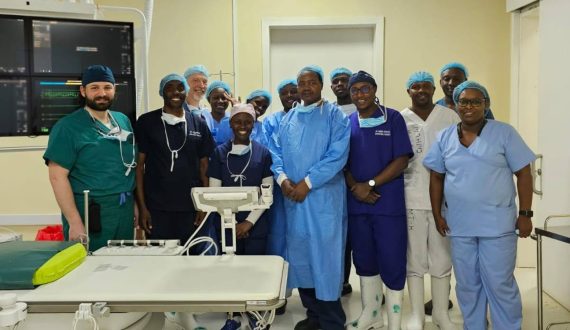
The deal was signed at the EAC Headquarters in Arusha, Tanzania, by EAC Secretary General Amb. Stephen P. Mbundi and KfW Development Bank Country Director for Tanzania and the EAC, Ms. Vanessa Eidt.
Published
TANZANIA—The East African Community (EAC) has intensified regional efforts to strengthen preparedness and response to Ebola and other communicable diseases as outbreaks continue to affect parts of the region.
This follows the EAC and the KfW Development Bank signing a €5 million (US$5.45 million) partnership on Friday, 12 June 2026, to strengthen regional health systems, with a focus on the Mpox response and broader epidemic preparedness.
The agreement will also support the expansion of laboratory capacity throughout Partner States.
The deal was signed at the EAC Headquarters in Arusha, Tanzania, by EAC Secretary General Amb. Stephen P. Mbundi and KfW Development Bank country director for Tanzania and the EAC, Ms. Vanessa Eidt.
Additional €3 M boost for Ebola response
In a related commitment, Germany announced an additional €3 million (US$3.25 million) through KfW Development Bank to strengthen Ebola response efforts across the region.
During the signing ceremony, Amb. Mbundi said the support would enhance regional coordination and strengthen surveillance systems, laboratory diagnostics, and technical capacity across Partner States.
He noted that Germany remains one of the EAC’s most consistent development partners, contributing significantly to regional integration and health system resilience.
“This support will strengthen regional coordination in responding to current public health threats, including surveillance systems, laboratory capacity, and technical expertise across Partner States,” he said.
The German delegation, led by Chargé d’Affaires at the German Embassy in Dar es Salaam, Mr. Manuel Müller, highlighted the importance of sustained investment in preparedness systems.
He noted that long-term cooperation has helped establish early warning systems, train health professionals, and equip laboratories across the region.
“German development cooperation has worked with the EAC for years in pandemic preparedness, and those systems are now actively supporting outbreak response,” he said.
Mobile laboratories strengthen regional diagnostics.
As part of the cooperation, the EAC flagged off an additional mobile laboratory supported by Germany.
To date, ten mobile laboratories have been deployed across Burundi, the Democratic Republic of the Congo (DRC), Kenya, Rwanda, South Sudan, Tanzania, and Uganda.
These units enable rapid testing, early detection, and faster outbreak containment.
The initiative is implemented under the East African Community Regional Network of Reference Laboratories for Combating Communicable Diseases, with technical support from the Bernhard Nocht Institute for Tropical Medicine and funding from the German Government through KfW Development Bank.
The mobile labs have previously supported responses to COVID-19, the 2022 Ebola outbreak in Uganda, the 2023 Marburg outbreak in Tanzania, and regional Mpox outbreaks reported in 2024.
Strengthening frontline response capacity
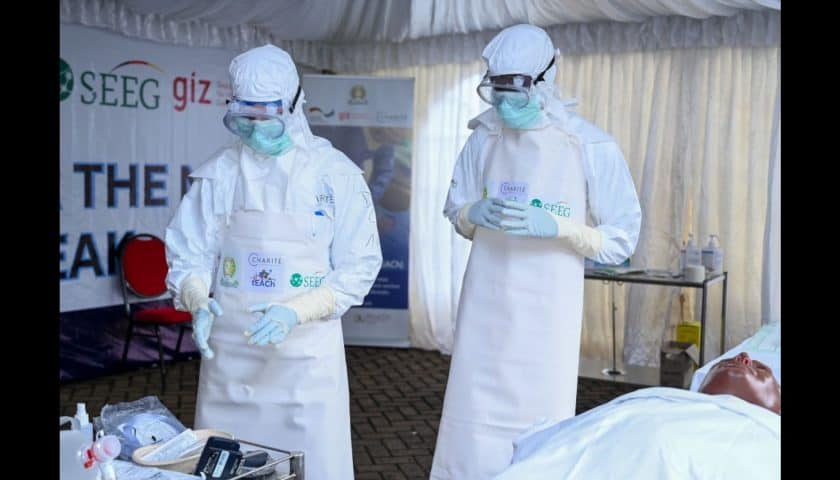
In addition to laboratory systems, Germany also delivered 500 sets of personal protective equipment (PPE) to support frontline health workers across Partner States.
The EAC further highlighted the role of its Rapidly Deployable Pool of Experts (RDE), a network of more than 180 specialists working under a One Health approach. The team supports rapid deployment during outbreaks and public health emergencies.
Training and regional preparedness expansion
To further strengthen readiness, health workers and members of the RDE will undergo training in infection prevention and control, outbreak management, risk assessment, and community engagement.
These activities are being implemented through the Support to Pandemic Preparedness in the EAC Region (PanPrep) programme, led by Deutsche Gesellschaft für Internationale Zusammenarbeit (GIZ) in collaboration with Charité – Universitätsmedizin Berlin, the German Epidemic Preparedness Team (SEEG), and the African Volunteers Health Corps under the Africa CDC.
Ongoing Ebola cases highlight regional risk
As of June 2026, both the Democratic Republic of the Congo and Uganda continue to report Ebola cases, reinforcing the need for sustained regional coordination and rapid response systems.
The EAC noted that Partner States continue to face recurring outbreaks of Ebola, Marburg, measles, avian influenza, and COVID-19, all of which place pressure on health systems, livelihoods, and regional stability.
Regional and international participation
The signing ceremony was attended by EAC Deputy Secretary General for Infrastructure, Productive, Social and Political Sectors, Hon. Aguer Ariik Malueth.
From the German delegation, attendees included Ms. Julia Kronberg, Head of Cooperation at the German Embassy in Dar es Salaam, Ms. Anne Hahn, GIZ Country Director for Tanzania and the EAC, and Mr. Bjorn Richter, GIZ Cluster Coordinator.
Sign up HEREto receive our email newsletters with the latest news and insights from Africa and around the world, and follow us on LinkedInfor updates.

Be the first to leave a comment