RadNet subsidiary DeepHealth gains 510(k) FDA approval for breast ultrasound AI
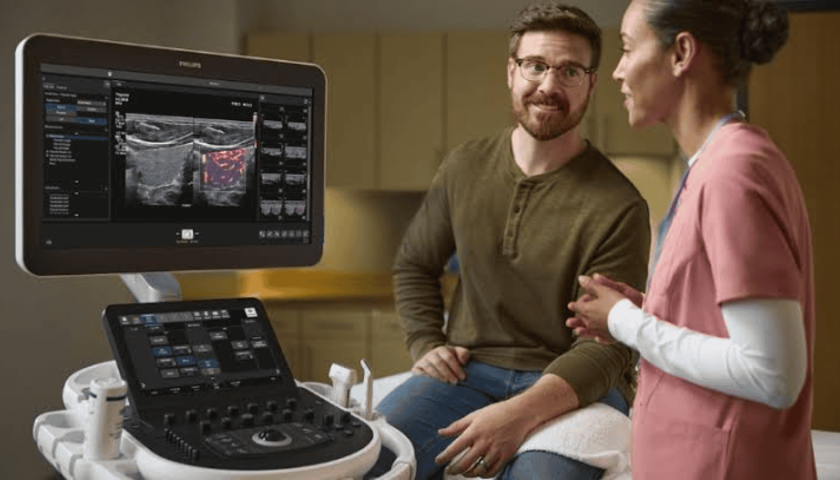
DeepHealth Breast Ultrasound automates several stages of breast ultrasound examinations, including lesion detection, characterisation and reporting.
Published
USA— RadNet subsidiary DeepHealth has received 510(k) clearance from the US Food and Drug Administration (FDA) for its DeepHealth Breast Ultrasound system, an artificial intelligence (AI)-powered technology designed to support breast ultrasound imaging.
The clearance allows DeepHealth to commercialise the system in the US. Healthcare providers can also seek reimbursement through an existing Category III Current Procedural Terminology (CPT) code for quantitative ultrasound tissue characterisation.
AI-assisted breast ultrasound
DeepHealth Breast Ultrasound automates several stages of breast ultrasound examinations, including lesion detection, characterisation and reporting.
The company said the technology is intended to standardise workflows for sonographers and radiologists while improving consistency and efficiency.
The system uses AI to help clinicians localise breast lesions, assess their characteristics according to the American College of Radiology’s Breast Imaging Reporting and Data System (ACR BI-RADS) classification, and generate radiology reports.
According to DeepHealth, the technology achieved more than 98% accuracy in lesion localisation and improved breast cancer detection sensitivity by 8%.
The company also reported a 37% reduction in radiologist interpretation time.
To support its FDA submission, DeepHealth cited evidence from a multi-reader, multi-case study involving 16 board-certified radiologists at selected imaging centres and hospitals across the US.
The company also validated the technology in clinical settings through regulated research protocols conducted within the RadNet network.
Standardising examinations
Dr Jason McKellop, medical director of women’s imaging at RadNet California, said breast ultrasound forms an important part of breast care, with approximately 40% of women undergoing the examination at some point in their lives.
He added that breast ultrasound is a complex, operator-dependent procedure that can result in variability in image acquisition, interpretation and reporting.
“By streamlining the examination process, we can help reduce exam times, enhance efficiency and ultimately improve patient outcomes,” McKellop said.
DeepHealth expects the technology to help standardise examinations while reducing the time required from patients, sonographers and radiologists.
Rollout across RadNet
RadNet plans to deploy DeepHealth Breast Ultrasound across its network by the end of the year.
The company estimates that more than 700,000 breast ultrasound studies conducted annually across its network could qualify for reimbursement under the existing CPT code.
DeepHealth’s broader portfolio includes AI-enabled solutions for mammography, breast density assessment, breast arterial calcification assessment, risk prediction and operational analytics.
In September 2024, DeepHealth and HOPPR also entered a partnership to commercialise a medical-grade generalised foundation model.
The model is intended to support the development of fine-tuned AI models for cancer detection.
Sign up HEREto receive our email newsletters with the latest news and insights from Africa and around the world, and follow us on LinkedInfor updates.




Be the first to leave a comment