

UAE hospitals expand AI and connected technologies to transform patient care
Hospitals are using these technologies in areas including mammography, stroke treatment, cancer care, sepsis detection, cardiology, neonatal services and emergency triage.
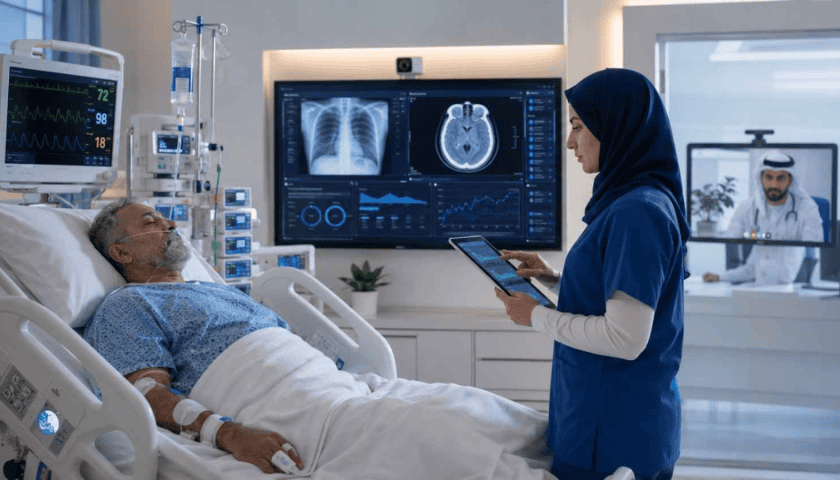
UAE—Healthcare providers across the United Arab Emirates are expanding the use of artificial intelligence (AI), predictive algorithms, and connected medical devices to improve care in hospitals across all seven emirates.
Deployments reported in August 2026 are focusing on diagnostic accuracy, continuous patient monitoring, emergency response and access to specialist care.
Hospitals are using these technologies in areas including mammography, stroke treatment, cancer care, sepsis detection, cardiology, neonatal services and emergency triage.
At the same time, connected medical equipment can transfer clinical data directly to monitoring centres and electronic health records.
Abu Dhabi expands AI in diagnostics and critical care
In Abu Dhabi, Cleveland Clinic Abu Dhabi uses Transpara software to analyse digital mammograms and identify suspicious areas before clinicians review the images.
The hospital also uses ARTIS Icono 3D imaging to support urgent stroke interventions, while intelligent radiotherapy software helps adjust cancer treatment doses during care.
Meanwhile, Sheikh Shakhbout Medical City has equipped smart inpatient rooms with contactless sensors that monitor vital signs and assess patients’ risk of falling.
Wireless mobiCARE devices also provide continuous electrocardiogram (ECG) monitoring and transmit patient data to hospital control rooms.
Similarly, Sheikh Khalifa Medical City and Al Ain Hospital use algorithms and alert systems to identify patients at risk of sepsis and septic shock.
By detecting warning signs early, the systems give clinical teams additional time to begin treatment.
Tawam Hospital has also introduced Histotripsy technology for treating liver tumours. The technology uses focused acoustic waves to target and destroy tissue without conventional invasive surgery.
Dubai and Sharjah strengthen connected monitoring
In Dubai, Rashid Hospital and Dubai Hospital operate wireless patient-monitoring networks alongside intelligent emergency-department triage systems.
These technologies help staff prioritise critically ill patients and direct them to appropriate care more quickly.
At Al Jalila Children’s Speciality Hospital, algorithm-assisted digital electroencephalogram (EEG) equipment helps identify patterns associated with epileptic seizures and convulsions before they occur.
The technology therefore extends predictive monitoring into paediatric neurological care.
In Sharjah, healthcare facilities are deploying computer-vision systems and smart clinical-monitoring technologies in operating theatres and intensive care units.
Khorfakkan Hospital and Kalba Hospital also use wireless foetal-monitoring equipment and digital wristbands that track patients’ vital signs.
Meanwhile, Dibba Al Hisn Specialised Health Centre uses AI-powered cameras to analyse retinal images and support earlier detection of diabetes-related complications.
Remote diagnostics extend specialist access
Healthcare providers are also using connected diagnostic technologies to extend specialist services to patients in remote areas.
Al Dhafra Hospitals in Madinat Zayed, Ghayathi and Al Mirfa use connected diagnostic kits that allow healthcare professionals to conduct examinations remotely.
The devices transmit live audio and video to consultants, enabling specialists to support patients beyond major urban hospitals.
Similarly, Masfout Hospital uses digital diagnostic equipment to support telemedicine services in mountainous areas of Ajman.
Sheikh Khalifa bin Zayed Hospital combines digital screening technologies with sensor-equipped smart beds designed to help reduce the risk of pressure injuries.

Be the first to leave a comment