

Uganda declares Ebola outbreak over after 42 days with no new cases
Uganda completed the monitoring period without detecting further transmission, providing an additional safeguard that no transmission chains linked to the imported case had been missed.
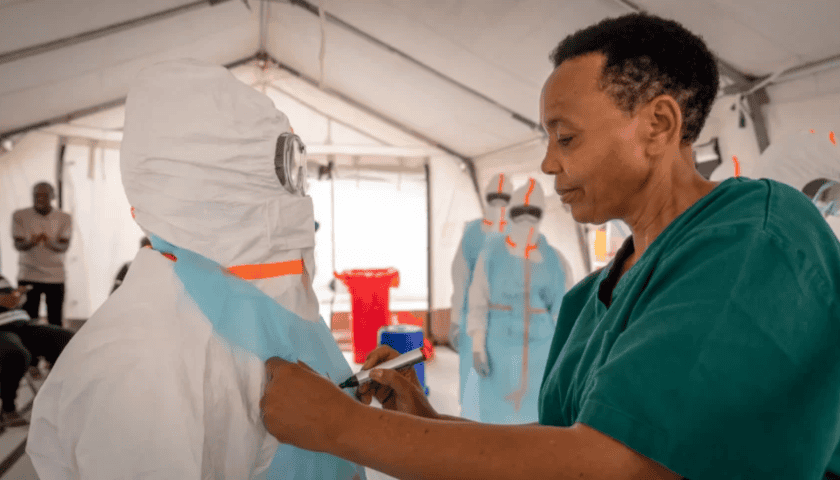
UGANDA—The Africa Centres for Disease Control and Prevention (Africa CDC) and the World Health Organization (WHO) have welcomed Uganda’s declaration that its Ebola outbreak caused by the Bundibugyo virus has ended after 42 consecutive days without a new confirmed case.
The 42-day period began after the country discharged its last Ebola patient, an imported case, on 16 July 2026.
Uganda completed the monitoring period without detecting further transmission, providing an additional safeguard that no transmission chains linked to the imported case had been missed.
The 42-day benchmark represents twice the upper limit of Ebola’s incubation period and serves as the internationally recognized standard for confirming that transmission associated with an outbreak has ended.
Uganda strengthens Ebola response
Uganda’s health authorities, supported by national and international partners, moved quickly to contain the outbreak and prevent wider transmission.
The response included early case detection and confirmation, contact tracing, isolation and clinical management of patients, infection prevention and control, community engagement, and enhanced surveillance at health facilities and points of entry.
“Uganda has demonstrated that with decisive action, Ebola outbreaks can be brought under control quickly,” said Dr Tedros Adhanom Ghebreyesus, WHO Director-General.
He added that strong preparedness, surveillance in health facilities and communities, and effective management of points of entry can help countries maintain the movement of people and goods while protecting communities and ensuring that people receive care when they become ill.
Africa CDC Director-General H.E. Dr Jean Kaseya said Uganda’s response demonstrated the importance of strong leadership, community trust and accessible public health systems.
“Uganda has shown that Ebola can be stopped when leadership acts decisively, communities are trusted and public health systems reach people quickly,” he said.
Uganda announced the interruption of local transmission on 28 July after recording 42 days without a locally acquired case.
However, authorities continued surveillance and other outbreak-control measures following the discharge of the last imported patient on 16 July.
20 confirmed cases reported
Uganda reported 20 confirmed Ebola cases following the declaration of the outbreak on 15 May 2026.
Of these, 15 were imported from the Democratic Republic of the Congo (DRC), while five were locally acquired among contacts and health workers linked to imported cases.
Eighteen people recovered from the disease, while two died.
Health authorities identified and monitored more than 800 contacts during the response.
WHO Regional Director for Africa Dr Mohamed Janabi said Uganda’s experience demonstrated the value of sustained investment in preparedness.
“Ending an Ebola outbreak is an important milestone, but the lasting achievement is a stronger ability to protect people from future health threats,” he said.
Regional vigilance remains critical
Despite Uganda ending its outbreak, the Ebola situation in the DRC remains a concern for neighbouring countries.
Strong social and economic links, frequent cross-border movement and trade continue to create opportunities for imported cases.
WHO therefore continues to advise countries against imposing travel or trade restrictions because of Ebola outbreaks.
The organization does not recommend suspending flights, closing borders or denying entry to travellers from affected countries.
Instead, countries should maintain international travel and trade while applying proportionate measures that support early detection, preparedness and cross-border cooperation.
Africa CDC and WHO are calling for continued investment in outbreak preparedness, disease surveillance and testing, rapid investigation of alerts, infection prevention and control, community engagement, and cross-border coordination.
The two organizations will continue supporting Uganda and the DRC through the joint continental preparedness and response plan, with stopping Ebola transmission in the DRC remaining a priority for regional health security.


Be the first to leave a comment