

Aptar Pharma partners with Macquarie University on dry powder inhaled biologics
The collaboration comes as pharmaceutical developers explore alternative delivery routes for biologic medicines, which can present formulation and administration challenges because of their molecular size and complexity.
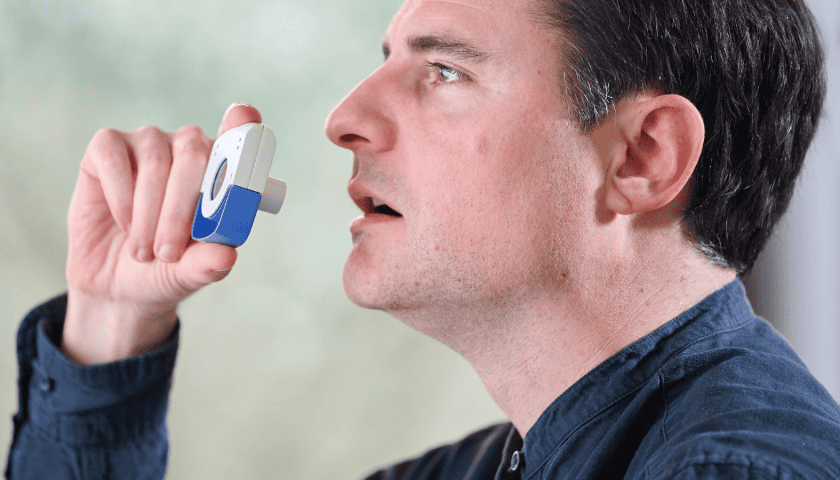
AUSTRALIA—Aptar Pharma and Macquarie University have launched a three-year research collaboration in Australia to investigate formulation approaches for delivering biologic medicines through the lungs.
The partnership will focus on Aptar Pharma’s Orbital dry powder inhaler platform, which is designed to deliver high payloads of dry powder formulations.
Researchers will examine how formulation characteristics affect aerosol performance when medicines are delivered through the device.
The collaboration comes as pharmaceutical developers explore alternative delivery routes for biologic medicines, which can present formulation and administration challenges because of their molecular size and complexity.
Pulmonary delivery is receiving increasing research attention because the lungs have a large surface area and are closely connected to the systemic circulation.
Research to examine formulation and device performance
During the three-year programme, researchers from Aptar Pharma and Macquarie University will assess engineered, blended, and combined dry powder formulations.
The work will examine how properties such as formulation composition influence aerosol behaviour and interaction with the inhaler.
According to the companies, the research is expected to generate data that can help researchers better understand the relationship between formulation design and device performance. The findings could also support the development of computational fluid dynamics (CFD) models to study aerosol behaviour and particle transport during inhalation.
CFD modelling can be used to simulate how particles move through fluid environments. In inhaled drug delivery, such models may help researchers examine the movement and dispersion of drug particles and assess how formulation and device characteristics affect delivery.
Guillaume Brouet, vice president of scientific affairs at Aptar Pharma, said biologic medicines have potential as pharmaceutical treatments but that challenges remain in developing effective inhaled formulations.
“By combining academic and industry expertise, this programme will help advance scientific understanding of high-dose dry powder delivery and support the development of future inhaled biologic medicines,” Brouet said.
DAptar expands inhalation development collaborations
The Macquarie University agreement follows Aptar Pharma’s recent collaboration with French biotechnology company Aceso Therapeutics to support development of ACT 101, an inhalable antisense oligonucleotide (ASO) being investigated for cystic fibrosis (CF).
Through Nanopharm, Aptar Pharma’s specialist inhalation development services business, the company will provide formulation development and device assessment support for Aceso’s clinical development programme.
The two collaborations reflect the range of technical requirements involved in developing inhaled medicines.
For biologics and other complex therapies, developers must consider not only the drug substance and formulation, but also how the delivery device affects aerosol generation, particle movement and deposition.
For Aptar Pharma, research into high-payload dry powder delivery also addresses a key formulation requirement for inhaled therapies: delivering sufficient quantities of drug while maintaining suitable aerosol characteristics.
The Macquarie University programme will therefore examine formulation and device performance together rather than treating them as separate development considerations.

Be the first to leave a comment