
WHO welcomes UN Declaration on Pandemic Preparedness as countries face 2027 deadline for Pandemic Agreement
The declaration reaffirms commitments by UN Member States to strengthen pandemic preparedness, improve coordination and protect populations from infectious disease threats.
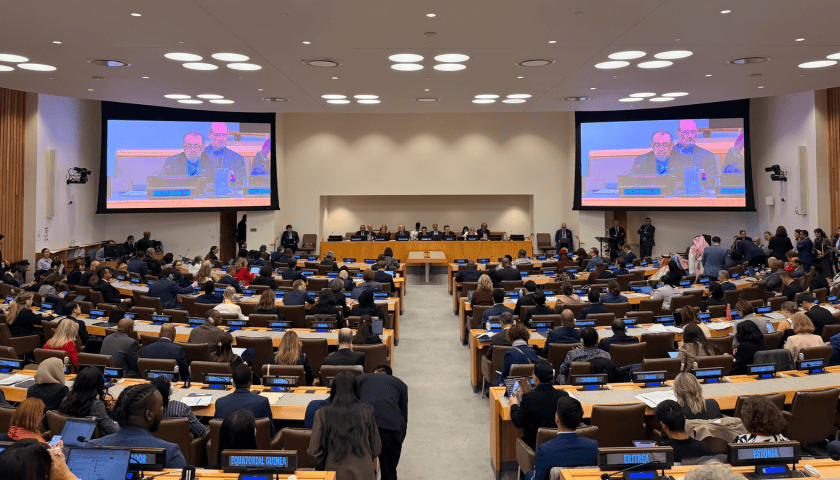
USA—The World Health Organization (WHO) has welcomed the United Nations General Assembly’s (UNGA) adoption of a political declaration on pandemic prevention, preparedness, and response, calling for stronger international cooperation to reduce the impact of future health emergencies.
The declaration reaffirms commitments by UN Member States to strengthen pandemic preparedness, improve coordination and protect populations from infectious disease threats.
It also sets priorities for governments, public health agencies and the healthcare industry, including sustainable financing, expanded research capacity and more equitable access to medical countermeasures.
WHO Director General Dr Tedros Adhanom Ghebreyesus urged countries to translate their commitments into action, particularly by concluding negotiations on a key component of the WHO Pandemic Agreement.
“The world has come a long way since COVID 19,” Tedros said, calling on countries to finalize negotiations on the Pathogen Access and Benefit Sharing (PABS) annex.
Its completion would allow the Pandemic Agreement to open for signature and proceed towards ratification and entry into force.
Countries Prioritize Pandemic Agreement
Member States considered the declaration during the second UNGA High Level Meeting on Pandemic Prevention, Preparedness and Response on 25 September 2026 before referring it to the full General Assembly for adoption.
The declaration builds on progress made since the COVID-19 pandemic, including the adoption of the WHO Pandemic Agreement.
It calls for sustained investment in national, regional and global systems to prevent, detect and respond to emerging infectious disease threats.
Governments also emphasized that pandemic preparedness extends beyond healthcare.
The declaration treats it as a development, economic and security priority that requires coordinated action across public health, research, trade and other sectors.
Negotiations on the PABS annex remain a critical step towards implementing the agreement.
The annex is intended to establish arrangements for accessing pathogens with pandemic potential and sharing the benefits arising from their use, including products developed through related research.
The outcome of the negotiations is expected to be considered at the next World Health Assembly in May 2027, or earlier if a special session is convened.
Implications for Healthcare Manufacturing and Research
The declaration identifies several priorities with direct implications for pharmaceutical manufacturers, biotechnology companies, diagnostic developers and research institutions.
These include stronger disease surveillance, investment in national response capacities and implementation of the amended International Health Regulations (2005).
It also calls for greater community participation, timely access to pathogens, equitable benefit sharing and expanded local and regional manufacturing capacity.
Strengthening research and development capabilities is another priority, alongside securing sustainable financing for preparedness programmes.
For manufacturers of vaccines, therapeutics and diagnostics, expanded regional production capacity could support more resilient supply chains during public health emergencies.
However, progress will depend on investment, regulatory readiness, technology transfer and effective collaboration between governments and industry.
The proposed PABS arrangements also have implications for research organizations and companies that use pathogen samples and associated data to develop health products.
Clear and workable access and benefit sharing mechanisms will be important for supporting research collaboration while addressing concerns about equitable access to resulting benefits.
The declaration also calls for stronger surveillance and implementation of international health regulations, which could increase demand for laboratory infrastructure, diagnostic technologies, genomic surveillance, and data-sharing systems.
Its implementation will require coordination among governments, international organizations, manufacturers, research institutions and funding partners as countries work towards the next stage of the Pandemic Agreement.


Be the first to leave a comment