

Sidra Medicine develops Middle East’s first population-scale genetic regulation atlas in Qatar
Although genome sequencing has expanded worldwide, scientists still lack a clear understanding of how many genetic variations affect gene activity and contribute to disease.
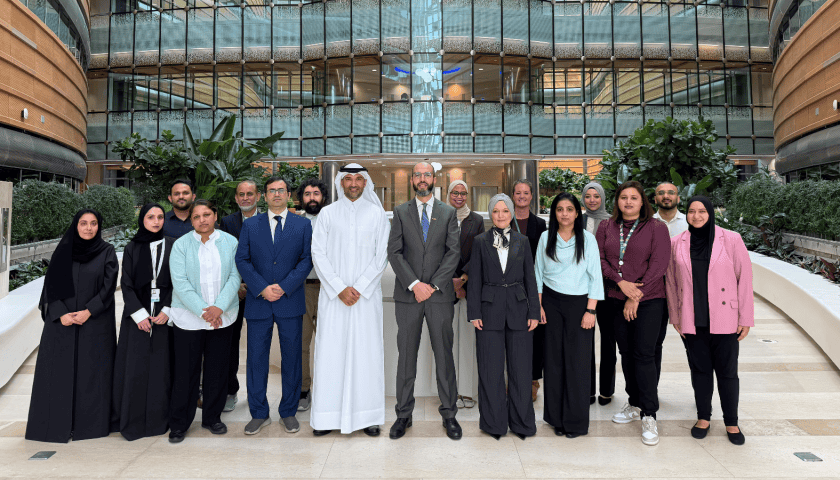
QATAR – Researchers at Sidra Medicine have developed the Middle East’s first population-scale atlas of genetic regulation, linking DNA variations to gene activity and clinical traits to support precision medicine in the region.
Published in Nature Genetics as “A catalogue of transcriptome genetic regulation in a consanguineous Middle Eastern biobank,” the study provides a reference for understanding how genetic differences influence health and disease.
It could improve genetic diagnosis, disease-risk prediction and the identification of biomarkers and potential drug targets.
Mapping genetic variation to disease
Although genome sequencing has expanded worldwide, scientists still lack a clear understanding of how many genetic variations affect gene activity and contribute to disease.
This knowledge gap is particularly pronounced in Arab and Middle Eastern populations, which remain underrepresented in genomic research.
Led by Prof. Younes Mokrab, Principal Investigator in Genome and Biomedicine Informatics and Director of the Neuroscience Research Program, the research involved nearly 2,000 participants from Qatar Biobank (QBB).
The team combined whole-genome sequencing, whole-blood gene expression data and detailed clinical records to examine the relationship between genetic variation, gene regulation and health outcomes.
Using computational analysis, the researchers identified nearly 30,000 causal effects influencing gene activity across the genome.
They also linked these regulatory effects to 20 clinical traits and disease pathways, including those associated with immune and metabolic functions.
Prof. Mokrab explained that genomic data provide information about an individual’s genetic blueprint, while transcriptomic data show how that blueprint is expressed.
Combining both with clinical information allowed the team to move beyond conventional genetic associations and identify regulatory effects with potential clinical significance.
Consanguinity and gene regulation
The research also examined how consanguinity, or marriage between biologically related individuals, influences gene activity.
Although consanguinity is widely associated with an increased risk of recessive genetic disorders, its effects on gene regulation have received less attention.
The researchers found that inheriting two copies of certain regulatory genetic variants can cause unusually high or low activity in specific genes.
This extends the understanding of how consanguinity influences biological processes beyond mutations that directly affect proteins.
Dr. Haroon Naeem, Staff Scientist in the Genome and Biomedicine Informatics Laboratory and the study’s first author, said the cohort’s high levels of consanguinity provided an opportunity to investigate these additional effects on gene regulation.
Implications for precision medicine
The findings could improve the interpretation of genomic test results, particularly by helping clinicians assess non-coding variants that influence gene activity without changing protein sequences.
They could also support the development of ancestry-aware polygenic risk scores, which estimate an individual’s likelihood of developing complex diseases using multiple genetic variants.
By connecting genetic variants to the genes they regulate, the atlas could help researchers prioritize candidates for functional studies, biomarker validation and therapeutic development.
These insights may also support more representative patient selection in clinical trials.
Prof. Khalid Fakhro, Chief Research Officer at Sidra Medicine, said population-matched reference databases are essential for precision medicine.
The new transcriptomic resource complements existing DNA databases developed for Qatar and the wider Middle East.
The dataset will be expanded with additional omics information from Qatar Biobank and disease-focused cohorts at Sidra Medicine.
These combined datasets are expected to support the development of artificial intelligence and machine learning models for disease prediction and treatment discovery.
The study received support from Sidra Medicine and the Qatar National Research Fund, using data and samples from Qatar Biobank and the Qatar Genome Program, now part of the Qatar Precision Health Institute.


Be the first to leave a comment