

Mayo Clinic maps deep brain region to improve epilepsy stimulation targeting
To investigate these connections, researchers studied 30 people with drug-resistant epilepsy who already had temporary electrodes implanted as part of their clinical care.
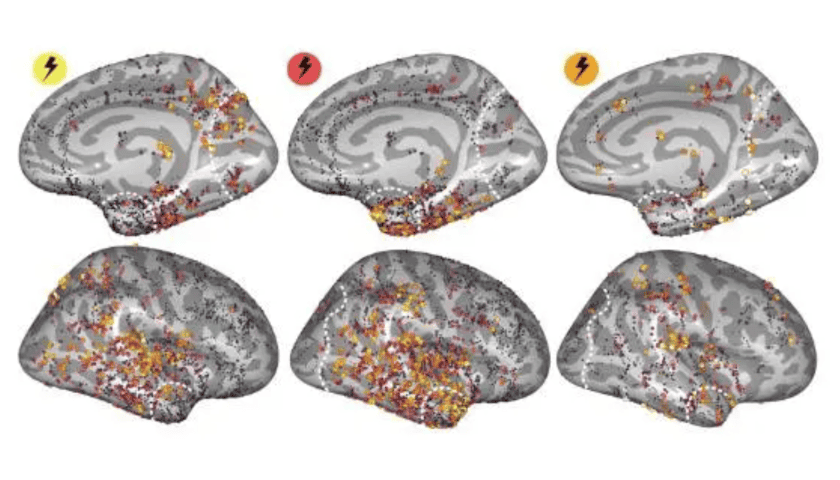
USA—Mayo Clinic researchers have mapped connections within the brain’s pulvinar to improve the precision of electrical stimulation therapies for people with drug-resistant epilepsy.
The findings, published in the Journal of Neuroscience, could help clinicians identify more precise electrode placement sites and develop personalised treatment strategies.
Mapping brain connections
The pulvinar is part of the thalamus, a deep brain structure that coordinates information from different senses and supports functions such as vision, memory, language and attention.
Although it has potential as a target for epilepsy treatment, its location has made it difficult for researchers to study its connections with other brain networks.
To investigate these connections, researchers studied 30 people with drug-resistant epilepsy who already had temporary electrodes implanted as part of their clinical care.
They delivered small electrical pulses to different parts of the pulvinar and measured the resulting brain responses.
This enabled them to map how specific areas communicate with other regions.
The findings showed that the pulvinar contains distinct subregions connected to different brain networks rather than functioning as a single, uniform structure.
Notably, areas separated by as little as 3 millimetres connected to entirely different networks.
Dora Hermes Miller, Ph.D., a biomedical engineer at Mayo Clinic and senior author of the study, said the complexity of the pulvinar and its potential role in epilepsy treatment exceeded the researchers’ initial expectations.
The research builds on clinical observations made while treating patients with drug-resistant epilepsy.
Researchers initially expected stimulation of different pulvinar locations to activate similar brain networks.
However, they observed variations, with some patients showing responses in visual processing areas while others did not.
These differences prompted further investigation into the region’s internal organisation.
Implications for personalised epilepsy treatment
The detailed mapping could help neurologists position electrodes more accurately when using deep brain stimulation (DBS), which delivers electrical impulses to regulate abnormal brain activity.
Precise targeting is important because stimulation of neighbouring areas may activate different neural networks and produce varying clinical effects.
Nick Gregg, M.D., a neurologist at Mayo Clinic and study co-author, said clinicians are already using the maps to guide individualised pulvinar stimulation in patients with drug-resistant epilepsy.
Researchers are also examining how electrode placement relates to long-term treatment outcomes.
Epilepsy affects more than 50 million people worldwide, and approximately one-third of patients continue to experience seizures despite medication.
For this population, neuromodulation offers an alternative approach to managing seizure activity.
Gregory Worrell, M.D., Ph.D., a Mayo Clinic neurologist and study co-author, said the findings provide a basis for tailoring neuromodulation to the specific brain networks involved in each patient’s epilepsy.
Researchers are now investigating which pulvinar subregions should be stimulated and which electrical frequencies could provide better seizure control while minimising side effects.
The work also supports Mayo Clinic’s Bioelectronic Neuromodulation Innovation to Cure (BIONIC) initiative, which brings together clinicians, scientists and engineers to advance personalised neuromodulation therapies.
From an industry perspective, more precise brain mapping could inform the development of targeted neurostimulation devices, improve electrode placement protocols and support patient-specific treatment planning.
It also highlights the growing role of integrated neuroscience, biomedical engineering and clinical data in advancing medical device innovation.


Be the first to leave a comment