
African leaders call for stronger domestic malaria financing at UNGA 81
ALMA and Malaria No More UK estimate that a 30% reduction in malaria financing could result in 146 million additional cases, almost 400,000 additional deaths and US$37 billion in lost economic output by 2030.
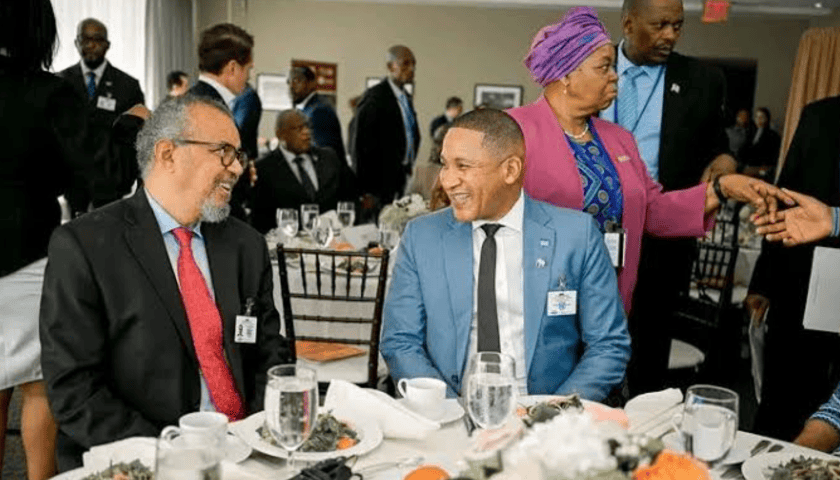
USA—African leaders meeting on the sidelines of the 81st United Nations General Assembly (UNGA) in New York have called for stronger domestic financing, multisectoral action, and closer international collaboration to protect progress against malaria and accelerate elimination efforts.
The call came during a high-level side event, “Africa’s Leadership for Sustainable Malaria Financing: A Multisectoral Path to Elimination,” hosted by Botswana President Advocate Duma Gideon Boko, chair of the African Leaders Malaria Alliance (ALMA), in partnership with the African Union Commission and the RBM Partnership to End Malaria.
Financing gaps threaten malaria progress
According to the World Health Organization (WHO), Africa accounted for 94% of global malaria cases and 95% of malaria deaths.
Participants said progress had stalled amid financing constraints, extreme weather events, increasing insecticide and medicine resistance, and humanitarian emergencies.
Recent replenishment rounds for the Global Fund and Gavi reportedly fell below their respective targets, while official development assistance for health in Africa has continued to decline.
ALMA and Malaria No More UK estimates that a 30% reduction in malaria financing could result in 146 million additional cases, almost 400,000 additional deaths and US$37 billion in lost economic output by 2030.
“When investment is sustained, malaria retreats. When financing falls, it returns,” said Dr. Tedros Adhanom Ghebreyesus, WHO Director-General.
Leaders therefore called for a managed transition towards greater domestic financing while maintaining international support.
President Boko said African countries had the tools and experience to change the trajectory of malaria but needed sustainable financing and coordinated action.
National mechanisms and domestic investment
Participants highlighted the National End Malaria Councils and Funds as mechanisms for coordinating government, businesses, civil society and communities around malaria programmes.
ALMA said 14 operational councils had mobilised more than US$245 million to address funding and resource gaps while increasing malaria’s visibility within national development agendas.
Member states were urged to incorporate malaria financing into national budgets and development plans.
International partners, meanwhile, were asked to provide predictable funding as countries increase domestic contributions.
The Gambia’s Vice President Muhammad B. S. Jallow cautioned that fiscal pressures could limit the ability of governments to finance malaria programmes independently.
He called for stronger international partnerships and predictable funding to support countries through the later stages of elimination.
Calls for stronger multilateral support
African countries were also urged to include malaria control in their World Bank IDA21 health compacts and to support consideration of a dedicated Malaria Booster Programme under IDA22.
Zarau Kibwe, Executive Director for the Africa Group 1 Constituency at the World Bank Group, said malaria should remain a priority in IDA22 negotiations.
Several governments outlined measures to strengthen regional and domestic capacity.
South Africa committed to increased cross-border collaboration through the Southern African Development Community, while Zimbabwe and Angola highlighted plans to expand local manufacturing of mosquito nets and medicines.
Tanzania said local manufacturing had become national policy and described research into gene drive mosquitoes by Tanzanian scientists at the Ifakara Health Institute and National Institute for Medical Research.
Health, environment, and agriculture ministries are working on regulatory frameworks, according to Health Minister Mohamed Omary Mchengerwa.
Development partners also outlined areas of support. The Global Fund said it would seek to mobilise additional resources, while the Gates Foundation said it would continue supporting the development of new malaria products.
GLIDE offered collaboration with ministries of health, and Gavi reiterated its commitment to expanding access to malaria vaccines.
The event forms part of the Big Push against Malaria, a country-led initiative aligned with the African Union’s Roadmap to 2030 and Beyond.
Participants said the approach focuses on political leadership, domestic financing, multisectoral accountability, and coordinated action across borders.
Be the first to leave a comment