

WHO recommends 2027 Southern Hemisphere influenza vaccine composition
WHO bases its recommendations on surveillance data collected through the Global Influenza Surveillance and Response System (GISRS), supported by collaborating centres and essential regulatory laboratories.
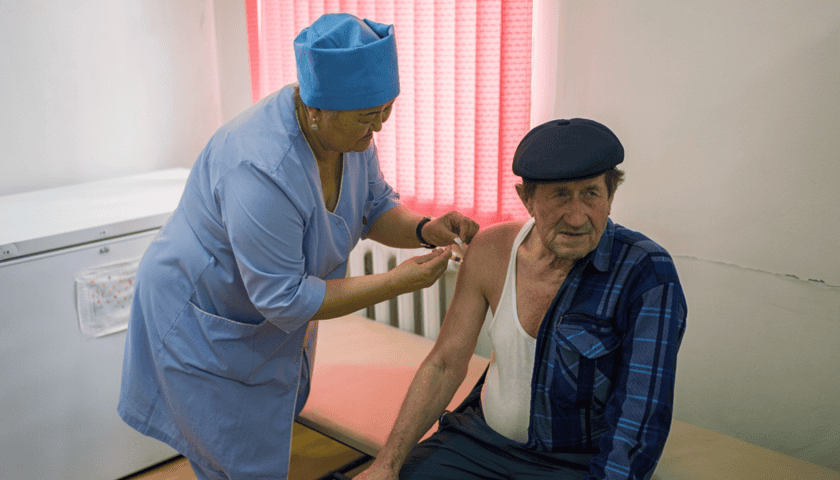
SWITZERLAND—The World Health Organization (WHO) has recommended the influenza vaccine virus composition for the 2027 Southern Hemisphere season following a global review of circulating influenza viruses.
The recommendations, announced after an international consultation, are intended to guide vaccine manufacturers and national regulatory authorities in selecting strains for vaccines ahead of the 2027 season.
WHO updates the composition twice a year because influenza viruses continually change, affecting the strains likely to circulate and the level of protection vaccines may provide.
Three influenza virus groups under review
Between February and August 2026, influenza A(H1N1)pdm09, A(H3N2) and influenza B viruses circulated at varying levels across regions and caused seasonal influenza illness.
Influenza A viruses predominated in most regions, while influenza B viruses accounted for a larger share of infections in Northern and Western Africa, North America, and Eastern Asia.
For egg-based vaccines, WHO recommended an A/Missouri/11/2025 (H1N1) pdm09-like virus, an A/Darwin/1454/2025 (H3N2) like virus, and a B/Tokyo/EIS13 175/2025 (B/Victoria lineage) like virus.
For cell culture, recombinant protein, and nucleic acid-based vaccines, the recommended composition includes an A/Missouri/11/2025 (H1N1) pdm09-like virus, an A/Darwin/1415/2025 (H3N2) like virus, and a B/Pennsylvania/14/2025 (B/Victoria lineage) like virus.
The different recommendations for egg-based and non-egg-based vaccines reflect the need to account for how influenza viruses can change during the vaccine production process.
Manufacturers use these recommendations to select candidate strains and begin production and regulatory preparations for the upcoming season.
Surveillance guides vaccine development
WHO bases its recommendations on surveillance data collected through the Global Influenza Surveillance and Response System (GISRS), supported by collaborating centres and essential regulatory laboratories.
Twice each year, specialists assess influenza viruses identified through surveillance programmes and examine their genetic and antigenic characteristics, geographic distribution and recent changes.
The process provides manufacturers and regulators with updated information for vaccine development and licensing.
Dr Maria Van Kerkhove, WHO Director for Epidemic and Pandemic Management, said the continued sharing of influenza data, viruses and technical expertise allows WHO to make timely vaccine recommendations.
The consultation also considered influenza viruses circulating in animals, particularly viruses that have infected humans.
WHO assesses these zoonotic viruses because some may acquire characteristics that enable sustained human transmission.
As part of the process, experts identify and develop candidate vaccine viruses from contemporary zoonotic influenza strains.
These candidate viruses can support rapid vaccine development if an influenza virus with pandemic potential emerges.
The recommendations therefore provide manufacturers with strain selections for the 2027 southern hemisphere seasonal influenza market while maintaining surveillance of viruses that could pose wider public health risks.

Be the first to leave a comment