

WHO introduces DIGIT platform to strengthen health campaign planning in Africa
The DIGIT platform is designed as an open and interoperable system that brings campaign planning, management and monitoring into a single interface.
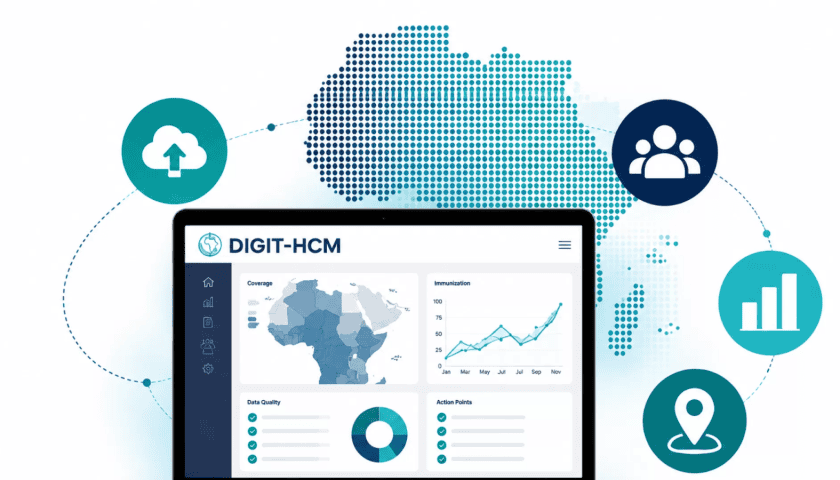
CONGO— The World Health Organization (WHO) Regional Office for Africa has launched the DIGIT Health Campaign Data Digitization Project to modernize the planning, coordination, implementation and monitoring of public health campaigns across the African Region.
The three-year initiative aims to help countries integrate campaign data and operations through a common digital infrastructure, supporting more coordinated delivery of vaccination and other preventive health interventions.
Building an integrated platform
The DIGIT platform is designed as an open and interoperable system that brings campaign planning, management and monitoring into a single interface.
WHO says the approach could reduce reliance on fragmented digital tools and improve the ability of health teams to access and use campaign information across programmes.
The first phase will involve seven pilot countries and is intended to generate experience for potential regional expansion.
The initiative is led by WHO AFRO’s Polio Eradication Programme and the Health Promotion, Disease Prevention and Control Cluster, in collaboration with the eGov Foundation and with support from the Gates Foundation.
“The approach is centred on country ownership and data sovereignty,” said Dr Gedi Mohamed, Coordinator of the WHO AFRO Polio Eradication Programme.
“Rather than creating another stand alone programme tool, DIGIT is intended to provide a common digital infrastructure through which information can be generated, managed and used across programmes.”
Using geospatial data
A central component of the platform is integrating Geographic Information Systems (GIS) and geospatial data into campaign management.
According to WHO, this capability will allow countries to improve microplanning, identify underserved populations and monitor campaign activities using location-based information.
The platform will also support spatial data analysis and capacity building, while helping participating countries incorporate geospatial tools into national health systems.
WHO and its partners plan to work with Member States to assess their readiness, adapt implementation to national contexts and strengthen coordination among programmes involved in health campaigns.
Early implementation in Chad
The initiative builds on previous experience managing digital health campaigns in the African Region.
The eGov Foundation, a key implementing partner, reports that its Health Campaign Management work has reached a population of about 40 million people across Africa.
Preparatory work for DIGIT included upgrades to the Health Campaign Management platform and development of the technical infrastructure required at the WHO Regional Office for Africa.
Earlier in 2026, WHO AFRO, the Gates Foundation, the International Federation of Red Cross and Red Crescent Societies (IFRC) and the eGov Foundation conducted a joint advocacy mission to Chad.
The engagement supported plans to introduce DIGIT Health Campaign Management in the country.
The first pilot deployment took place in a district of N’Djamena Province during the June 2026 polio vaccination campaign.
Dr Benido Impouma, Director of the Universal Health Coverage, Communicable and Noncommunicable Diseases Cluster at WHO AFRO, said health campaigns remain an important way to deliver preventive interventions to populations with limited access to routine services.
He noted that campaigns are often planned and delivered separately by individual programmes, while the DIGIT platform is intended to support more integrated planning and implementation.
WHO said the initiative also draws on broader efforts across the region to digitize campaign reporting.
In several countries, digital systems have enabled health workers to submit campaign information electronically, allowing programme teams to receive and review data more quickly than through paper-based reporting.


Be the first to leave a comment