
African leaders call for greater health financing at CPHIA 2026 in Ethiopia
The five-day conference, co-hosted by the Africa Centres for Disease Control and Prevention (Africa CDC) and the Ethiopian Government at the Addis International Convention Centre, opened on November 23.
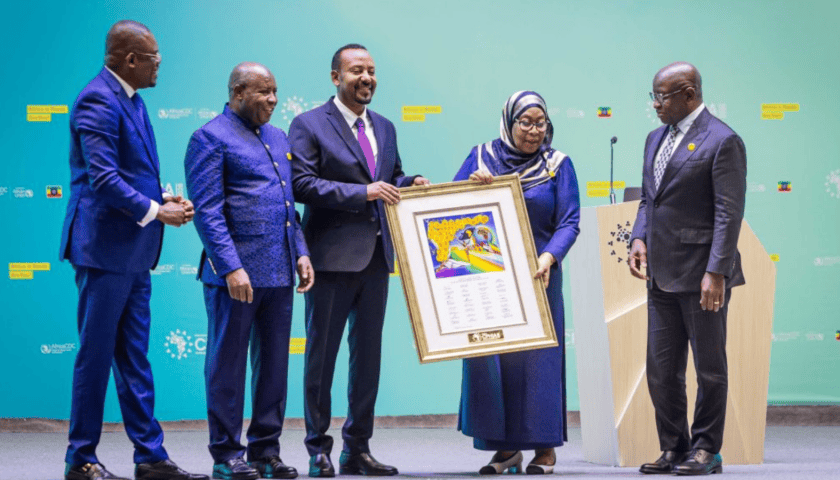
ETHIOPIA—African Heads of State and Government have opened the Fifth International Conference on Public Health in Africa (CPHIA 2026) in Addis Ababa, calling for greater domestic health investment, accountability, and national ownership to strengthen the continent’s health security.
The five-day conference, co-hosted by the Africa Centres for Disease Control and Prevention (Africa CDC) and the Ethiopian Government at the Addis International Convention Centre, opened on November 23.
Its theme is “Africa’s Health Security and Sovereignty: Transformation from Health Dependency and Vulnerability to Ownership and Resilience.”
It comes amid declining external health financing and persistent disease threats, prompting calls for sustainable funding and stronger public health systems.
The opening ceremony brought together Ethiopian Prime Minister Abiy Ahmed; African Union (AU) Chairperson and Burundi President Évariste Ndayishimiye; Tanzanian President Samia Suluhu Hassan; Sierra Leone President Julius Maada Bio; AU Commission Chairperson Mahmoud Ali Youssouf; and Africa CDC Director General Jean Kaseya, alongside ministers, health leaders and partners.
Maternal and child health roadmap
The conference launched the AU Champions’ Continental Roadmap on Reproductive, Maternal, Newborn, Child and Adolescent Health (RMNCAH) 2026–2030, championed by President Hassan.
The initiative targets three priorities: zero home deliveries, zero preventable maternal and newborn deaths, and zero unvaccinated children.
Hassan urged AU Member States to appoint empowered national focal points and integrate the roadmap into national health strategies.
She also called for improved access to skilled maternity care and childhood vaccination, particularly in underserved communities.
Drawing on Tanzania’s healthcare investments, she announced 60 scholarships for specialised training in midwifery, anaesthesia, obstetrics and gynaecology, and neonatal care, alongside shorter competency-based training programmes.
Digital health, local manufacturing and accountability
Ethiopia presented its AU Artificial Intelligence and Digital Health Championship, showcasing investments in digital infrastructure, electronic health records, community-based digital systems and AI capabilities.
Prime Minister Abiy highlighted the potential of digital technologies to connect remote healthcare workers with specialists, improve access to medical expertise and support secure patient information sharing.
He called for investment in African research institutions, laboratories, training and locally developed technologies, alongside continental cooperation to establish centres of medical excellence, expand collective procurement of locally manufactured medicines and improve accountability.
Meanwhile, Sierra Leone President Bio reported that the country’s maternal deaths had declined by 34% and child deaths by 12% compared with the corresponding period in the previous year.
Its accountability campaign had also reached 10,764 previously unvaccinated children.
However, he acknowledged persistent challenges in Freetown, including rising maternal deaths and delays in referrals and emergency care.
Bio called for stronger emergency obstetric services, ambulance referral systems, trained personnel, blood supplies and essential medicines.
He also reaffirmed Sierra Leone’s commitment to domestic health financing and offered to share lessons from its weekly maternal and child mortality reviews and Ebola response.
Financing and pharmaceutical capacity
AU Commission Chairperson Youssouf urged governments to meet the Abuja Declaration target of allocating at least 15% of national budgets to healthcare while improving spending efficiency and accountability.
He also called for expanded pharmaceutical and vaccine manufacturing, stronger research capacity, support for the African Medicines Agency, and greater use of the African Continental Free Trade Area and pooled procurement to develop regional health industries.
The opening ceremony recognised political leaders, scientists and global health partners for their contributions.
Presidential Awards for Health Transformation went to Presidents Ndayishimiye, João Lourenço of Angola, John Dramani Mahama of Ghana, Netumbo Nandi-Ndaitwah of Namibia and Bio.
Professor Rose Gana Fomban Leke of the University of Yaoundé received the Distinguished Scientist Award for her contributions to malaria research and immunisation.
Extraordinary Global Health Leadership Awards were presented to Gavi’s Dr Sania Nishtar, CEPI’s Dr Richard Hatchett and Unitaid’s Dr Philippe Duneton for their work in vaccine access, epidemic preparedness and equitable access to health technologies.

Be the first to leave a comment