Schneider Children’s Medical Center administers world’s first WWOX gene therapy for rare epilepsy
The therapy builds on long-standing research led by Prof. Rami Aqeilan of the Hebrew University of Jerusalem, who helped uncover the critical role of the WWOX gene in brain development.
Published
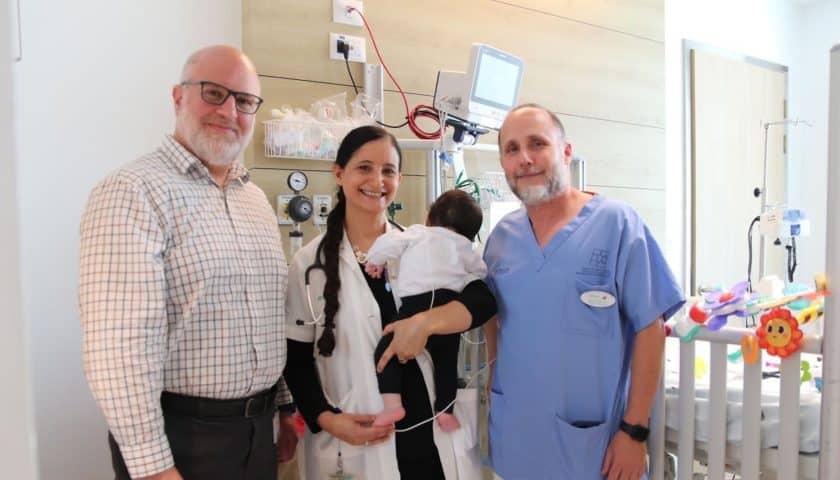
ISRAEL—Schneider Children’s Medical Center of Israel has achieved a major milestone after successfully administering an experimental gene replacement therapy to an eight-month-old infant with a severe form of genetic epilepsy.
The treatment targeted mutations in the WWOX gene, which are responsible for WOREE syndrome, one of the rarest and most aggressive neurological disorders known.
Doctors delivered the therapy directly into the child’s brain using an adeno-associated viral vector designed to restore normal gene function in affected neurons.
Following the procedure, the infant remained clinically stable and was discharged after one month of observation, with no return of the severe seizures that had begun at six weeks of age.
Decades of research behind the treatment
The therapy builds on long-standing research led by Prof. Rami Aqeilan of the Hebrew University of Jerusalem, who helped uncover the critical role of the WWOX gene in brain development.
His early work showed that although WWOX was first studied as a tumor suppressor, it also plays a key role in maintaining neuronal stability and brain function.
Using animal models, his team demonstrated that loss of WWOX leads to epilepsy, impaired myelination, developmental delay, and early death, closely mirroring symptoms seen in children with WOREE syndrome.
These findings laid the groundwork for a gene replacement strategy using AAV9 vectors to restore gene activity in the brain.
In preclinical studies, a single dose improved survival, reduced seizures, and restored neurological function in mice, providing strong proof of concept for human application.
From laboratory discovery to clinical use
After years of academic development, the program moved into clinical translation through collaboration with clinicians at Schneider and biotechnology partners, including Dr. Naama Orenstein and Dr. Dror Kraus.
The technology was licensed to Mahzi Therapeutics, which supported manufacturing and regulatory preparation for human use.
The infant treated in this case developed severe epileptic seizures shortly after birth and was later diagnosed with WOREE syndrome through genetic testing.
The condition, which affects only an estimated 60 to 90 confirmed patients globally, causes drug-resistant seizures, profound developmental impairment, and high mortality in early childhood.
Rare disease insights and ongoing monitoring
WOREE syndrome occurs when a child inherits two faulty copies of the WWOX gene, disrupting brain development and neurological balance.
Although carriers with a single mutation remain unaffected, affected children often face life-threatening complications, including respiratory failure and severe motor dysfunction.
The research team reported that early treatment outcomes remain encouraging, though long-term monitoring will determine safety and effectiveness.
The approach reflects a growing global shift toward precision gene therapies for ultra-rare neurological conditions, an area increasingly highlighted in recent scientific discussions and emerging clinical programs worldwide.
The infant continues to receive close medical follow-up as clinicians track neurological progress and overall development following this first-of-its-kind intervention.
Sign up HEREto receive our email newsletters with the latest news and insights from Africa and around the world, and follow us on LinkedInfor updates.



Be the first to leave a comment