NYU Abu Dhabi collaborates with Cleveland Clinic to develop wire-free injectable microdevice for chronic pain management
The researchers designed the device to work seamlessly with existing medical imaging technologies, including ultrasound and CT scans.
Published
UAE—Researchers at New York University Abu Dhabi, working alongside clinicians and scientists from Cleveland Clinic Abu Dhabi, have developed a tiny injectable medical device that could transform the treatment of chronic pain and movement disorders by controlling nerve activity without the need for surgery, batteries, or implanted wires.
The breakthrough, published in the journal Science Advances, introduces a minimally invasive approach to neuromodulation that could offer patients a simpler alternative to conventional implants and long-term drug therapies.
A seed-sized device delivered through a needle
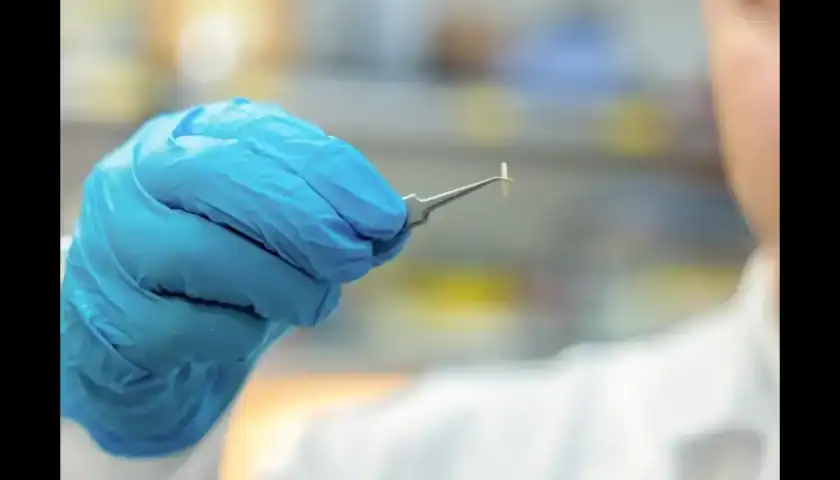
Roughly the size of a small seed, the device can be injected into the body using a standard medical needle and positioned near a targeted nerve.
Once in place, it delivers controlled electrical stimulation that influences nerve activity and can be adjusted in real time.
Unlike traditional implanted neurostimulation systems, the device operates wirelessly and receives power from an external source.
This eliminates the need for bulky batteries, surgical implantation procedures, and extensive recovery periods.
“This work represents a shift in how we think about treating nerve-related conditions,” said Prof. Khalil Ramadi, Assistant Professor of Bioengineering at NYU Abu Dhabi and NYU Tandon School of Engineering and senior author of the study.
“By creating a device that can be injected rather than surgically implanted, we are making these therapies simpler, safer, and more accessible while maintaining precise control over nerve activity.”
Real-time control and precise monitoring
The researchers designed the device to work seamlessly with existing medical imaging technologies, including ultrasound and CT scans.
Physicians can therefore accurately place and monitor the implant after injection.
Once deployed, the system provides programmable electrical stimulation, enabling clinicians to tailor treatments according to each patient’s condition and therapeutic needs.
The ability to modify stimulation parameters in real time could make the technology particularly valuable for patients whose symptoms fluctuate over time.
Promising results in early testing
During laboratory and preclinical studies, the device demonstrated consistent performance and precise control of nerve stimulation under realistic operating conditions.
Researchers also successfully activated nerves in vivo, providing early evidence that the technology could be suitable for future clinical applications.
Dr. Mohamed Elsherif, Research Associate at NYU Abu Dhabi and first author of the study, said the technology could help bridge the gap between non-invasive therapies and conventional implanted devices.
“This technology has the potential to bridge the gap between non-invasive therapies and traditional implants. It opens the door to treatments that are both effective and easy to deliver, which could significantly improve patient care.”
Strengthening innovation in neurological care
Dr. Sawsan Abdel-Razig, Chief Academic Officer at Cleveland Clinic Abu Dhabi, said the project highlights the value of partnerships between clinicians and engineers in accelerating the development of patient-centred medical technologies.
“By bringing together multidisciplinary expertise, this work highlights how academic partnerships can accelerate the development of safer, less invasive therapies and expand access to advanced treatments for patients,” she said.
The latest breakthrough comes as Cleveland Clinic Abu Dhabi continues to expand its portfolio of minimally invasive neurological treatments.
Just weeks ago, the hospital became the first institution in the Gulf region to introduce Laser Interstitial Thermal Therapy (LITT), an advanced MRI-guided procedure for epilepsy and selected brain tumours that reduces surgical exposure and shortens recovery times.
Earlier this year, the hospital also performed the UAE’s first robotic-assisted stereoelectroencephalography (SEEG) procedure, a highly precise diagnostic technique used to identify the origin of complex epileptic seizures.
Expanding NYU Abu Dhabi’s medical technology pipeline
The injectable nerve-stimulation device is the latest in a series of biomedical engineering advances emerging from NYU Abu Dhabi.
In recent months, researchers at the university developed soft sensors capable of restoring a surgeon’s sense of touch during minimally invasive procedures and unveiled a light-activated nanotechnology platform designed to improve the precision of cancer treatment.
The Science Advances study was co-authored by Salma Mansour, Zhansaya Makhambetova, Fotoon Aldhanhani, Batoul Khlaifat, Mahmoud Elbeh, Vega Pradana Rachim, and Sohmyung Ha from NYU Abu Dhabi, alongside Hicham Abada, Juan S. Barajas-Gamboa, and Carlos M. Abril Vega from Cleveland Clinic Abu Dhabi.
Sign up HEREto receive our email newsletters with the latest news and insights from Africa and around the world, and follow us on LinkedInfor updates.


Be the first to leave a comment