Beckman Coulter secures EU CE mark for Access p-Tau217 Alzheimer’s blood test
The approval allows laboratories across Europe and other CE-recognising markets to use the assay to support the clinical evaluation of amyloid pathology in people showing signs of cognitive decline.
Published
UK—Beckman Coulter Diagnostics has received a CE mark under the European Union’s In Vitro Diagnostic Regulation (IVDR) for its Access p-Tau217 blood test, strengthening the company’s growing portfolio of tools for Alzheimer’s disease diagnosis.
The approval allows laboratories across Europe and other CE-recognizing markets to use the assay to support the clinical evaluation of amyloid pathology in people showing signs of cognitive decline.
The assay measures phosphorylated tau 217 (p-Tau217), a biomarker strongly associated with Alzheimer’s disease.
It was developed using ALZpath’s pTau217 antibody under a licensing agreement signed in July 2024.
Blood-based testing offers a less invasive alternative to cerebrospinal fluid analysis and complements imaging techniques such as PET scans, making diagnostic assessment more accessible for routine clinical practice.
Beckman Coulter said the automated assay enables laboratories to evaluate Alzheimer’s-related pathology more efficiently while fitting into existing laboratory workflows.
“Our CE-marked Access p-Tau217 assay brings a well-established Alzheimer’s biomarker into routine clinical workflows, enabling laboratories to scale blood-based evaluation of disease pathology more efficiently,” said Dr. Chris Bird, Chief Medical Officer at Beckman Coulter Diagnostics.
He added that making the test more accessible and operationally scalable would help integrate biomarker-based assessment into everyday clinical care.
Research assay broadens Alzheimer’s investigations
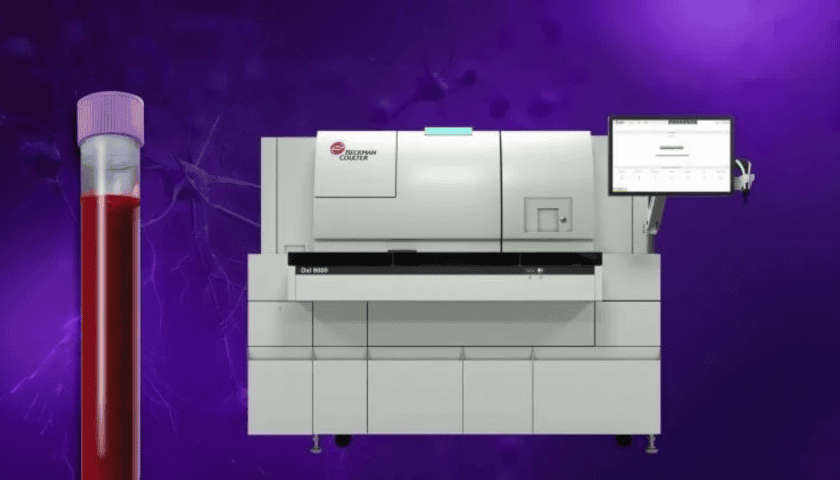
Alongside the clinical assay, Beckman Coulter has introduced the Access BD-pTau217 Research Use Only (RUO) assay for use on its DxI 9000 Immunoassay Analyzer.
The company unveiled the assay this week ahead of the 2026 Alzheimer’s Association International Conference (AAIC), which runs from 12 to 15 July in London.
Unlike the clinical test, the research assay selectively detects the low-molecular-weight form of p-Tau217 that originates in the brain.
Beckman said this approach improves biological specificity and allows researchers to better characterise central nervous system tau signals detected in blood samples.
Dr Jeremiah Hinson, Chief Scientific Officer for Neurodegenerative Diseases at Danaher, said the assay could help researchers identify tau pathology with greater precision and improve studies investigating disease progression and staging.
The company will also present five scientific posters at AAIC highlighting new data on p-Tau217, biomarker ratios and next-generation Alzheimer’s biomarkers.
Growing demand for blood-based diagnostics
The latest approval comes weeks after Roche secured European clearance for its Elecsys p-Tau217 blood test, reflecting increasing competition in blood-based Alzheimer’s diagnostics.
Interest in these tests has accelerated alongside the arrival of disease-modifying therapies.
The US Food and Drug Administration approved Biogen’s Leqembi (lecanemab) in 2023 and Eli Lilly’s Kisunla (donanemab) in 2024.
According to GlobalData, the two medicines are projected to generate global sales of US$3.7 billion and US$2.7 billion, respectively, by 2032.
Sign up HEREto receive our email newsletters with the latest news and insights from Africa and around the world, and follow us on LinkedInfor updates.




Be the first to leave a comment