Sidra Medicine administers Novartis’ Itvisma gene therapy to Qatar’s first SMA patient
The milestone also makes Qatar the third country worldwide to administer Itvisma and marks a significant step in the country’s precision medicine and rare disease care efforts.
Published
QATAR—Sidra Medicine, a member of Qatar Foundation, has administered Itvisma (onasemnogene abeparvovec), a one-time gene replacement therapy, to a 13-year-old patient with spinal muscular atrophy (SMA), becoming the first hospital in Qatar to deliver the treatment.
The milestone also makes Qatar the third country worldwide to administer Itvisma and marks a significant step in the country’s precision medicine and rare disease care efforts.
Prof. Ibrahim Janahi, Chief Medical Officer at Sidra Medicine, said the treatment represented an important milestone for the hospital and the future of rare disease care in Qatar.
He added that the achievement demonstrates the value of combining multidisciplinary expertise, precision medicine, and advanced interventional radiology to improve outcomes for patients with complex genetic conditions.
According to Janahi, Sidra Medicine aims to ensure eligible patients and their families can access advanced therapies closer to home through coordinated care pathways that provide support before, during, and after treatment.
Targeting the genetic cause of SMA
SMA is a rare genetic neuromuscular disorder caused by a missing or non-functional survival motor neuron 1 (SMN1) gene.
As a result, the body produces insufficient levels of the survival motor neuron (SMN) protein, which is essential for motor neuron survival and normal muscle function.
Itvisma is designed to address the underlying cause of SMA by delivering a functional copy of the human SMN1 gene through a single intrathecal injection.
Patients undergo comprehensive clinical and genetic assessments to determine their eligibility for treatment.
Prof. Tawfeg Ben Omran, Division Chief of Genetics and Genomic Medicine at Sidra Medicine, said gene therapy is changing the treatment landscape for SMA by shifting care from symptom management towards addressing the disease at its genetic source.
He added that comprehensive genetic evaluation, careful patient selection, and long-term multidisciplinary follow-up are essential to achieving the best possible outcomes.
Multidisciplinary approach
The treatment followed months of preparation involving specialists in genetics and genomic medicine, interventional radiology, neurology, pharmacy, anesthesiology, pediatric intensive care, pulmonology, physiotherapy and rehabilitation, nursing, endocrinology, and orthopedic spine services.
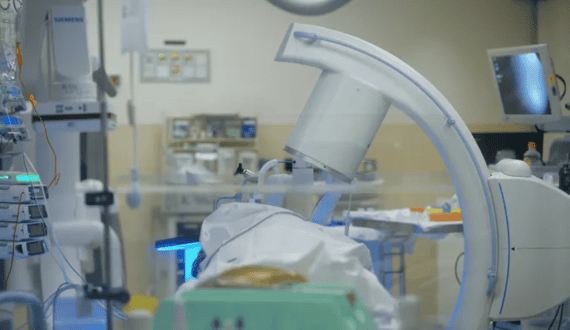
The therapy was administered through a single intrathecal injection in the interventional radiology unit.
The image-guided approach enabled clinicians to visualize the procedure in real time, navigate complex anatomy, and accurately position the needle for delivery into the spinal canal.
Dr. Walid Mubarak, Senior Attending Physician in Interventional Radiology at Sidra Medicine, said detailed planning and precise delivery are critical when administering a one-time intrathecal therapy.
He added that advanced imaging capabilities enable clinicians to perform the procedure accurately while maintaining patient safety.
Expanding access to gene therapy
Mohammed Ezz Eldin, Head of the GCC Cluster at Novartis, said the milestone highlights the importance of collaboration between healthcare providers and industry partners in expanding access to innovative treatments for patients with significant unmet needs.
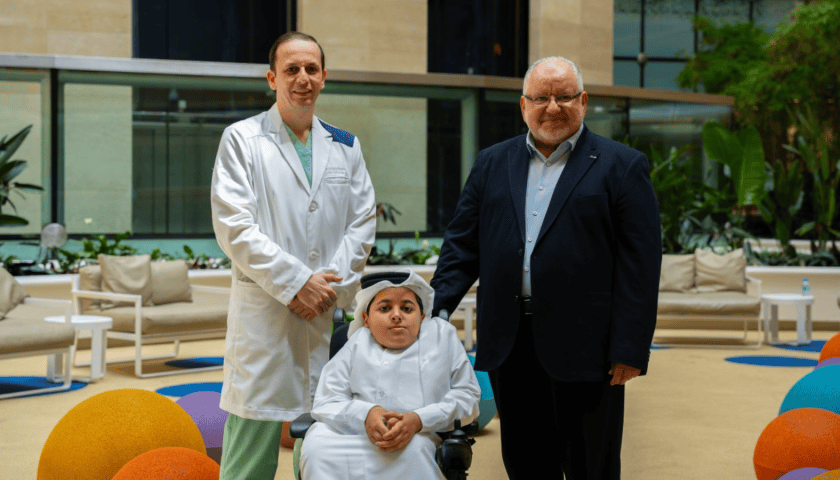
For Khalid and his family, the treatment marks the culmination of years of seeking specialist care and exploring advances in SMA treatment.
His mother said receiving the therapy in Qatar had been a dream come true after the family travelled internationally in search of treatment options.
Khalid, who attends Qatar Academy Sidra, said he was grateful to the healthcare teams that supported him and hoped to continue his studies and become a doctor.
Itvisma is registered with Qatar’s Ministry of Public Health, allowing eligible patients to access the therapy locally following specialist assessment.
Khalid will continue receiving follow-up care at Sidra Medicine, including laboratory monitoring, corticosteroid management, and assessments of motor function, respiratory health, mobility, rehabilitation goals, and overall well-being.
Sign up HEREto receive our email newsletters with the latest news and insights from Africa and around the world, and follow us on LinkedInfor updates.


Be the first to leave a comment