Egypt inaugurates Arab world’s first integrated rapid diagnostic test plant in Ismailia
The new facility will manufacture rapid diagnostic tests used in several areas of healthcare, including the detection of infectious diseases and epidemics, drug screening and the identification of cancer biomarkers.
Published
EGYPT—Egypt has inaugurated a manufacturing facility operated by Spectrum Diagnostic Industries, which it describes as the first integrated plant in Egypt and the Arab world dedicated to producing rapid diagnostic tests.
The facility is expected to strengthen domestic medical manufacturing, reduce the country’s reliance on imported diagnostic products and support the expansion of medical technology exports.
Minister of Industry Khaled Hashem attended the inauguration ceremony at the company’s facility in the Ismailia Public Free Zone.
He was joined by Deputy Prime Minister and Minister of Health and Population Khaled Abdel Ghaffar, Minister of Investment and Foreign Trade Mohamed Farid, Ismailia Governor Nabil Hasaballah, Chairperson of the Egyptian Drug Authority Ali El Ghamrawy and other government officials.
The new facility will manufacture rapid diagnostic tests used in several areas of healthcare, including the detection of infectious diseases and epidemics, drug screening and the identification of cancer biomarkers.
Hashem described the factory as a strategic step in Egypt’s efforts to localise the production of essential medical and diagnostic products.
He added that expanding domestic manufacturing would strengthen healthcare security while helping Egypt establish itself as a regional centre for medical and diagnostic manufacturing.
Focus on imports and exports
According to Hashem, the facility could help reduce Egypt’s dependence on imported rapid diagnostic tests and generate annual import savings of approximately US$30m.
At the same time, increased domestic production could create opportunities to expand exports of higher-value medical products to international markets.
The minister said Egypt’s strategic geographical position, industrial infrastructure and extensive network of trade agreements provide a strong foundation for developing the country’s medical manufacturing sector and reaching regional and global markets.
He also noted that the project reflects growing confidence in Egyptian manufacturers’ ability to produce advanced medical products that meet international quality standards.
Hashem stressed the need for continued cooperation between the Ministries of Industry, Health and Population, and Investment and Foreign Trade, as well as the Egyptian Drug Authority and private-sector companies.
He said coordinated efforts among these stakeholders would help strengthen Egypt’s pharmaceutical and medical industries and support the development of locally manufactured healthcare products.
Pharmaceuticals identified as priority industry
The minister also highlighted industrial development as a central component of Egypt’s broader economic growth strategy.
Under the country’s updated industrial strategy, pharmaceuticals are among seven industries identified as priorities for development and investment.
The strategy aims to improve the quality of locally manufactured products, increase the share of local content and accelerate technological modernisation across priority industries.
It also seeks to attract investments that support technology transfer while helping Egyptian manufacturers integrate into global value chains.
In addition, Hashem said the Ministry of Industry is implementing measures to improve the investment environment and encourage further industrial expansion.
These measures include streamlining administrative procedures, expanding industrial services and making serviced industrial land available to investors.
The ministry is also supporting manufacturers seeking to increase production capacity and strengthen their technological capabilities to improve the competitiveness of Egyptian industries.
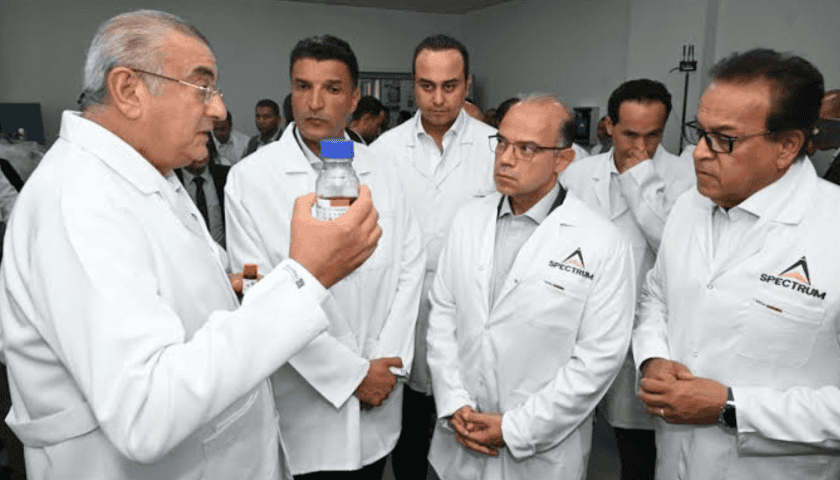
Following the inauguration ceremony, the ministers toured the new rapid diagnostic test production line and reviewed the advanced manufacturing technologies installed at the facility.
Sign up HEREto receive our email newsletters with the latest news and insights from Africa and around the world, and follow us on LinkedInfor updates.



Be the first to leave a comment