Medcare Dubai launches patient-specific 3D-printed surgical guides for spine care
The technology is designed to improve surgical precision, shorten operating times, reduce blood loss, and accelerate recovery for patients with severe scoliosis and other spinal deformities.
Published
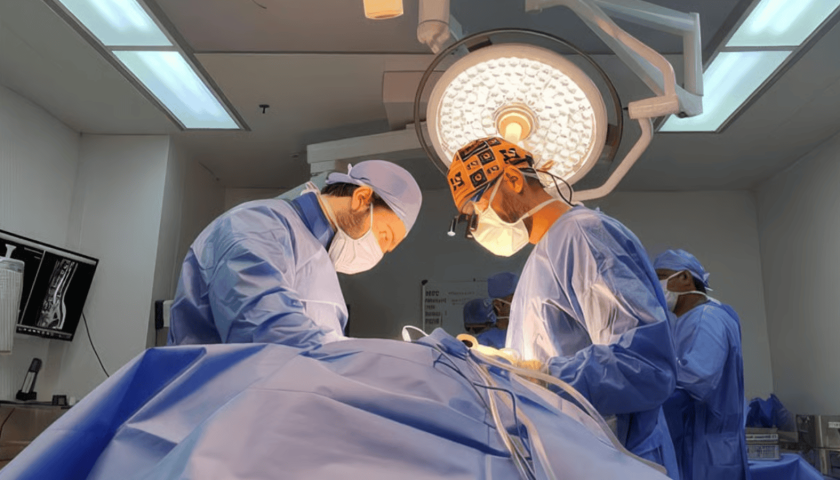
UAE— Medcare Orthopaedics and Spine Hospital in Dubai has introduced patient-specific 3D-printed surgical guides for complex spinal procedures, marking a major advancement in spine care.
The technology is designed to improve surgical precision, shorten operating times, reduce blood loss, and accelerate recovery for patients with severe scoliosis and other spinal deformities.
The development further strengthens the UAE’s position as a regional hub for advanced spinal treatment.
Among the first patients to benefit from the new approach were two girls aged 14 and 15 and a 17-year-old boy, all diagnosed with severe scoliosis that required complex corrective surgery.
Personalised planning improves surgical outcomes
Dr. Sameh Abolfotouh, Consultant Orthopaedic and Spine Surgeon at Medcare Orthopaedics and Spine Hospital and Chairperson of AO Spine for the Middle East and Africa (MEA) region, said every scoliosis case presents unique challenges, making personalised surgical planning essential.
He explained that the 14-year-old patient had severe spinal curvature affecting both the upper and lower spine after experiencing persistent back pain.
Using detailed pre-operative planning and customised 3D-printed guides, the surgical team achieved precise correction, enabling her to return to normal daily activities.
The 17-year-old patient had a significant spinal deformity that threatened his posture and long-term mobility.
According to Dr. Abolfotouh, the technology enabled surgeons to complete the complex procedure in just four hours, compared with the traditional eight to ten hours often required for similar operations, without post-operative complications.
Meanwhile, the 15-year-old girl had a progressive spinal curvature exceeding 50 degrees.
The customised guides allowed surgeons to accurately navigate her spinal anatomy, restore alignment, and support a smooth recovery.
Digital workflow enhances precision
Dr. Abolfotouh said the customised 3D-printed guides reduce surgery duration by more than half while improving accuracy during corrective procedures. As a result, young patients can return more quickly to school, sports, work, and other daily activities with fewer complications.
Dr. Azzam Fayyad, Consultant Orthopaedic and Trauma Surgeon, Medical Director, and Head of Orthopaedics at Medcare Orthopaedics and Spine Hospital, explained that the hospital has implemented a specialised digital workflow that allows surgeons to virtually plan each operation before entering the operating theatre.
The process begins with advanced imaging to create detailed three-dimensional models of each patient’s spine. These images are then used to manufacture customised surgical guides that precisely match the patient’s anatomy.
During surgery, the guides fit onto the vertebrae like a lock and key, enabling surgeons to place implants with exceptional precision while reducing the margin of error to less than two per cent.
Faster recovery with less blood loss
According to Dr. Fayyad, the hospital uses the technology to minimise operating time, reduce blood loss, and support faster recovery for both paediatric and adult patients with complex spinal conditions.
He noted that one of the hospital’s primary focus areas is the treatment of Adolescent Idiopathic Scoliosis (AIS), a progressive condition that causes abnormal spinal curvature during childhood and adolescence.
In severe cases, AIS can affect posture, mobility, self-confidence, and overall quality of life, often making major corrective surgery necessary.
Traditionally, these procedures last between eight and ten hours and involve substantial blood loss, extended hospitalisation, and lengthy rehabilitation.
Dr. Abolfotouh added that the virtual planning process allows surgeons to simulate the entire procedure before entering the operating room, ensuring that every surgical step is carefully mapped in advance.
The technology has also significantly reduced blood loss to less than 400 millilitres per procedure, lowering the need for major blood transfusions and reducing the risk of complications.
These improvements contribute to safer operations and faster recovery for both children and adults undergoing complex spinal surgery.
Sign up HEREto receive our email newsletters with the latest news and insights from Africa and around the world, and follow us on LinkedInfor updates.




Be the first to leave a comment