Africa adopts decade framework to sustain polio eradication gains
The framework calls on countries to maintain high-quality disease surveillance, preserve laboratory and emergency response capacity, strengthen routine immunization and secure sustainable domestic financing.
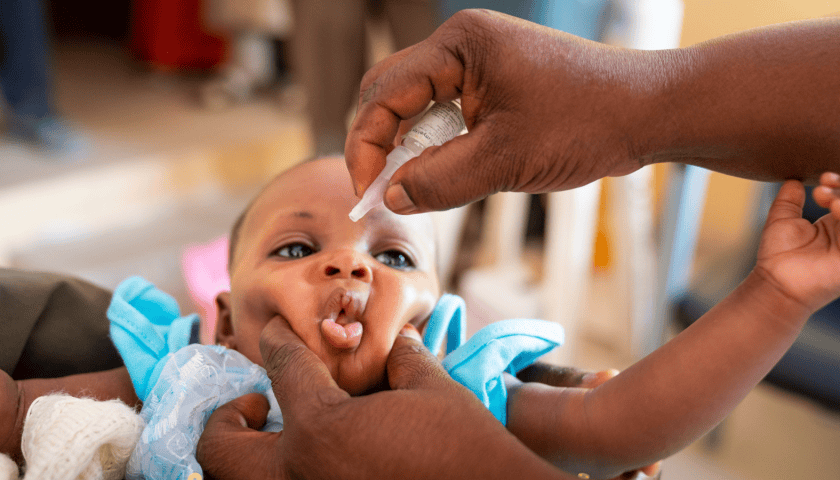
ETHIOPIA—African health ministers and senior health officials have adopted a 10-year framework to sustain progress towards polio eradication by strengthening national health systems and protecting decades of investment in creating a polio-free continent.
The Framework for Polio Transition and Sustainability in the WHO African Region 2026–2035 was adopted during the 76th session of the World Health Organization (WHO) Regional Committee for Africa, held in Addis Ababa from 25 to 28 August 2026.
Strengthening polio surveillance and response
The framework calls on countries to maintain high-quality disease surveillance, preserve laboratory and emergency response capacity, strengthen routine immunization, and secure sustainable domestic financing.
It also emphasizes stronger governance and accountability, as well as country-led plans for integrating essential polio functions into national health systems.
Although the African Region achieved certification as free of indigenous wild poliovirus in 2020, countries continue to report outbreaks of circulating variant polioviruses alongside other complex public health emergencies.
To date, more than 180 polio detections have been reported across the Region, with the Lake Chad Basin and Horn of Africa recording the highest numbers and remaining key areas of transmission.
The framework seeks to ensure that expertise, surveillance systems, laboratories, trained health workers, emergency operations, and community networks developed through the Global Polio Eradication Initiative (GPEI) continue to support countries beyond polio eradication.
In addition, countries have repeatedly used polio-funded personnel and infrastructure to respond to Ebola, Marburg virus disease, mpox, cholera, yellow fever and other health emergencies.
These resources have also helped strengthen routine immunization, laboratory networks and emergency preparedness.
Integrating Polio assets into health systems
The regional framework aligns with WHO’s global Polio Transition Strategic Framework and the Sustaining a Polio-free World strategy.
Together, these frameworks will guide Member States as they integrate essential polio functions into national health systems between 2026 and 2035.
“Sustaining Africa’s polio gains requires strong country ownership, sustainable financing, and the integration of polio assets into broader health systems,” said Dr Mohamed Gedi, Polio Eradication Programme Coordinator at the WHO Regional Office for Africa.
He said maintaining high population immunity, effective surveillance and strong outbreak preparedness would help countries protect their polio-free status while strengthening health security across the Region.
The framework also links polio transition to wider health security priorities.
By incorporating polio capacities into national health systems, countries can improve their ability to detect and respond rapidly to emerging infectious diseases while advancing universal health coverage and implementing the International Health Regulations (2005).
It also addresses the expected decline in external polio eradication funding by encouraging countries to progressively institutionalize and finance essential functions through their own health systems.
Country Ownership and sustainable financing
Mike McGovern, Chair of the International PolioPlus Committee at Rotary International and Chair of the GPEI Polio Oversight Board, said the world is closer than ever to ending polio but must maintain its efforts.
Rotary remains committed to working with governments, WHO and GPEI partners to protect children, strengthen immunization systems and support financing for the final stages of eradication, he said.
Under the framework, Member States will develop or strengthen national transition plans, integrate essential polio functions into broader health programmes, mobilize sustainable domestic resources, and monitor progress through a regional accountability mechanism.
WHO will provide technical assistance, facilitate knowledge sharing, and report annually on implementation across the region.
The initiative comes as GPEI extends its eradication efforts through 2029 while countries prepare to sustain critical public health functions beyond polio certification.
The Center for Diagnostics and Telemedicine is developing AI services for the entire country.
Regional physicians can access the most advanced diagnostic imaging technologies without having to build their own digital infrastructure from scratch.

Be the first to leave a comment