

Uganda advances two candidate vaccines against Bundibugyo Ebola virus
The trials will advance the evaluation of the two candidates against the Bundibugyo virus, a species distinct from the Zaire Ebola virus targeted by the widely used Ervebo vaccine.
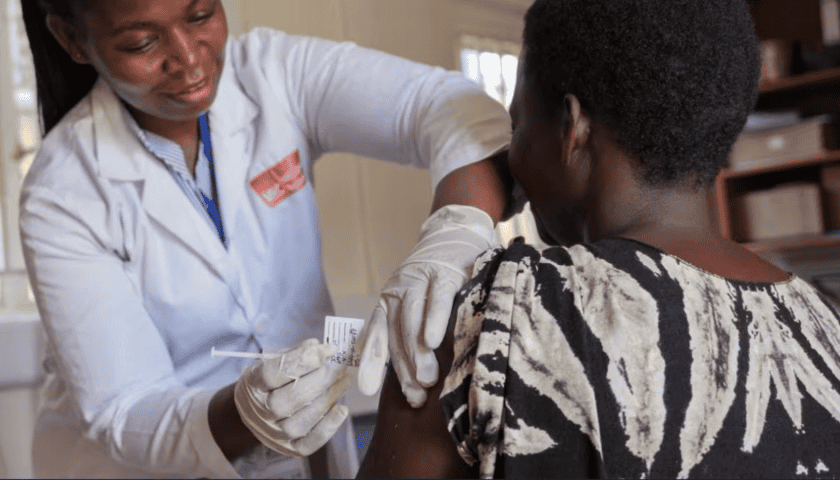
UGANDA—Two experimental vaccines against the Bundibugyo Ebola virus have advanced to new stages of clinical development in Uganda as health authorities respond to an outbreak in the Democratic Republic of the Congo (DRC).
The Africa Centres for Disease Control and Prevention (Africa CDC) said these developments mark progress in addressing a major gap in Ebola preparedness, as no vaccine or specific treatment has been approved for the Bundibugyo virus.
Two vaccine candidates advance to Phase Ib
Wessam Mankoula, an Africa CDC official, said during an online press briefing that the University of Oxford’s ChAdOx1 BDBV vaccine entered Phase Ib clinical trials in Uganda on October 6.
The development follows the launch of Phase Ia trials in the United Kingdom in July.
A second candidate, developed by Moderna, received ethical approval for Phase Ib trials in Uganda on October 7, Mankoula said.
Its Phase Ia trials began in Canada in early August.
The trials will advance the evaluation of the two candidates against the Bundibugyo virus, a species distinct from the Zaire Ebola virus targeted by the widely used Ervebo vaccine.
The absence of an approved vaccine specifically for Bundibugyo Ebola leaves public health authorities with limited options for preventing infections among healthcare workers and other people at high risk of exposure.
Moving the candidates through clinical development could help expand the range of tools available for future outbreak responses.
However, their progression to Phase Ib does not establish safety or effectiveness, which clinical research must assess.
DRC receives 70,000 doses of Ervebo
Meanwhile, the DRC has received 70,000 doses of Ervebo, a vaccine approved to protect against the Zaire Ebola virus, according to Africa CDC.
The vaccine has not been proven effective against the Bundibugyo strain responsible for the current outbreak.
Authorities have administered doses through two separate programmes.
Under a protocol-governed compassionate-use programme, authorities vaccinated 7,775 healthcare workers and other frontline personnel as of October 7.
A further 848 frontline workers had received Ervebo through a separate research protocol known as BRAVO.
Vaccination under that programme has been suspended because of supply shortages.
The two programmes illustrate the operational challenges facing outbreak responders, who must manage vaccine availability while addressing uncertainty over protection against the circulating virus.
The distinction between the two Ebola species also remains important when assessing the potential benefits of deploying an existing vaccine during an outbreak caused by a different strain.
Outbreak toll rises as response continues
Figures released by DRC health authorities showed that the outbreak had recorded 8,728 confirmed cases and 4,205 deaths as of October 6.
The reported case fatality rate stood at 48.2%, while 2,269 patients had recovered.
The outbreak figures underscore pressure on healthcare services and the need for effective infection-prevention measures, particularly for medical personnel and other frontline workers.
Without an approved vaccine or treatment for Bundibugyo Ebola, clinical research remains a key part of efforts to develop targeted medical countermeasures.
The Oxford and Moderna candidates are being evaluated in parallel, while the DRC continues to use Ervebo under separate programmes despite the lack of established effectiveness against the virus causing the outbreak.
Be the first to leave a comment