Japan’s MHLW approves Boehringer’s Jascayd as first PDE4B inhibitor for lung fibrosis
Jascayd acts as the first phosphodiesterase 4B (PDE4B) inhibitor approved for these indications, offering both antifibrotic and immunomodulatory activity.
Published
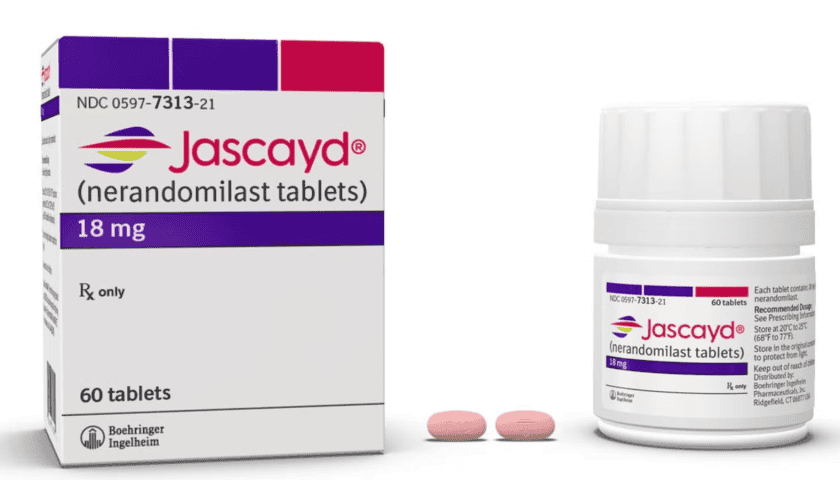
JAPAN—Boehringer Ingelheim has secured approval from Japan’s Ministry of Health, Labour and Welfare (MHLW) for Jascayd (nerandomilast), an oral therapy designed for adults living with idiopathic pulmonary fibrosis (IPF) and progressive pulmonary fibrosis (PPF).
The decision positions Japan as the fourth country to authorize nerandomilast, expanding access to a treatment that targets chronic, life-threatening lung scarring conditions.
Jascayd acts as the first phosphodiesterase 4B (PDE4B) inhibitor approved for these indications, offering both antifibrotic and immunomodulatory activity.
The therapy aims to slow disease progression by targeting underlying inflammatory and fibrotic pathways that drive lung tissue damage.
Clinical evidence from Phase III trials
The approval follows results from two large Phase III studies, FIBRONEER-IPF and FIBRONEER-ILD, which evaluated the safety and efficacy of nerandomilast in patients with fibrotic lung disease.
Both trials ran in parallel and included patients with varying stages of disease progression.
In the FIBRONEER-IPF study, nerandomilast met its primary endpoint by significantly reducing the decline in lung function compared with placebo.
Researchers measured this outcome as absolute changes in forced vital capacity (FVC) from baseline through week 52, showing a slower decline in lung capacity among treated patients.
Similarly, the FIBRONEER-ILD trial demonstrated statistically significant improvements in FVC at week 52 compared with placebo.
Although neither study achieved its key secondary endpoints, pooled analyses indicated additional potential benefits, including a 59% reduction in the risk of death in patients receiving the 18 mg dose without background therapy, compared with placebo.
Clinical interpretation and physician perspective
Boehringer Ingelheim highlighted that the results reinforce nerandomilast as a meaningful therapeutic option for patients with limited treatment choices, particularly in IPF, where no new oral therapy has been introduced in several markets over the past decade.
The company emphasized the consistency of lung function preservation across both pivotal studies as a key clinical outcome.
According to Shashank Deshpande, who leads the Human Pharma division and serves on the company’s Board of Managing Directors, the approval represents a significant step forward for patients in Japan.
He noted that physicians now have access to a new oral treatment option that combines measurable efficacy with a tolerability profile designed to support long-term adherence in chronic care settings.
Broader research and pipeline expansion
Beyond fibrotic lung disease, Boehringer Ingelheim continues to advance its respiratory and oncology pipeline.
The company recently expanded its collaboration efforts with Zai Lab, focusing on dual-targeting approaches involving delta-like ligand 3 (DLL3) for extensive-stage small cell lung cancer (ES-SCLC) and other neuroendocrine carcinomas.
This reflects a broader strategy to integrate targeted therapies across complex and high-need disease areas.
With Jascayd’s approval in Japan, Boehringer Ingelheim strengthens its global footprint in respiratory medicine while continuing to pursue next-generation treatment strategies across multiple therapeutic fields.
Sign up HEREto receive our email newsletters with the latest news and insights from Africa and around the world, and follow us on LinkedInfor updates.




Be the first to leave a comment