

Olympus to launch CADDIE PLUS AI Colonoscopy Solution in Europe in November 2026
CADDIE PLUS builds on the existing CADDIE system by adding real time polyp size classification and withdrawal time monitoring to help endoscopists assess lesions and monitor procedural quality.
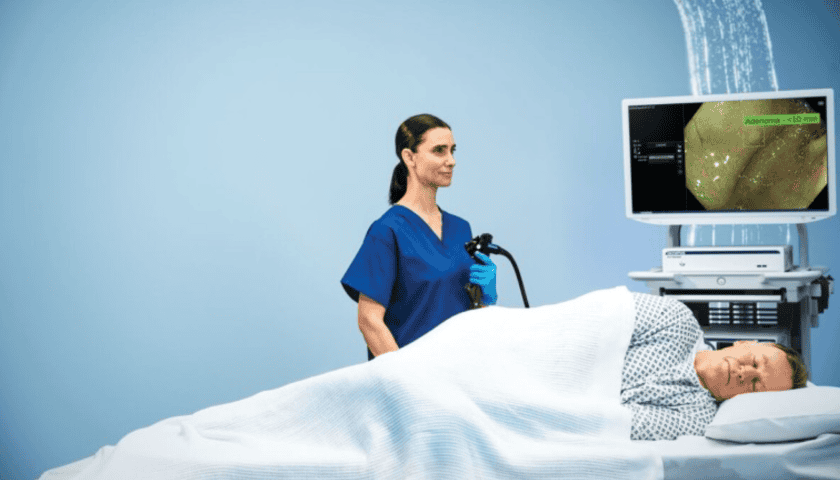
JAPAN—Olympus Corporation will introduce CADDIE PLUS, an upgraded artificial intelligence (AI) solution for colonoscopy, in 17 European countries from November 2026 to support polyp assessment and procedure quality.
The medical technology company unveiled the cloud-based application at United European Gastroenterology (UEG) Week 2026 in Barcelona, Spain.
CADDIE PLUS builds on the existing CADDIE system by adding real time polyp size classification and withdrawal time monitoring to help endoscopists assess lesions and monitor procedural quality.
New features support clinical assessment
The application forms part of OLYSENSE, Olympus’ connected digital platform, which integrates AI, procedure data, reporting and workflow tools for gastrointestinal endoscopy.
The platform aims to extend AI support beyond lesion detection to include assessment during colonoscopy and post-procedure analysis of performance.
CADDIE PLUS retains CADDIE’s existing lesion detection and characterisation functions while introducing two additional capabilities.
Polyp size classification indicates whether a detected polyp is smaller or larger than 10 mm, a clinically relevant threshold for lesion assessment and management.
Live Net Withdrawal Time displays withdrawal time during the procedure, helping endoscopists monitor adherence to established quality standards.
The European Society of Gastrointestinal Endoscopy recommends a minimum mean withdrawal time of six minutes, as careful examination during withdrawal is associated with improved adenoma detection.
Clinical evidence and quality monitoring
Olympus cited findings from the EAGLE randomised controlled trial, which evaluated CADDIE against standard colonoscopy.
The study found that CADDIE increased the number of sessile serrated lesions detected per procedure by 230% and large adenomas measuring more than 10 mm by 93%.
The absolute adenoma detection rate increased by 7.3 percentage points, from 35.9% to 43.2%.
After the procedure, separate Computer Aided Metrics software automatically presents seven performance indicators, including total endoscope time, gross and net withdrawal time, cleaning and therapy time, and documentation of caecal intubation and retroflexion.
Olympus said the software requires no additional steps from clinical staff.
“Colorectal cancer prevention starts with high quality colonoscopy and the ability to detect and appropriately assess precancerous lesions,” said Miquel Àngel García, executive vice president and general manager of gastrointestinal operations at Olympus.
Edward Seward of University College London Hospital said access to polyp size and withdrawal time information could help clinicians assess lesions and maintain consistent procedure quality.
Digital endoscopy expansion
The launch reflects the wider adoption of AI enabled tools in endoscopy, where manufacturers are developing connected systems to support clinical decisions and standardise procedure monitoring.
Olympus said OLYSENSE operates within an ISO/IEC 27001-certified information security management system, providing a framework for managing information security as hospitals integrate digital applications into clinical workflows.
Peter Mountney, global vice president of artificial intelligence at Olympus, said the platform would expand how clinicians access and use AI tools in patient care.
CADDIE PLUS will become available from November 2026 in 17 European countries where CADDIE is already offered.
The application is not available in the United States, and availability remains subject to local regulatory requirements.
UEG Week runs from October 17 to 20 in Barcelona, and visitors can view the solution at the Olympus booth in Hall 7, Booth 53.

Be the first to leave a comment