Senegal convenes global mercury experts ahead of 2034 Minamata phase-out deadline
The meeting combines an African subregional workshop with the closing session of the Global Environment Facility’s (GEF) GEF-7 Phasing Down Dental Amalgam Project.
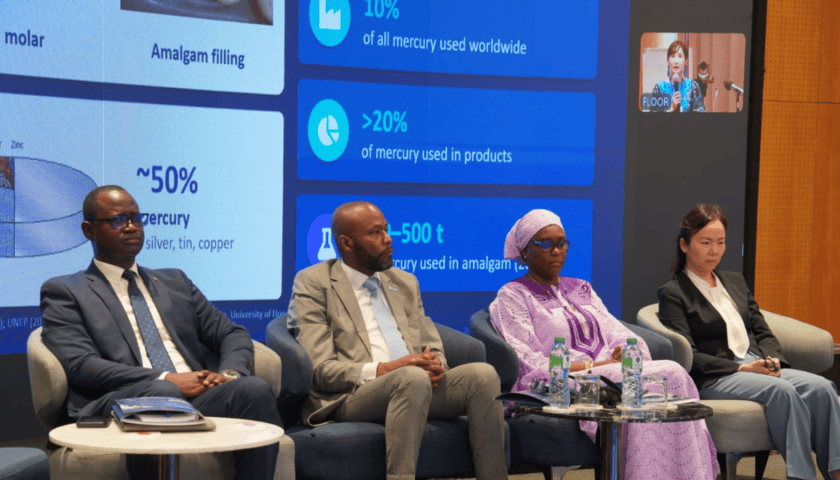
SENEGAL—More than 75 health and environmental experts from Africa, Asia, and Latin America are gathering in Senegal from 19 to 22 October 2026 to advance the phase-out of mercury-containing dental fillings and promote safer, more sustainable oral healthcare.
The meeting combines an African subregional workshop with the closing session of the Global Environment Facility’s (GEF) GEF-7 Phasing Down Dental Amalgam Project.
It follows the sixth Conference of the Parties to the Minamata Convention on Mercury in 2025, where countries agreed to phase out dental amalgam by 2034.
Countries strengthen mercury controls
Dental amalgam has been used for more than 175 years and contains approximately 50% elemental mercury by weight.
Mercury can enter the environment during the placement or removal of fillings and through improper waste disposal, contaminating soil and water.
The World Health Organization’s (WHO) Global Oral Health Action Plan 2023–2030 calls for 90% of countries to phase down or phase out dental amalgam by 2030.
However, only 13% of countries in the WHO African Region had achieved this target by 2024, compared with 31% worldwide.
The United Nations Environment Programme (UNEP) implements the GEF-funded project, with WHO executing it and technical assistance from the UNEP Global Mercury Partnership.
It helps countries reduce dental amalgam use, introduce alternative materials and improve the management of mercury-containing waste.
Senegal pilots mercury-free oral healthcare
Senegal, one of three pilot countries alongside Thailand and Uruguay, has strengthened coordination between its health and environment sectors following a national assessment of dental practices and needs.
The country developed good-practice guidance, trained oral health professionals in mercury-free and minimally invasive techniques, and installed 13 amalgam separators to prevent mercury from entering wastewater.
It also improved the collection, storage and disposal of mercury-containing waste.
Through the Minamata Convention’s Specific International Programme, Senegal worked with Burkina Faso and Togo to develop and technically validate national regulatory instruments covering mercury and mercury-added products, including dental amalgam.
Dr Codou Badiane Mané, Head of the Oral Health Division at Senegal’s Ministry of Health and Public Hygiene, said training professionals, promoting alternatives and testing new solutions were important steps towards integrating mercury-free practices into routine dental care.
Dr Pathé Dieye, Senegal’s national focal point for the Minamata Convention, said the pilot helped test approaches that combine oral healthcare, waste management, and stronger regulation.
He added that the meeting would allow other African countries to learn from Senegal’s experience.
Regional cooperation supports the 2034 deadline
Participants will review project results and discuss regulations, alternative filling materials, workforce training and waste management.
West African countries will also identify priority actions to accelerate the transition, while field visits will showcase solutions being tested in Senegal.
Ludovic Bernaudat, Head of UNEP’s GEF Chemicals and Green Chemistry Unit, said the pilot countries’ experiences offered practical lessons for translating international commitments into national action.
Dr Benido Impouma, Director of the Communicable and Noncommunicable Diseases Cluster at WHO’s Regional Office for Africa, said the transition could strengthen prevention, improve care quality and support universal health coverage.
WHO will continue working with UNEP to help countries implement the Minamata Convention while maintaining access to safe, effective and affordable oral healthcare.
After the project closes, Senegal, Thailand, and Uruguay will consolidate their results and explore opportunities to expand successful approaches as countries work toward the 2034 phase-out deadline.

Be the first to leave a comment