Senegal’s Institut Pasteur de Dakar sequences first 40 human genomes
The development comes nearly two decades after the first human genome draft was completed in 2001 and a decade after Africa’s first human genome sequencing effort in South Africa in 2013.
Published
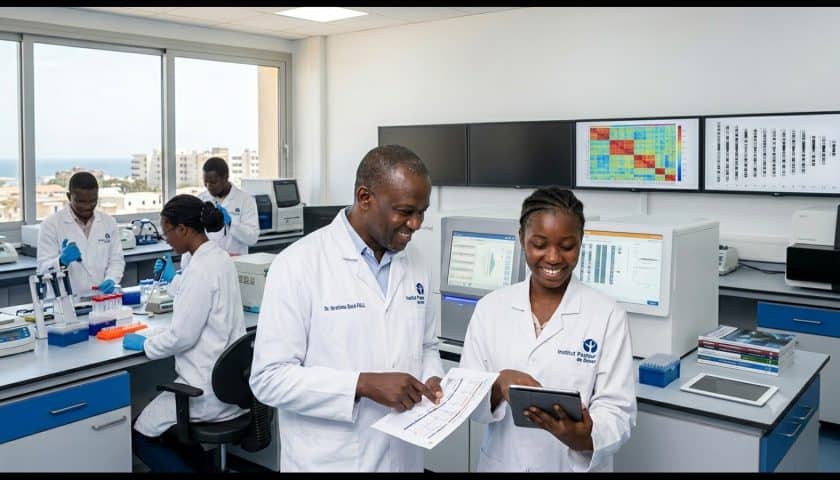
SENEGAL—The Institut Pasteur de Dakar (IPD) has successfully sequenced the first 40 human whole genomes in Senegal, marking a significant milestone in the country’s move toward clinical genomics and precision health.
This achievement places Senegal alongside other African nations, including South Africa, Nigeria, Egypt, and Tunisia, that are expanding the use of next-generation sequencing in biomedical research and healthcare innovation.
IPD built this capability by drawing on its long experience in pathogen and vector genomics, bioinformatics, and advanced laboratory diagnostics.
It deployed high-throughput sequencing platforms, including Illumina NovaSeq and Oxford Nanopore Technologies, to support the initiative and strengthen local research capacity.
Building advanced genomic infrastructure
The development comes nearly two decades after the first human genome draft was completed in 2001 and a decade after Africa’s first human genome sequencing effort in South Africa in 2013.
With the completion of a full reference human genome in 2022, the Senegalese milestone reflects the continent’s growing participation in global genomics research.
By combining dual sequencing technologies, IPD is now building one of the region’s most advanced platforms for human genome analysis.
This infrastructure is expected to accelerate research into genetic diseases and improve diagnostic accuracy across multiple medical fields.
Driving precision medicine and cancer research
The new genomics platform will support the development of diagnostic tools and enable earlier detection of diseases, particularly cancers.
IPD plans to prioritize breast cancer screening in its initial phase before expanding to other cancer types in the future.
At the same time, the institute is strengthening its public health response to women’s cancers through community-based programs.
In partnership with LISCA and district health authorities, IPD has supported cervical cancer screening campaigns using screening vouchers across Senegal in 2024 and 2025.
It has also worked with the Ministry of Health to raise awareness of HPV vaccination across multiple regions, reinforcing prevention as a key strategy in cancer control.
Alongside these efforts, ongoing research is focusing on improving early detection methods and refining risk assessment tools for women’s cancers.
Expert perspectives on genomic innovation
Dr Ibrahima Socé Fall, CEO of IPD, said the milestone reflects Senegal’s commitment to health sovereignty and highlights the role of African institutions in advancing genomic medicine under broader continental initiatives led by the Africa CDC.
Dr Moussa Moise Diagne of IPD noted that the sequencing platform builds on years of expertise in outbreak genomics and now extends into clinical applications that will reshape disease detection in Senegal.
Dr Alexander Ross of the University of Southampton said the pilot work lays a strong foundation for genomic medicine that could improve treatment outcomes and reduce cancer-related mortality.
Professor Ahmadou Dem of the University Cheikh Anta Diop emphasized that genetic research is becoming central to understanding cancer risk and improving prevention strategies in Africa.
Dr Fatma Guenoune of LISCA highlighted the impact of collaboration with IPD in expanding access to cervical cancer screening and improving early detection services for women.
Sign up HEREto receive our email newsletters with the latest news and insights from Africa and around the world, and follow us on LinkedInfor updates.




Be the first to leave a comment