Akeso secures China approval for Psoriasis Biologic Gumokimab
The approval adds a new option in the growing IL-17 inhibitor class and strengthens the company’s dermatology portfolio.
Published
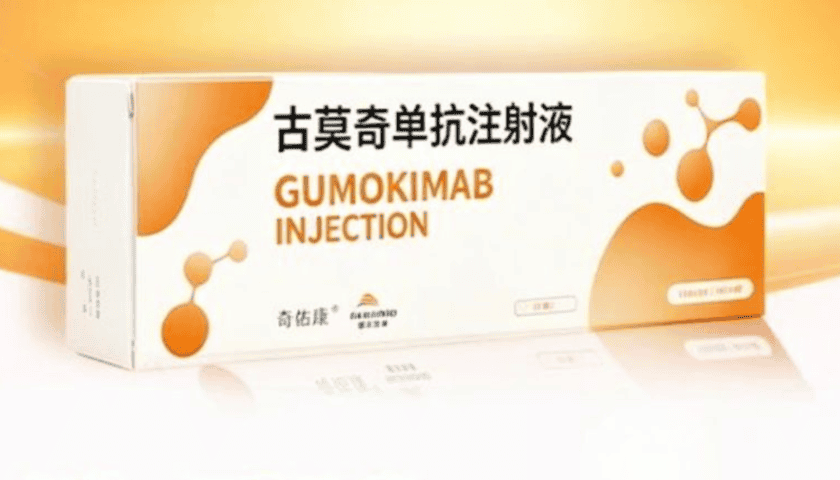
CHINA—Akeso has received approval from China’s National Medical Products Administration (NMPA) for gumokimab (AK111), a monoclonal antibody targeting interleukin-17 (IL-17), for the treatment of adults with moderate-to-severe plaque psoriasis.
The approval adds a new option in the growing IL-17 inhibitor class and strengthens the company’s dermatology portfolio.
The regulatory decision was based on evidence from one pivotal Phase III clinical trial (AK111-301) and three supportive studies that evaluated both efficacy and safety across patient populations.
Strong clinical performance
Clinical results from the Phase III trial showed rapid and significant improvement in skin symptoms among treated patients.
At week 12, gumokimab achieved a Psoriasis Area and Severity Index 75 (PASI 75) response rate of 94.6%, indicating that nearly all patients experienced at least a 75% reduction in disease severity.
In comparison, the PASI 100 response rate, which reflects complete skin clearance, reached 47.7%, outperforming other agents in the same class, which recorded 28.6%.
In addition, the therapy demonstrated sustained benefits over time.
By week 52, patients maintained high response levels, with PASI 75 rates approaching 100% and PASI 100 responses increasing to 68.9%, suggesting durable disease control with continued treatment.
Safety profile and treatment convenience
Alongside its efficacy, gumokimab showed a favourable safety profile across clinical studies.
Investigators reported low incidences of treatment-emergent adverse events, serious adverse events, and infections when compared with other IL-17 inhibitors evaluated in similar clinical settings.
The treatment regimen also offers practical advantages for patients. Administered via subcutaneous injection, gumokimab requires only 17 injections per year, including the loading phase.
This reduced frequency is roughly half the injection burden associated with other therapies in the same class, potentially improving long-term adherence.
Clinical leadership and company strategy
The Phase III study was led by Professor Xu Jinhua of Huashan Hospital, Fudan University, who served as principal investigator. His team contributed key clinical insights that supported the regulatory submission and approval process.
Akeso founder, chairwoman, president, and chief executive officer Dr Xia Yu highlighted the company’s expanding dermatology pipeline.
She noted that Akeso has developed both ebdarokimab and gumokimab to address different pathogenic pathways in autoimmune disease, positioning them as complementary treatment options for patients with psoriasis and related conditions.
She further emphasized that autoimmune disorders remain one of the most dynamic areas in global drug development, with growing demand for targeted biologics that offer improved efficacy and convenience.
Expansion into additional indications
Beyond psoriasis, the NMPA’s Center for Drug Evaluation (CDE) has also accepted a supplemental new drug application for gumokimab in active ankylosing spondylitis.
This regulatory step signals the company’s intention to expand the therapy’s use into additional inflammatory conditions, supported by ongoing clinical evaluation and broader development plans.
Sign up HEREto receive our email newsletters with the latest news and insights from Africa and around the world, and follow us on LinkedInfor updates.




Be the first to leave a comment