
Sidra Medicine expands precision cancer care for children in Qatar through genomic research
Over the past five years, the program has expanded its molecular diagnostic capabilities and introduced expedited genomic oncology profiling to provide oncologists with timely information when treatment decisions are urgent.
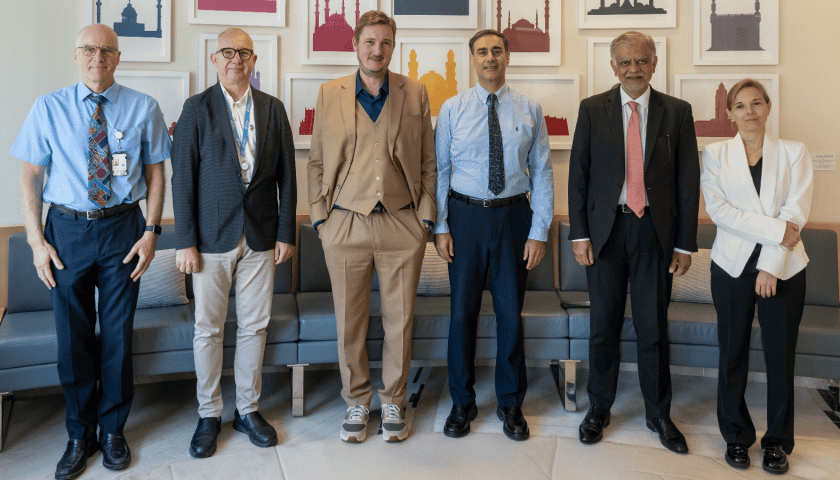
QATAR—Sidra Medicine, a member of the Qatar Foundation, has released its Pediatric Oncology Report 2025, highlighting developments in pediatric cancer research and precision oncology in Qatar.
The report coincides with World Cancer Research Day and Cancer Awareness Month.
The report draws on Sidra Medicine’s pediatric oncology and translational research programs and examines cancer diagnoses recorded between 2019 and 2025.
During this period, the hospital recorded 538 pediatric cancer diagnoses, comprising 355 solid tumors and 183 non-solid cancers.
Leukemia accounted for 34% of diagnoses, followed by central nervous system malignancies at 22%, lymphoma at 10%, neuroblastoma at 7% and germ cell tumors at 7%.
Dr. Wouter Hendrickx, Director of the Sidra Pediatric Oncology Qatar (SPOQ) program, said advances in pediatric oncology research are giving clinical teams a better understanding of each child’s cancer and helping inform treatment decisions.
He added that the program supports Qatar National Vision 2030 by contributing to healthcare research, innovation, and the development of specialized medical capabilities.
SPOQ uses precision medicine approaches to examine the molecular characteristics of pediatric tumors and support improvements in diagnosis, prognosis and treatment.
Genomic profiling and precision care
SPOQ brings together Sidra Medicine’s Research branch, Oncology and Hematology, Anatomical Pathology, Hematopathology and Neurosurgery divisions.
Over the past five years, the program has expanded its molecular diagnostic capabilities and introduced expedited genomic oncology profiling to provide oncologists with timely information when treatment decisions are urgent.
Sidra Medicine increasingly integrates genomic and molecular profiling into pediatric oncology care.
The approach helps clinicians understand the biology of individual cancers and, where possible, identify treatment options that more closely match each patient’s tumor characteristics.
Dr. Chiara Cugno, Acting Division Chief of Hematology and Oncology, Clinical Lead for SPOQ, and Director of the Advanced Cell Therapy Core, said progress in childhood cancer care involves improving diagnosis and developing new treatments.
She said precision care is integrated into the treatment journey for hematology and oncology patients at Sidra Medicine and highlighted the hospital’s focus on combining cancer care with research.
Advanced therapies
SPOQ is also advancing cellular therapies for children with cancer.
Its Advanced Cell Therapy Core is developing personalized treatments, including chimeric antigen receptor T cell (CAR T) therapy, while the Clinical Trial Office supports access to innovative clinical trials.
Sidra Medicine provides specialized services for pediatric and adolescent cancers and blood disorders.
Its multidisciplinary teams include pediatric oncologists and hematologists, pathologists, genomics specialists, radiologists, surgeons, and neuroscience experts.
The hospital has also introduced complex treatments, including hematopoietic stem cell transplantation, immunotherapy and cell therapy.
Sidra Medicine manufactures CAR T cells locally at its Good Manufacturing Practice Facility.
The hospital said the number of pediatric cancer patients requiring treatment abroad has declined as local expertise and treatment capabilities have expanded.
Looking ahead, Sidra Medicine plans to make comprehensive molecular profiling available to every pediatric cancer patient and continue developing access to innovative cancer treatments.

Be the first to leave a comment