

Siemens Healthineers secures US$31.1M ARPA-H award for autonomous stroke robotics
Siemens Healthineers will contribute US$5.4 million in cost sharing, bringing the total potential investment to US$36.5 million.
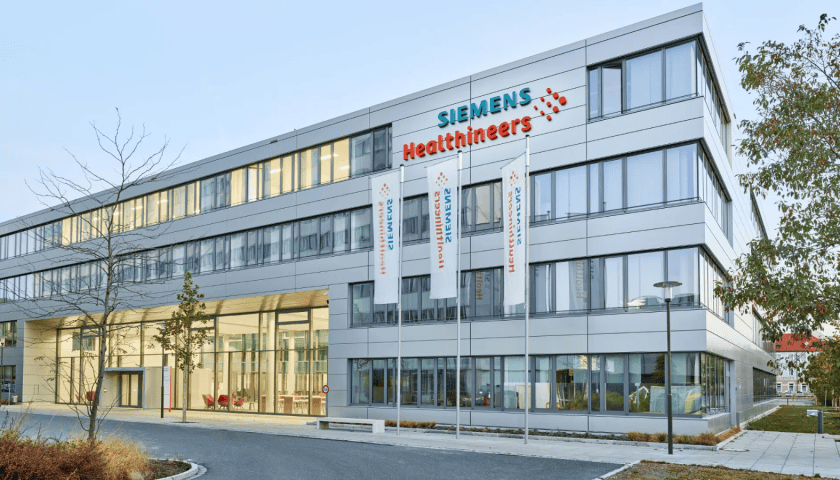
GERMANY—The Advanced Research Projects Agency for Health (ARPA-H) has awarded Siemens Healthineers up to US$31.1 million over five years to accelerate the development of autonomous remote endovascular robotics for stroke treatment.
Siemens Healthineers will contribute US$5.4 million in cost sharing, bringing the total potential investment to US$36.5 million.
The initiative aims to develop robotic systems capable of performing mechanical thrombectomy remotely and with a high degree of autonomy, potentially allowing specialists to treat patients over long distances.
Mechanical thrombectomy is a minimally invasive procedure that removes a blood clot blocking an artery in the brain and restores blood flow following an acute ischemic stroke.
When performed quickly, the procedure can improve outcomes and reduce the risk of long-term disability.
Expanding access to stroke treatment
Currently, mechanical thrombectomy is available primarily at comprehensive stroke centers, limiting access for patients who live far from specialized facilities.
In the United States, more than half of the population lives more than an hour from a thrombectomy-capable clinic. Meanwhile, only an estimated 12% of the 335,000 patients eligible for the procedure receive mechanical thrombectomy each year.
Because stroke treatment is highly time-sensitive, delays can increase the risk of permanent disability or death and contribute to higher healthcare costs.
Siemens Healthineers aims to address these barriers by combining robotics, medical imaging, interventional devices and artificial intelligence.
Philipp Fischer, head of Advanced Therapies at Siemens Healthineers, said early access to appropriate treatment can make a significant difference for stroke patients.
He added that the company aims to use these technologies to make endovascular therapy more accessible and precise across a wider range of healthcare settings.
Fischer described the ARPA-H investment as an important step in advancing autonomous remote endovascular robotics and expanding access to advanced stroke treatment.
Stryker joins development effort
Under the award, Stryker will participate as a sub-awardee, building on the strategic partnership it established with Siemens Healthineers in 2025 to advance robotic neurovascular interventions.
Jim Marucci, president of Stryker’s Neurovascular division, said the funding marks an important milestone in the companies’ collaboration and reinforces their shared commitment to innovation in neurovascular care.
The companies will work together to develop technologies intended to overcome geographical and infrastructure-related barriers to treatment and bring advanced stroke care closer to more patients and communities.
The funding comes through ARPA-H’s Autonomous Interventions and Robotics (AIR) program, led by ARPA-H Program Manager Ileana Hancu, PhD.
The project also supports Siemens Healthineers’ broader vision of helping healthcare professionals deliver personalized care, improve operational efficiency and transform healthcare delivery.

Be the first to leave a comment