

Uganda Parliament approves US$36.9M French loan for Mbarara Cancer Centre
The project will cost €33.58 million (US$38.8 million), with the French loan covering approximately 95% of the investment and the Ugandan government providing the remaining €1.6 million (US$1.85 million).
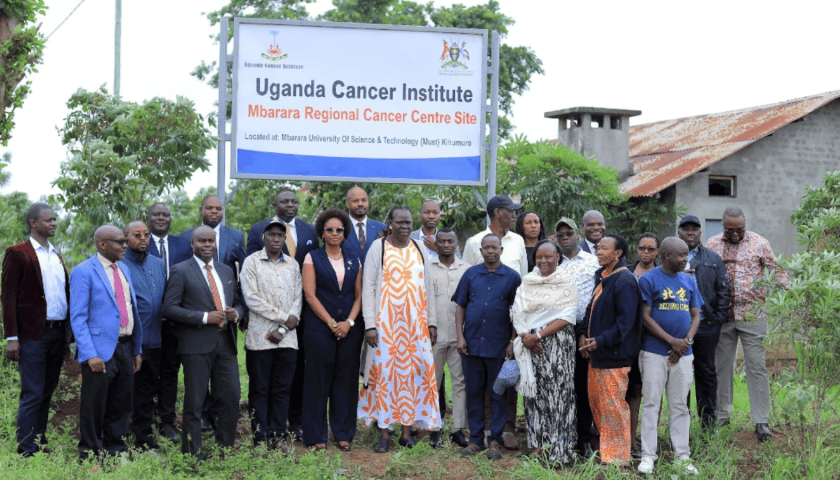
UGANDA—Uganda’s Parliament has approved a €31.98 million (US$36.9 million) loan from France to construct and equip a 138-bed cancer centre in Mbarara District, expanding access to specialist oncology services outside Kampala.
The Uganda Cancer Institute’s Mbarara Regional Oncology Centre will occupy 8.5 acres at the Kihumuro campus of Mbarara University of Science and Technology.
The project will cost €33.58 million (US$38.8 million), with the French loan covering approximately 95% of the investment and the Ugandan government providing the remaining €1.6 million (US$1.85 million).
Presenting the loan request, Minister of State for Finance, Planning and Economic Development Henry Musasizi cited Uganda’s annual cancer burden of 35,968 new cases and 24,629 deaths.
He said the shortage of specialist oncology services outside Kampala forces many patients to travel long distances to access diagnosis and treatment.
Centre to expand diagnostic and treatment capacity
In its report to Parliament, the Committee on National Economy said the facility would support earlier cancer diagnosis, reduce patients’ travel expenses and ease pressure on the Uganda Cancer Institute in Mulago.
Committee chairperson Jane Avur Pacuto highlighted the consequences of limited access to early detection and comprehensive cancer care, particularly among low-income communities and children with potentially treatable cancers.
The first phase will provide chemotherapy, cancer surgery and diagnostic services.
Infrastructure will include three operating theatres, intensive care and high-dependency care beds, and an imaging department equipped with CT and MRI scanners, mammography, ultrasound and X-ray machines.
The project also includes two ambulances and specialist training in partnership with France’s Gustave Roussy Institute.
However, the committee raised concerns about excluding radiotherapy from the first phase, warning that this could limit the centre’s treatment capacity.
Pacuto noted that approximately 60% of cancer patients require radiation therapy, making its absence a significant gap in the planned services.
Staffing and funding gaps raise implementation concerns
The committee also identified workforce and medicine supply challenges that could affect operations.
Citing an Auditor General’s report, it noted that only 11 of the 259 approved positions at the existing Mbarara cancer centre were occupied.
Additionally, the Uganda Cancer Institute faces an estimated Shs83.5 billion (US$22 million) funding gap for cancer medicines and laboratory supplies.
The committee urged the government to finance staff recruitment and ring-fence its contribution to the project, prioritising accommodation for specialist personnel.
It also called for an assessment of French contractor Tyllium SAS, extended equipment warranties and quarterly reports to Parliament covering construction progress, expenditure and implementation delays.
Other recommendations included funding for mobile cancer screening, human papillomavirus (HPV) vaccination and community awareness programmes.
The committee also proposed including accommodation for outpatients and caregivers in future expansion plans to support patients undergoing prolonged treatment.
Government defends phased implementation
During the parliamentary debate, Bukooli County Central MP Solomon Silwany called for stronger oversight of government borrowing, urging Parliament to monitor approved projects and assess whether they deliver their intended benefits.
Minister of State for Primary Health Care Charles Ayume defended the phased approach, explaining that the French loan would not cover the full range of oncology services, including radiotherapy.
He said the government would initially prioritise chemotherapy, surgical oncology and pathology, with additional services requiring further investment.
Be the first to leave a comment