UHAS Mega-Lab construction resumes under President Mahama’s Reset Agenda
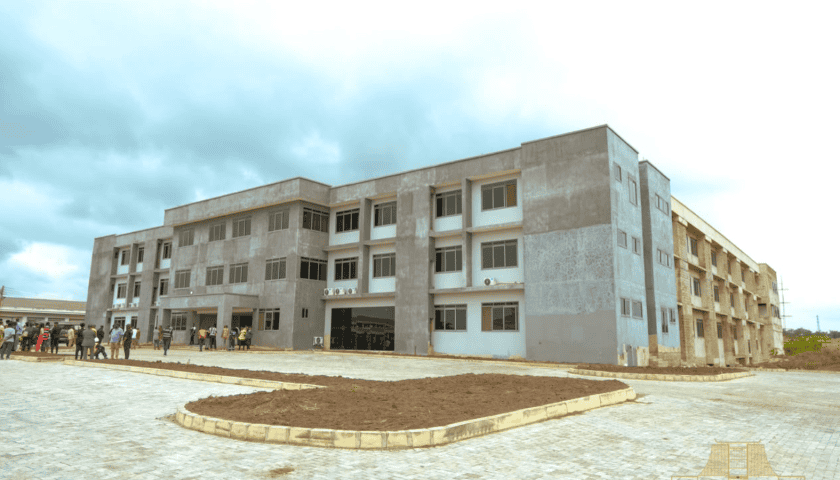
The renewed work aims to complete the university’s 5,300-square-metre Laboratory Complex, a project that began in 2014 but stalled for several years.
Published
GHANA—Construction has resumed on a multipurpose laboratory complex at the University of Health and Allied Sciences (UHAS) Sokode Campus, in a move aligned with President John Dramani Mahama’s “Reset Agenda” and its focus on expanding access to quality education and practical skills.
The renewed work aims to complete the university’s 5,300-square-metre Laboratory Complex, a project that began in 2014 but stalled for several years.
Its revival is expected to address a major infrastructure gap in medical education while supporting efforts to equip Ghanaian students with practical skills relevant to the healthcare sector.
Facility to expand hands-on medical training
Once completed, the facility will become the largest laboratory complex of its kind in Ghana and the wider sub-region.
The five-block development will accommodate more than 1,200 students and staff and will include specialised research, anatomy, and radiology simulation laboratories.
The expanded infrastructure will enable UHAS to move beyond predominantly theoretical instruction by giving students greater access to practical, hands-on training.
In addition, advanced simulation equipment will allow learners to develop technical skills in a controlled environment before entering clinical and professional settings.
The investment is expected to strengthen the university’s capacity to produce graduates who can transition more effectively into the healthcare workforce, while also improving opportunities for research and innovation.
Laboratory services to generate additional revenue
Beyond its educational role, the complex is expected to contribute to the university’s financial sustainability.
UHAS plans to use the facility to provide diagnostic, toxicology, and research services to hospitals, private companies, and other institutions across Ghana.
Revenue generated through these services could provide additional Internally Generated Funds (IGF) to support the operation and maintenance of the facility and its specialised equipment.
The approach is intended to reduce reliance on public funding for the upkeep of the university’s high-technology infrastructure.
Regional access and economic opportunities
The laboratory complex is also expected to strengthen UHAS’s regional role and attract students and researchers from other parts of West Africa.
Located in the Volta Region, which shares borders with Togo and is connected to the wider West African region, the university is positioned to serve an increasingly international student population.
At the same time, road infrastructure improvements are expected to make Ho and surrounding areas more accessible, potentially easing travel for students, researchers, healthcare professionals, and other visitors.
As activity around the university increases, demand for accommodation, transportation, retail, and other services could also rise.
Local businesses and communities around Ho and towns hosting UHAS satellite campuses are therefore expected to benefit from increased economic activity linked to education, research, healthcare services, and student spending.
Sign up HEREto receive our email newsletters with the latest news and insights from Africa and around the world, and follow us on LinkedInfor updates.


Be the first to leave a comment