

WHO Africa unveils Regional Health Data Hub to centralize African public health data
The RDHUB, launched during the 76th session of the WHO Regional Committee for Africa in Addis Ababa from 25 to 27 August 2026, connects information from different health programmes and systems.
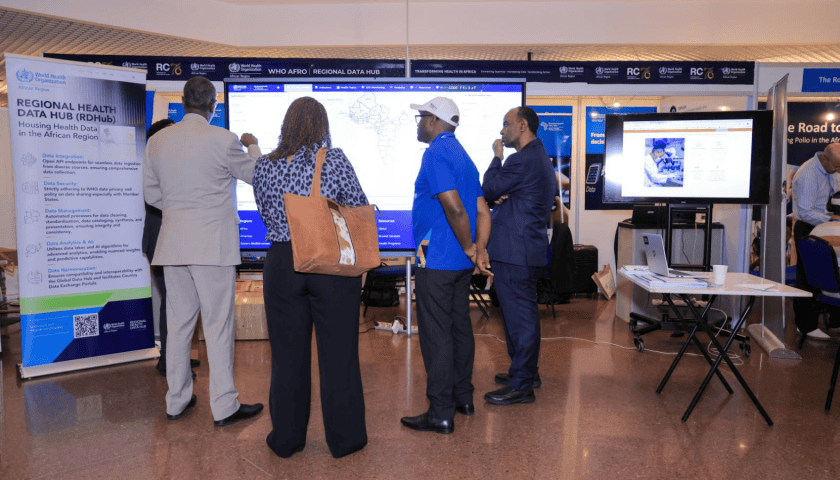
ETHIOPIA—The World Health Organization (WHO) Regional Office for Africa has launched the Regional Health Data Hub (RDHUB), a platform designed to bring together health information from across the region and improve access to reliable data for decision making.
Governments across Africa depend on timely health information to respond to disease outbreaks, improve maternal and child health, plan services and allocate resources.
However, essential data often remain scattered across different systems, making it difficult to obtain a complete and timely picture of population health.
Connecting fragmented health data
The RDHUB, launched during the 76th session of the WHO Regional Committee for Africa in Addis Ababa from 25 to 27 August 2026, connects information from different health programmes and systems.
It enables users to explore trends, compare progress and identify emerging health priorities.
Dr Abdouramane Diallo, Director of Programme Management at the WHO Regional Office for Africa, said countries should have access to the information they need to make critical health decisions and ensure that publicly funded data are effectively used.
The platform currently contains 53 datasets and 7,965 indicators.
WHO has registered all indicators and defined and validated their metadata in collaboration with its technical clusters and Member States.
To date, 65% of datasets have been ingested, while data for 45% of indicators are available through the web portal.
WHO aims to increase dataset ingestion to at least 80% by the end of 2026.
Supporting national health priorities
The Hub will serve the 47 member states of the WHO African Region, as well as public health institutions, researchers, and development partners.
Users can access publicly available indicators and analytical products through the portal, while more detailed country information will be provided through appropriate access arrangements.
The platform can also help countries combine information from different sources.
For example, health officials can compare population data, vaccination coverage and disease surveillance information to identify areas with low immunization coverage or increased disease risk.
Dr Nancy Njeru Mucogo, Director of Healthcare Financing, Digital Health, Policy and Research Standards at Kenya’s Ministry of Health, said the Hub is being developed alongside a regional data governance framework covering data ownership, stewardship, access rights and responsibilities between Member States and WHO.
Strengthening regional collaboration
The RDHUB was developed in response to a mandate from Member States and will complement rather than replace national health information systems.
Countries will retain ownership of their data while common standards promote interoperability, data quality and secure information sharing.
Dr Ahmadou Lamin Samateh of The Gambia’s Ministry of Health stressed the importance of evidence-based decision-making, while Dr George Sinyangwe, Permanent Secretary for Donor Coordination at Zambia’s Ministry of Health, said stronger regional linkages could improve benchmarking, epidemic intelligence and predictive analytics.
WHO plans to expand the Hub by adding more datasets, indicators and analytical tools.
Future developments will include enhanced Country Profiles and greater use of artificial intelligence for narrative generation, pattern identification and decision support.
The platform will also strengthen the integration and triangulation of diverse health datasets across the region.

Be the first to leave a comment