

UKHSA targets breeding Aedes aegypti mosquitoes in East London
Although Aedes aegypti mosquitoes have been detected in the UK several times in recent years, the latest findings provide the first evidence that the species is actively breeding in Britain.
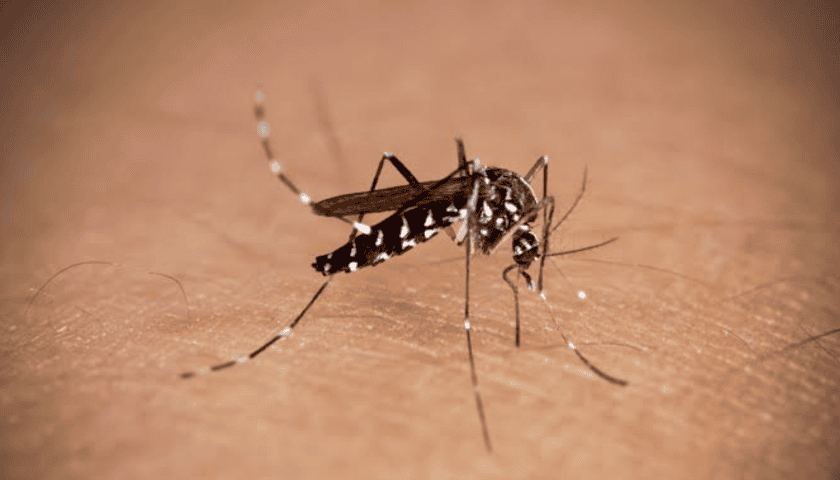
UK—The UK Health Security Agency (UKHSA) has launched a programme to eradicate a population of disease-carrying mosquitoes after identifying breeding Aedes aegypti mosquitoes at several residential properties in east London.
Following the discovery, UKHSA teams have introduced measures to prevent the mosquitoes from establishing and spreading.
The response includes destroying A. aegypti larvae and conducting surveillance around the affected properties to determine whether the population has spread to other areas.
Although Aedes aegypti mosquitoes have been detected in the UK several times in recent years, the latest findings provide the first evidence that the species is actively breeding in Britain.
Growing presence across Europe
The discovery comes as A. aegypti expands its range in parts of Europe.
The European Centre for Disease Prevention and Control (ECDC) recently reported that the mosquito has become established in a region of Cyprus.
Aedes aegypti is commonly found in tropical, subtropical, and warm temperate regions. The species can transmit several viral diseases, including dengue, Zika and chikungunya.
Dengue remains the most widespread of the three, with researchers estimating 3.6 million cases between January and August 2026.
Climate change has increased concerns about the movement and establishment of mosquito species in areas where they were previously unable to survive.
Rising temperatures in the Northern Hemisphere could allow invasive mosquitoes to persist for longer periods, potentially increasing the risk of mosquito borne diseases such as dengue.
However, UKHSA said the immediate public health risk from the east London mosquitoes remains very low.
Dr Jolyon Medlock, head of medical entomology and Zoonoses Ecology at UKHSA, said there is currently no evidence that the mosquitoes have infected people or that larvae have been found in nearby public areas.
Medlock also noted that A. aegypti generally cannot survive for long periods under typical UK climatic conditions because of the country’s relatively cold temperatures.
However, he warned that a warming climate could lead to more incursions by invasive mosquito species and increase the likelihood of them surviving in the UK.
Qdenga remains the only approved dengue vaccine in the UK
The UK currently has one dengue vaccine approved by the Medicines and Healthcare products Regulatory Agency (MHRA).
Takeda’s Qdenga (dengue tetravalent vaccine) is available through private travel clinics for people aged four years and older.
The vaccine has also received approval in Europe under the same age indication.
Takeda had previously sought approval for Qdenga in the US but later voluntarily withdrew its application after the US Food and Drug Administration (FDA) requested additional data to support its review.
Qdenga’s approvals in the UK, Europe, Brazil, Argentina, Indonesia, and Thailand marked a significant development in dengue prevention following the global discontinuation of Sanofi’s Dengvaxia, largely because of limited demand.
Dengvaxia also faced safety concerns after evidence showed that people who had not previously contracted dengue faced a higher risk of severe disease and hospitalisation after vaccination.
Meanwhile, competition in the dengue vaccine market could increase.
MSD (Merck & Co.) is evaluating its single-dose, quadrivalent dengue vaccine V181 in the Phase III MOBILIZE-1 study (NCT07013487).


Be the first to leave a comment