
WHO inks two-year agreement with Peking University to strengthen global health emergency preparedness
The agreement builds on Peking University’s longstanding involvement in global health research and public health capacity development.
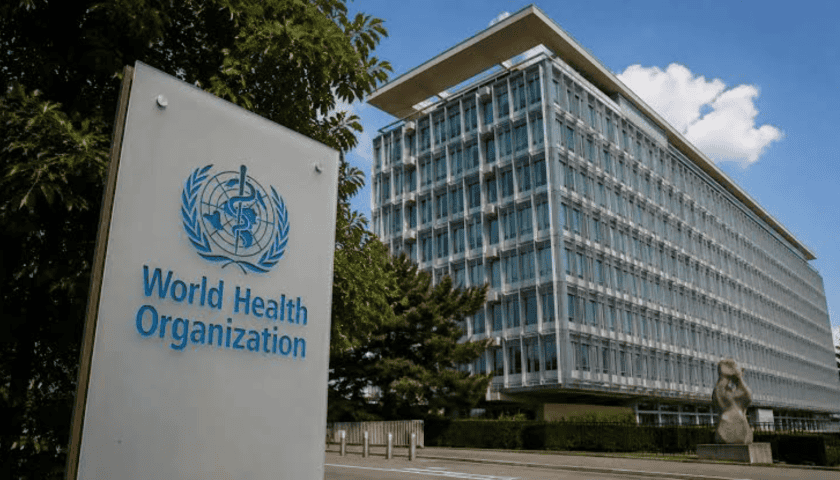
SWITZERLAND—The World Health Organization (WHO) and Peking University have signed a two-year project collaboration agreement to strengthen global health emergency preparedness through research, training and innovative analytical approaches.
The partnership brings together WHO’s Department of Health Emergency Preparedness, through its Risk Analytics and Action Reviews (RAR) Unit, and Peking University’s Institute for Global Health.
Together, the institutions will support efforts to improve countries’ ability to prevent, prepare for, and respond to health emergencies while building greater resilience.
The agreement supports the priorities outlined in WHO’s Fourteenth General Programme of Work and contributes to international efforts to strengthen preparedness capacities and promote evidence-informed decision-making.
Research and training
Under the agreement, WHO and Peking University will conduct operational and implementation research focused on health emergency preparedness.
The partners will also develop and deliver training on WHO tools and approaches designed to help countries assess and strengthen their preparedness systems.
These activities will include training on WHO benchmarks for strengthening health emergency capacities, simulation exercises (SimEx), after-action reviews (AARs) and Dynamic Preparedness Metrics (DPM).
These tools help countries identify gaps in preparedness, test emergency response systems and assess progress over time.
In addition, the collaboration will support the development of methodologies for assessing investments in health emergency preparedness.
The partners will also develop approaches to measure the outcomes and impact of preparedness investments, providing evidence to inform future policies and programmes.
Expanding academic partnerships
The agreement builds on Peking University’s longstanding involvement in global health research and public health capacity development.
The university has also been designated as a WHO Collaborating Centre in several areas, including universal health coverage.
Meanwhile, the new partnership expands the RAR Unit’s growing network of collaborations with academic institutions worldwide.
With the agreement, RAR now has sustained partnerships with four leading universities across different regions.
Through these academic partnerships, WHO draws on technical expertise, research capacity, training capabilities and analytical approaches to support its work on health emergency preparedness.
The collaboration with Peking University will run from 1 August 2026 to 31 July 2028, with the option to extend the agreement by mutual agreement of both parties.
During this period, the two institutions will focus on generating practical evidence, strengthening preparedness tools and supporting capacity-building efforts in health emergency preparedness.


Be the first to leave a comment